
 English
 Arabic
 Chinese (Simplified)
 Dutch
Dutch French
 German
 Italian
 Portuguese
 Russian
 Spanish
Personalized education for adults is not about making learning easier.
It is about making learning more accurate.
That difference matters.
An adult learner does not arrive with an empty notebook and a blank history.
They arrive with experience.
Old knowledge.
Work habits.
Confidence issues.
Forgotten lessons.
Repeated mistakes.
Personal goals.
Limited time.
And sometimes, years of learning that was never fully used.
That is why one fixed course does not work for every adult.
One adult may need to move faster because they already know the basics.
Another may need to slow down because an old gap keeps causing mistakes.
Another may understand the content but struggle to use it in real life.
Another may need feedback more than another lesson.
Same subject.
Different learner.
Different path.
That is where adult education needs to change.
Pro tip: this adult learning guide by Indeed is a gamechanger and helped us guide some recent content.
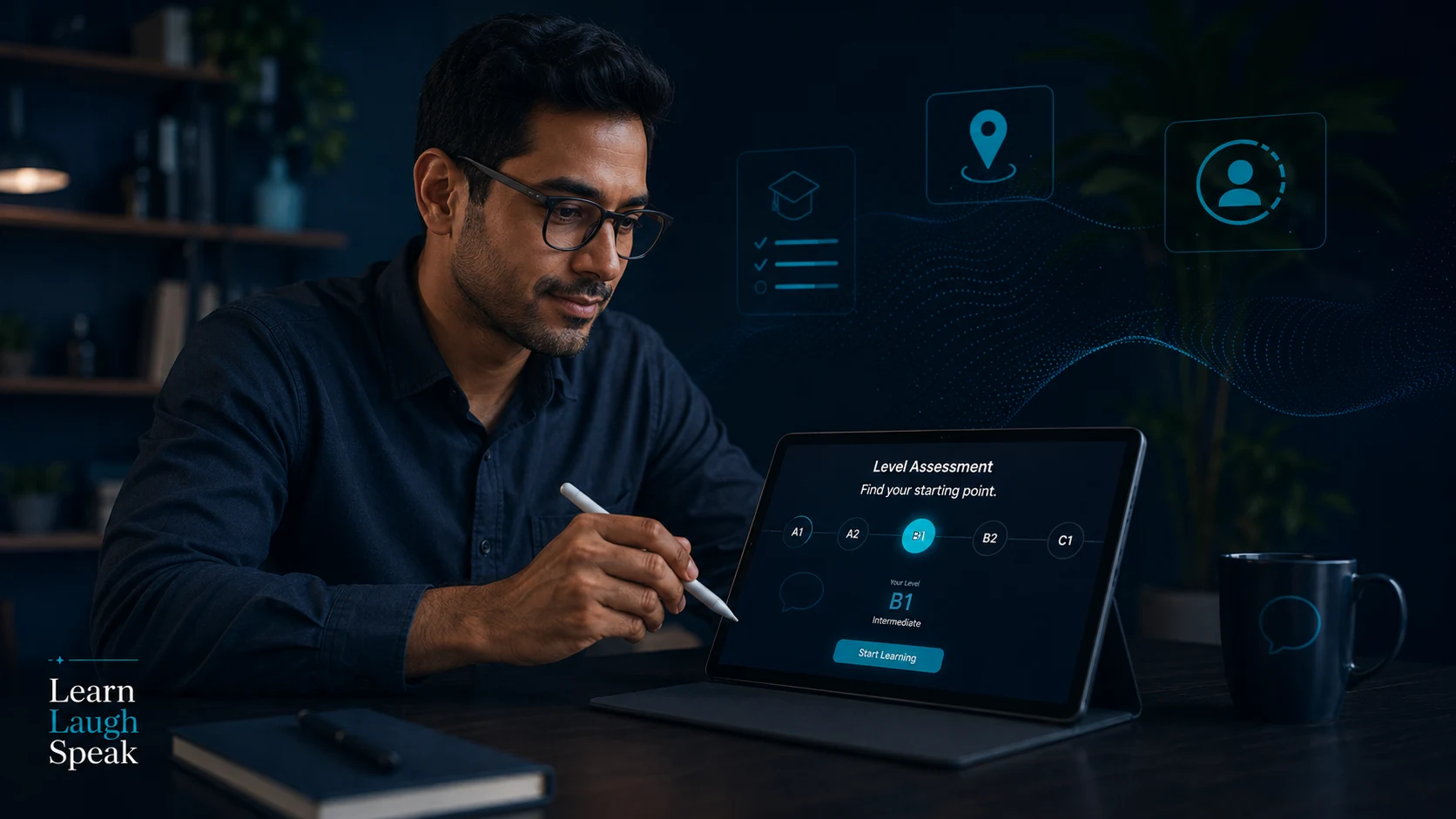
What Is Personalized Education for Adults?
Personalized education for adults means the learning path changes based on the learner, not only the subject.
It considers what the adult already knows, what they have forgotten, where mistakes keep appearing, how quickly they are progressing, and what they need the skill for in real life.
This does not mean every learner chooses random lessons.
It means the learning system gives better direction.
The goal is simple:
less wasted time, fewer repeated mistakes, and a clearer path toward real progress.
For adults, that matters because time is limited.
They do not need more content for the sake of more content.
They need learning that knows where they are now and what should happen next.
Why Personalized Education for Adults Starts With the Right Level
A fixed course is easy to organize.
Everyone starts at lesson one.
Everyone follows the same order.
Everyone completes the same activities.
Everyone moves toward the same end.
That looks clean from the outside.
But adult learning is rarely that clean.
One adult may already understand 40% of the course because of previous study.
Another may know the theory but cannot apply it.
Another may have skipped an important foundation years ago and still be struggling because of it.
When every adult starts in the same place, two things usually happen.
Some learners waste time repeating what they already know.
Others are pushed forward before they are ready.
Both create frustration.
And frustration is one of the fastest ways for adults to stop learning.
Personalization begins before the first lesson.
It begins by asking:
Where is this adult actually starting from?
Not where the course begins.
Not where the group begins.
Where the learner begins.
Three Adults, One Course, Three Different Problems
Imagine three adults join the same online course.
The first adult has studied the subject before.
They remember more than they expected.
But the course starts too low, so they feel bored and start skipping lessons.
The second adult is motivated but has hidden gaps.
The course moves too quickly, and soon they feel behind.
The third adult understands the lessons but cannot use the skill outside the platform.
They complete tasks, but real situations still feel difficult.
On paper, all three adults are taking the same course.
In reality, they need three different learning paths.
One needs faster movement.
One needs foundation repair.
One needs application and feedback.
That is why personalized education for adults is not a luxury.
It is often the difference between finishing content and making real progress.
Personalization Should Not Mean Random Choice
There is a mistake some learning platforms make.
They confuse personalization with choice.
They give adults hundreds of lessons and say:
“Choose what you want.”
That sounds flexible.
But it can quickly become overwhelming.
Adults do not always want more options.
They want better direction.
They want to know:
What do I need now?
What can I skip?
What should I review?
What mistake keeps appearing?
What is the next useful step?
Personalized learning should not leave adults guessing.
It should guide them.
The learner should still have flexibility, but the path should make sense.
A personalized system should reduce confusion, not add more of it.
How Personalized Education for Adults Uses Prior Knowledge
Adults bring previous learning into every new course.
Sometimes that prior knowledge helps.
Sometimes it hides weak areas.
Both matter.
A learner who already understands part of a topic should not be forced to repeat every basic lesson.
But a learner who has an old gap should not be pushed forward just because they completed a lesson years ago.
Personalized education should recognize what adults already know, but also test what they can actually use.
That is the real difference.
Knowing something once is not the same as being able to use it now.
Adults do not learn in one straight line.
They return.
They rebuild.
They refresh.
They continue.
A good learning path should respect that.
It should not treat prior learning as irrelevant.
It should also not assume prior learning means mastery.
The best approach is more honest:
What does the learner already know?
What can they still use?
What has been forgotten?
What needs to be corrected?
What is ready to move forward?
That is how prior knowledge becomes useful instead of ignored.
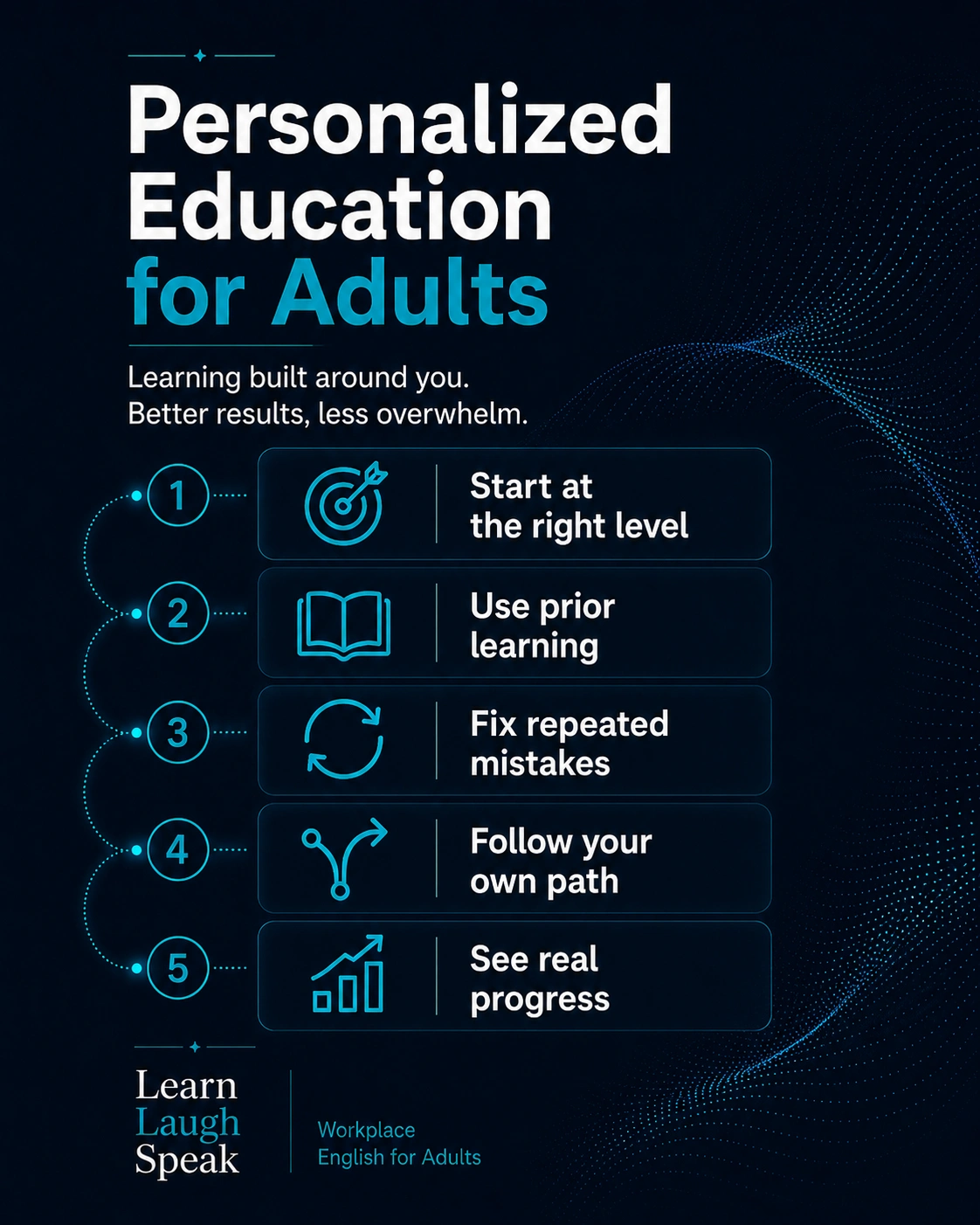
Personalized Education Helps Adults Stop Wasting Time
Time is one of the biggest pressures for adult learners.
Adults are not usually studying with unlimited space in their week.
They are learning around work, family, travel, stress, and responsibilities.
So wasted time matters.
A course that repeats what the learner already knows wastes motivation.
A course that ignores mistakes wastes effort.
A course that gives too much content without direction wastes attention.
Personalization helps by making the learning path sharper.
It helps adults spend more time on what matters and less time on what does not.
That does not remove effort.
Learning still takes work.
But the work becomes more focused.
And focused effort is much easier to continue.
A Better Way to Think About Personalized Education for Adults
| Adult learner situation | What a personalized path should do |
|---|---|
| Already knows part of the topic | Let the learner move faster where they are ready |
| Has hidden gaps | Slow down and repair the missing foundation |
| Keeps making the same mistake | Use feedback and targeted practice |
| Understands but cannot apply | Add real-life tasks and active use |
| Has limited time | Keep lessons focused and flexible |
| Loses motivation | Show visible progress and small wins |
| Returns after years away | Recognize prior learning without assuming mastery |
This is why personalization is not only about preference.
It is about accuracy.
The goal is not to ask adults what they like.
The goal is to understand what they need.
Why Feedback Makes Personalized Education Work
A personalized path cannot work without feedback.
Feedback shows what is happening inside the learning process.
It reveals repeated mistakes.
It shows whether the learner is ready to move forward.
It helps the system understand what should happen next.
For adults, feedback is especially important because it saves time.
Without feedback, a learner may practise the wrong thing for weeks.
With feedback, the mistake becomes useful.
It becomes a signpost.
It tells the learner:
Here is the problem.
Here is why it matters.
Here is what to do next.
That is where personalized education becomes practical.
Not just personal.
Practical.
A course can say it is personalized, but if it does not respond to mistakes, progress, and repeated patterns, it is not truly personal.
It is just customized content.
Real personalization changes because the learner changes.
Personalization Should Build Confidence, Not Depend on It
Many adults return to learning with mixed confidence.
They want to improve, but they may also feel unsure.
They may remember struggling before.
They may worry they are too slow.
They may feel embarrassed about mistakes.
A fixed course often makes this worse because the learner has to keep up with the course.
A personalized path changes the pressure.
The learning adjusts to where the adult is.
That does not mean lowering standards.
It means creating the right challenge.
Too easy, and the learner loses interest.
Too hard, and the learner loses confidence.
The right level keeps the adult engaged.
It gives them enough challenge to grow, but enough support to continue.
That balance is important.
Confidence does not come from pretending learning is easy.
It comes from seeing progress that feels real.
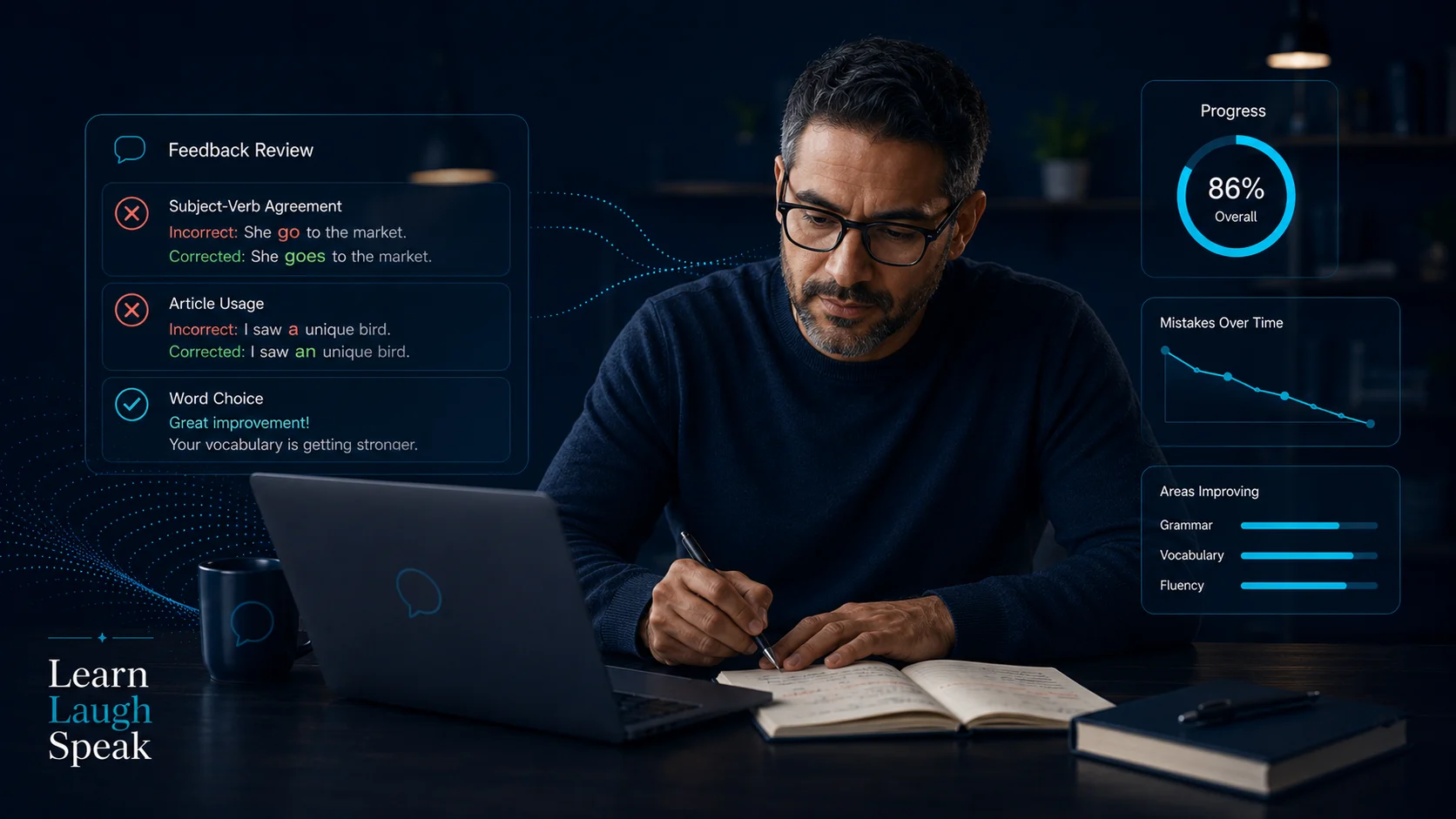
Adults Need Learning That Changes as They Improve
Personalization should not happen only at the beginning.
A level assessment is important, but adult learners keep changing.
They improve.
They forget.
They make new mistakes.
They build confidence.
They hit difficult sections.
They need review.
They become ready for harder tasks.
A learning path should respond to those changes.
That is what makes personalization different from simple placement.
Placement asks:
Where do you start?
Personalization keeps asking:
What do you need next?
That is the question adult education needs to keep answering.
Because adults do not stay in the same place.
Their learning path should not stay fixed either.
Personalized Education Does Not Replace Discipline
Personalization helps, but it does not remove responsibility.
Adults still need to show up.
They still need to practise.
They still need to review.
They still need to use feedback.
They still need to keep going when learning feels slow.
But good personalization makes discipline easier to maintain.
It removes unnecessary friction.
The adult learner does not waste energy wondering what to do next.
They do not repeat lessons they already know.
They do not ignore mistakes that need attention.
They do not move blindly through content hoping it will all connect later.
The path gives direction.
The learner still does the work.
That is the partnership modern education needs.
How Learn Laugh Speak Uses Personalized Education for Adults
Learn Laugh Speak is built around the idea that adult learners should not all follow the same generic journey.
Every student starts with a level assessment so the platform can understand where they are now.
That matters because adults arrive with different histories.
Some have prior learning.
Some have hidden gaps.
Some already understand parts of a level.
Some need more support because repeated mistakes are slowing them down.
From there, each learner follows a personalized path based on level, progress, mistakes, and needs.
This connects directly to personalized education for adults because the goal is not simply to provide more lessons.
The goal is to make learning more accurate.
Students learn what they need, when they need it.
They do not waste time repeating everything they already know.
They also do not skip the areas where support is still needed.
That is how adult learning becomes more useful, more efficient, and more connected to real progress.
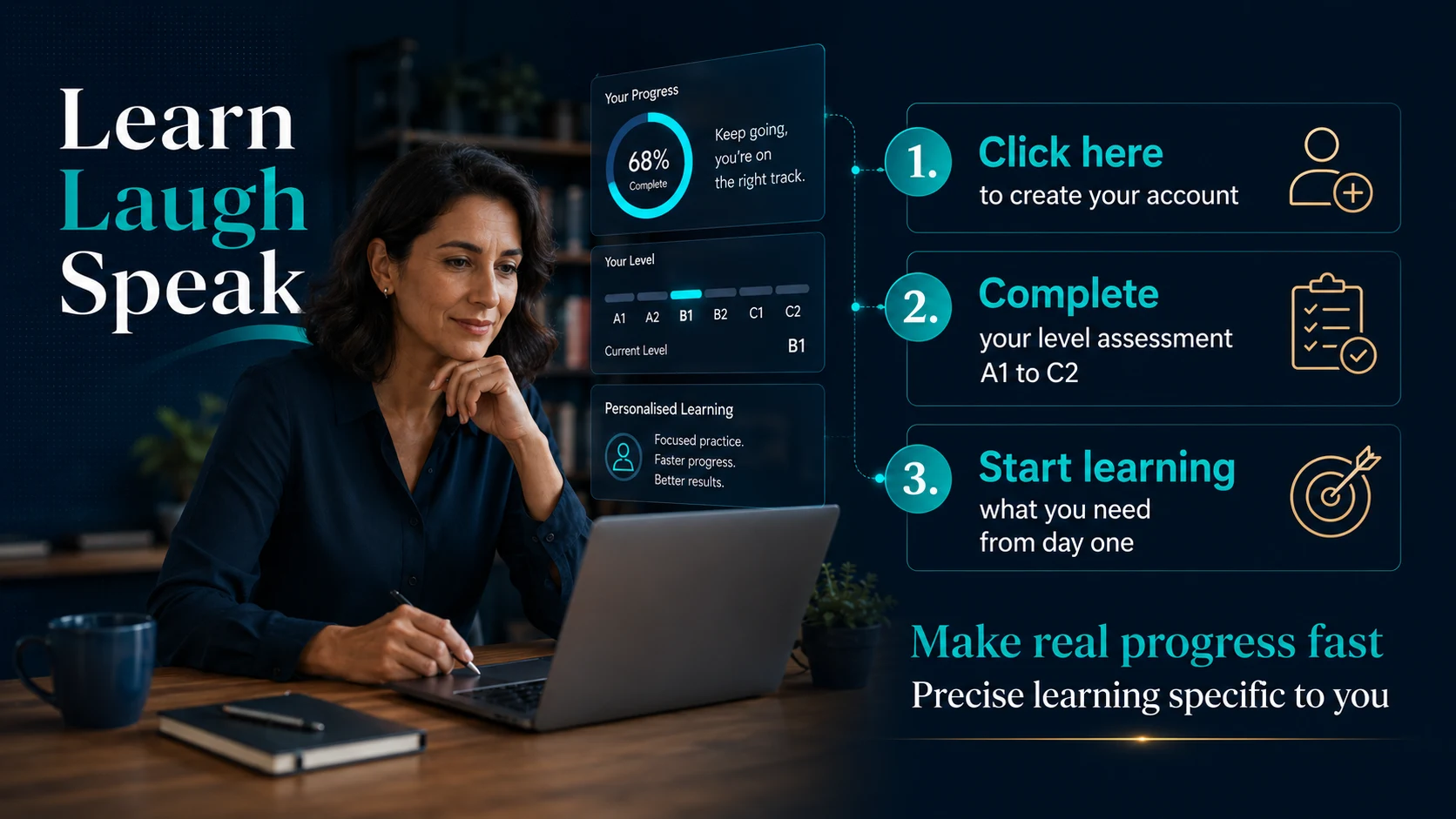
What Personalized Adult Education Should Avoid
Personalized education should avoid:
giving too many choices without guidance
treating every adult as a beginner
moving learners forward only because they completed lessons
ignoring prior learning
ignoring repeated mistakes
measuring progress only by time spent
making the learner guess what comes next
These mistakes are common.
They are also fixable.
The future of adult education should not be about making adults fit the course.
It should be about making the learning path fit the adult.
Final Thought
Personalized education for adults matters because adults do not all learn from the same starting point.
They bring different experience, confidence, gaps, goals, responsibilities, and learning histories.
A fixed path may be easier to deliver, but it is not always the best way to create progress.
Adults need learning that understands where they are, what they already know, what they still need, and what should happen next.
That is how learning becomes more accurate.
And for adults, accuracy matters.
Because when education fits the learner, progress becomes easier to see, easier to trust, and easier to continue.
That is why personalized education for adults should be at the center of modern learning.
2 thoughts on “Personalized Education for Adults: One Learning Path Is Not Enough”
Pingback: How Printable Calendars Help Students Stay Consistent in English Learning - Learn Laugh Speak
Pingback: Best Cooling Products and Devices to Keep Seniors Comfortable in Summer - Learn Laugh Speak