
 English
 Arabic
 Chinese (Simplified)
 Dutch
Dutch French
 German
 Italian
 Portuguese
 Russian
 Spanish
Learning English sounds exciting at first. You download apps, save grammar videos, buy notebooks and promise yourself that this time you’ll stay consistent. However, after a few days, things usually slow down. One missed practice session can shift into a week and suddenly your learning routine disappears. That is exactly where planning makes a huge difference.
Most students do not struggle because English is difficult. They struggle because they do not follow a good routine. When your study schedule feels messy, staying motivated becomes hard, too. That’s why many students now use printable calendars for English learning to build an easy and practical study practice. Sometimes, the smallest tools create the largest improvements.

Why Consistency Counts More Than Studying for Hours
You do not need to study English for 5 hours a day to improve. What actually helps is showing up regularly. Even 20 to 30 minutes every day can improve your language, speaking confidence, reading speed and grammar knowledge. Your brain learns languages better through repetition.
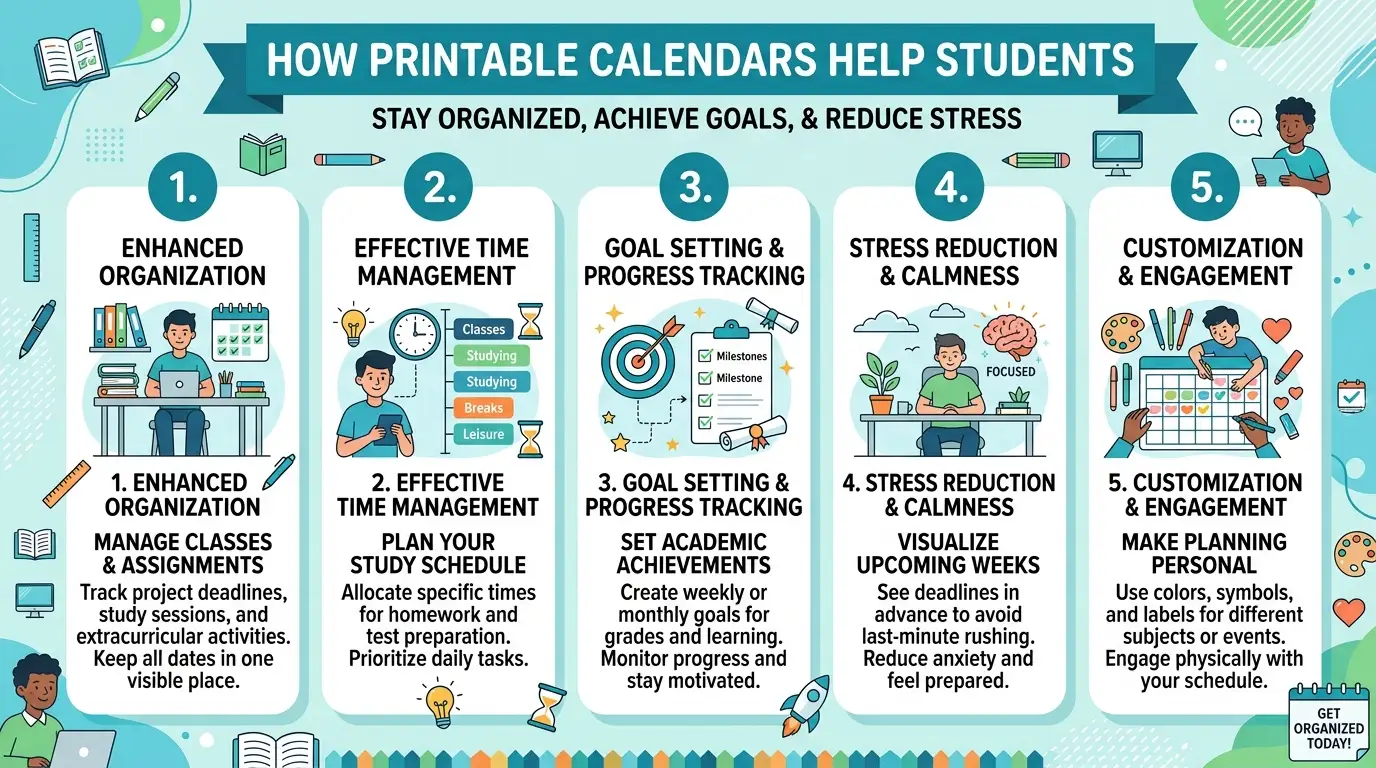
According to resources shared by the U.S. Department of Education, consistent daily practice plays an important role in improving communication and language retention over time. Therefore, small daily practice works much better than random long study sessions once a week. It is why students who stay consistent usually improve faster than students who study heavily only sometimes. Using printable calendars for English learning helps you visually track your progress.
How Printable Calendars Help You Build Better Study Habits
Your phone can be distracting. You open your device to revise vocabulary and five minutes later, you are watching random reels or replying to messages. That happens to almost everyone. A printable calendar removes that distraction completely. You can place it on your study desk, a wall or a notebook and quickly check your tasks without opening 10 apps.
You can use your calendar to track things like:
- Daily vocabulary routine
- Grammar revision days
- Reading exercises
- English-speaking sessions
- Weekly writing goals
What makes this method feel satisfying is the visual progress. Completing tasks offers you a slight sense of achievement. It sounds simple, but it genuinely helps you move. Sometimes seeing your improvement on paper feels way more motivating than tapping boxes on a screen.
Weekly Planning Makes English Learning Feel Less Stressful
One reason students stop learning English is that they attempt to do too much at once. You may intend to understand grammar, improve speaking, learn vocabulary, see English movies and practice writing all in one day. Naturally, that becomes overwhelming.
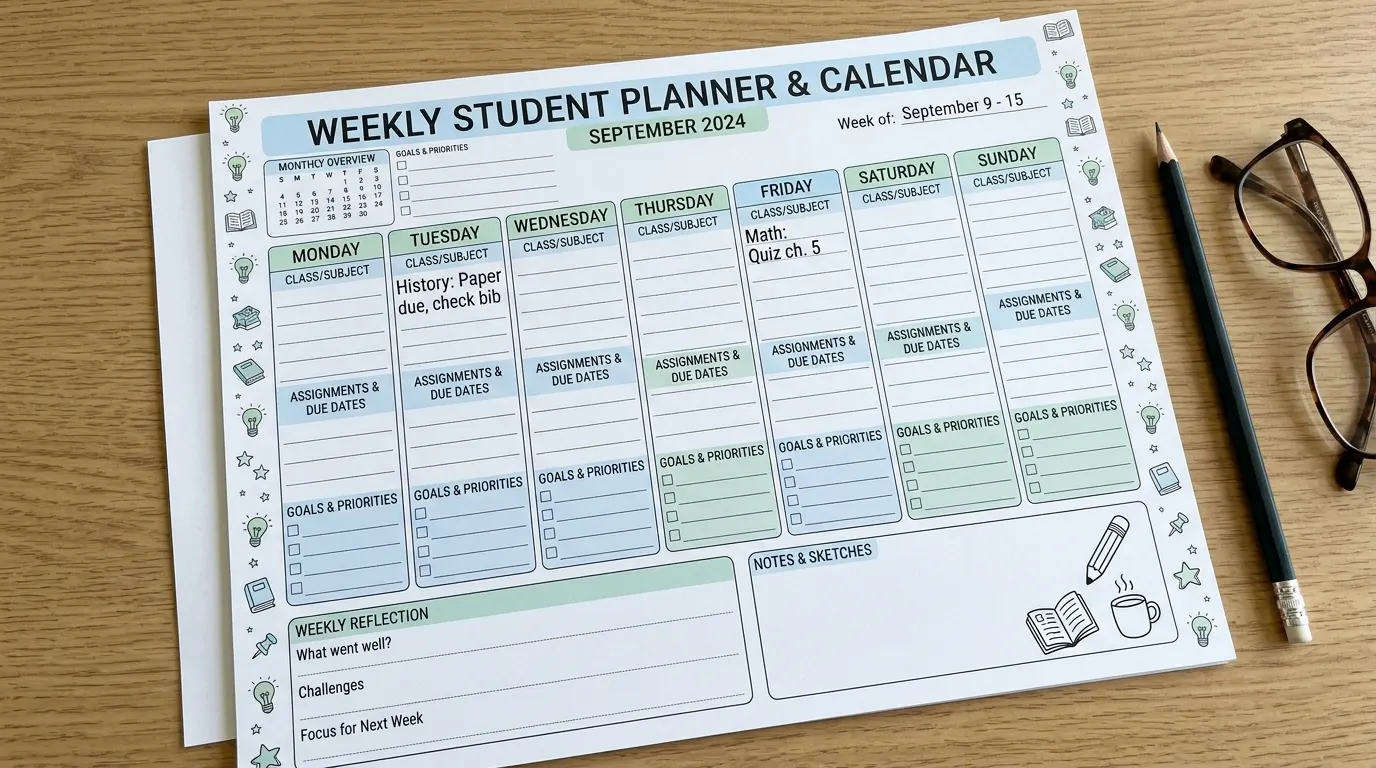
It is where a proper weekly system helps. Using a Free Printable weekly planner allows you to divide your learning goals into smaller tasks. Instead of feeling stressed, your schedule starts feeling manageable.
For example:
- Monday: Vocabulary practice
- Tuesday: Reading exercises
- Wednesday: Listening practice
- Thursday: Grammar revision
- Friday: Speaking practice
This type of planning creates balance. You stop running and begin learning at a comfortable pace. Moreover, weekly planners help you remain organized alongside school tasks, homework and exams. Everything feels less messy when you already understand what you must do each day.
Monthly Calendars Help You See Long-Term Progress
Daily planning is useful, but monthly tracking shows you how far you have actually come. When you use monthly calendars, you begin seeing patterns in your learning habits. You can identify which weeks were productive and where you lost consistency. For students preparing for English exams or language certifications, this becomes extremely useful.
You can mark:
- Mock test dates
- Essay practice deadlines
- Reading milestones
- Speaking goals
- Revision weeks
Using printable calendars for English learning also helps you stay mentally prepared for upcoming study objectives, rather than studying at the last minute. Over time, your belief naturally improves as you can clearly see your progress month after month.
Personalized Education for Adults: One Learning Path Is Not Enough
Holiday Calendars Can Keep Your Learning Routine Alive
Holidays are entertaining, but they also break routines very quickly. Many students stop practicing English completely during vacations. Then, restarting again feels difficult. However, you do not need intense study sessions during holidays to stay consistent. You only need a lighter routine.
Using Canada Holidays calendars can help you plan study breaks more realistically. You can organize lighter tasks around holidays rather than completely abandon your learning schedule.
For example, during holiday weeks, you can focus on:
- Watching English shows
- Reading short stories
- Understanding five new words daily
- Hearing English podcasts
It maintains your momentum alive without making learning feel stressful.
Conclusion
Learning English is not about being excellent every single day. It’s about staying consistent, even with slight actions. When you create a simple routine and follow it regularly, improvement begins to occur naturally.
If you want to form a smoother, more practical learning routine, study the printable planning tools available on CalendarKart to make consistency feel more comfortable each day.