
 English
 Arabic
 Chinese (Simplified)
 Dutch
Dutch French
 German
 Italian
 Portuguese
 Russian
 Spanish
Volleyball moves quickly. A serve starts the rally, someone calls “mine,” the setter sends the ball toward the net, and seconds later you hear words like kill, dig, block or side-out.
If English is not your first language, understanding the game can sometimes be harder than watching it.
This guide explains volleyball terms in simple English so you can understand players, coaches, commentators and other fans. You will learn volleyball vocabulary for serving, passing, attacking, blocking, defending, player positions, court areas, rules and common phrases.
If you already enjoy learning English through sport, you can also explore our basketball vocabulary guide, tennis vocabulary guide and football vocabulary guide.
Watch and Learn Sports English
Watching sport in English is one of the easiest ways to remember new vocabulary because you can connect the word directly with the action. Listen for some of the volleyball terms below while watching a match or sports video.
Quick Answer: What Are Volleyball Terms?
Volleyball terms are the words and phrases used to describe the players, positions, actions, court, rules and tactics in volleyball.
Some of the most important words are:
serve, ace, rally, set, spike, kill, dig, block, setter, libero, rotation and side-out.
For example:
“The setter made a perfect set.”
“She finished the rally with a kill.”
“The libero made an incredible dig.”
“He served an ace.”
Learning these expressions makes it much easier to follow a match and talk about volleyball naturally in English.
The rules referenced in this guide follow the current international framework published in the FIVB Official Volleyball Rules. In standard indoor volleyball, six players are on court for each team, teams normally have up to three contacts to return the ball, and a block contact does not count as one of those three team hits.
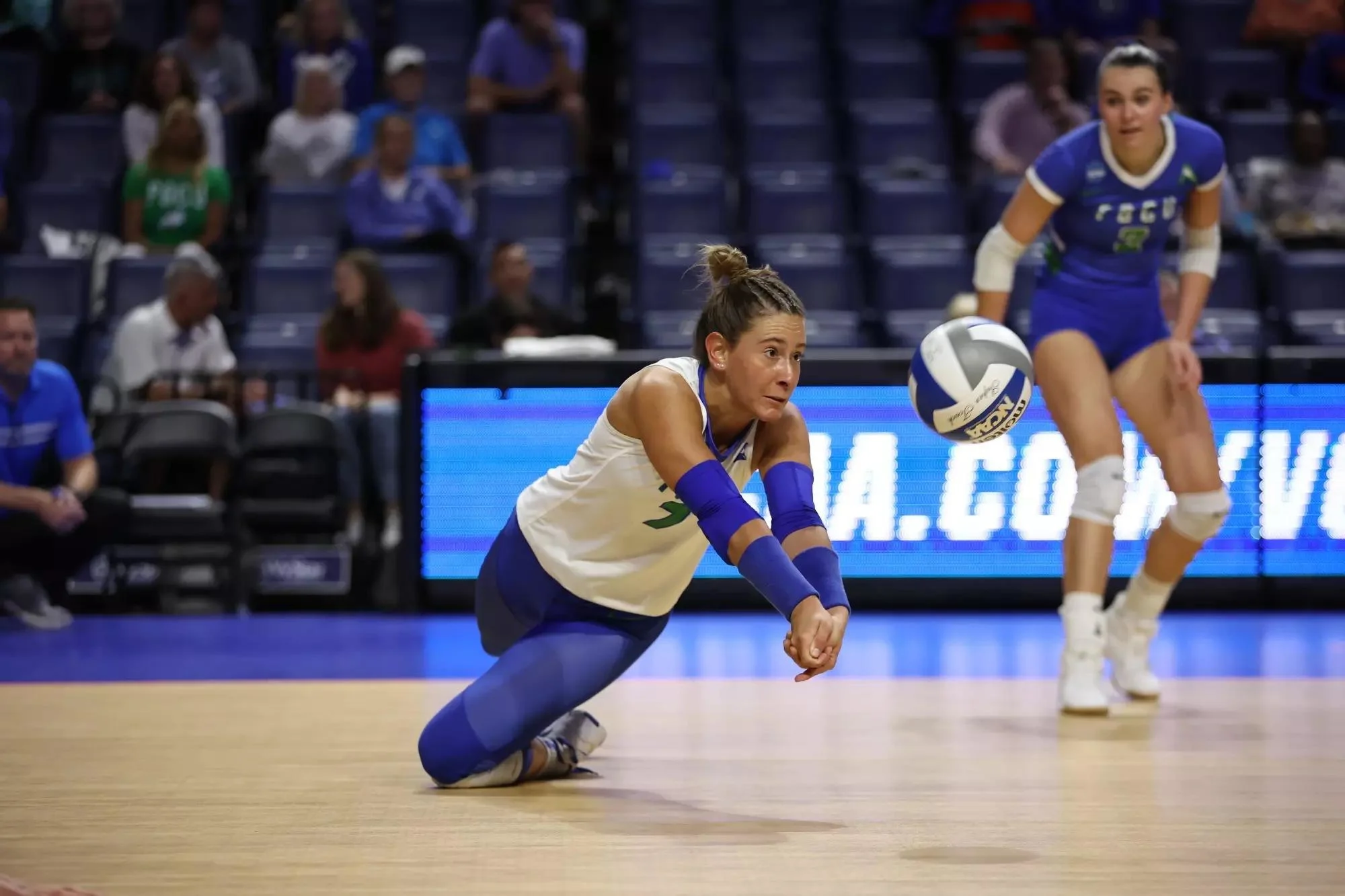
Basic Volleyball Terms
Let’s begin with the volleyball terms you will hear in almost every match.
1. Serve
The action that starts a rally. The server hits the ball from behind the end line and sends it over the net.
Example: “Her serve went deep into the back of the court.”
2. Server
The player taking the serve.
Example: “The server is putting the receiving team under pressure.”
3. Rally
The period of play from the serve until the point ends.
Example: “That was an amazing rally.”
4. Point
A unit of scoring. Under rally scoring, the team that wins a rally receives a point.
5. Set
A section of a volleyball match. Be careful: set can also mean the action of placing the ball for an attacker.
Example: “They won the first set.”
6. Match
The complete competition between two teams.
Example: “They won the match in five sets.”
7. Rotation
The clockwise movement players make through the six court positions when their team gains the right to serve.
8. Side-out
A commonly used volleyball expression for when the receiving team wins the rally and gains the right to serve.
Example: “They need a side-out here.”
9. Fault
An action that breaks a rule and causes the team to lose the rally.
10. Rally Point Scoring
The scoring system in which a point is awarded after every rally, regardless of which team served.
These basic volleyball terms give you the foundation you need before moving into the more technical language of the sport.
Volleyball Terms for Serving
Serving has its own vocabulary. These volleyball terms describe different types of serves and the situations around them.
11. Ace
A legal serve that directly wins the point because the receiving team cannot successfully return it.
Example: “She finished the set with an ace.”
12. Float Serve
A serve hit with very little spin. The ball can move unpredictably through the air.
13. Jump Float
A float serve performed while jumping.
14. Jump Serve
A powerful serve where the player tosses the ball, jumps and strikes it while airborne.
15. Topspin Serve
A serve hit with forward spin, causing the ball to dip quickly.
16. Underhand Serve
A basic serve made by striking the ball from below waist level.
17. Overhand Serve
A serve where the player contacts the ball above the shoulder.
18. Service Zone
The area behind the end line where the player serves.
19. Service Error
A serving mistake that gives the opponent the point.
Example: “The ball went long, so that is a service error.”
20. Serve Receive
The formation and action a team uses to receive the opponent’s serve.
According to USA Volleyball’s explanation of the game, a rally begins with a serve, and the receiving team normally has up to three contacts before returning the ball over the net.
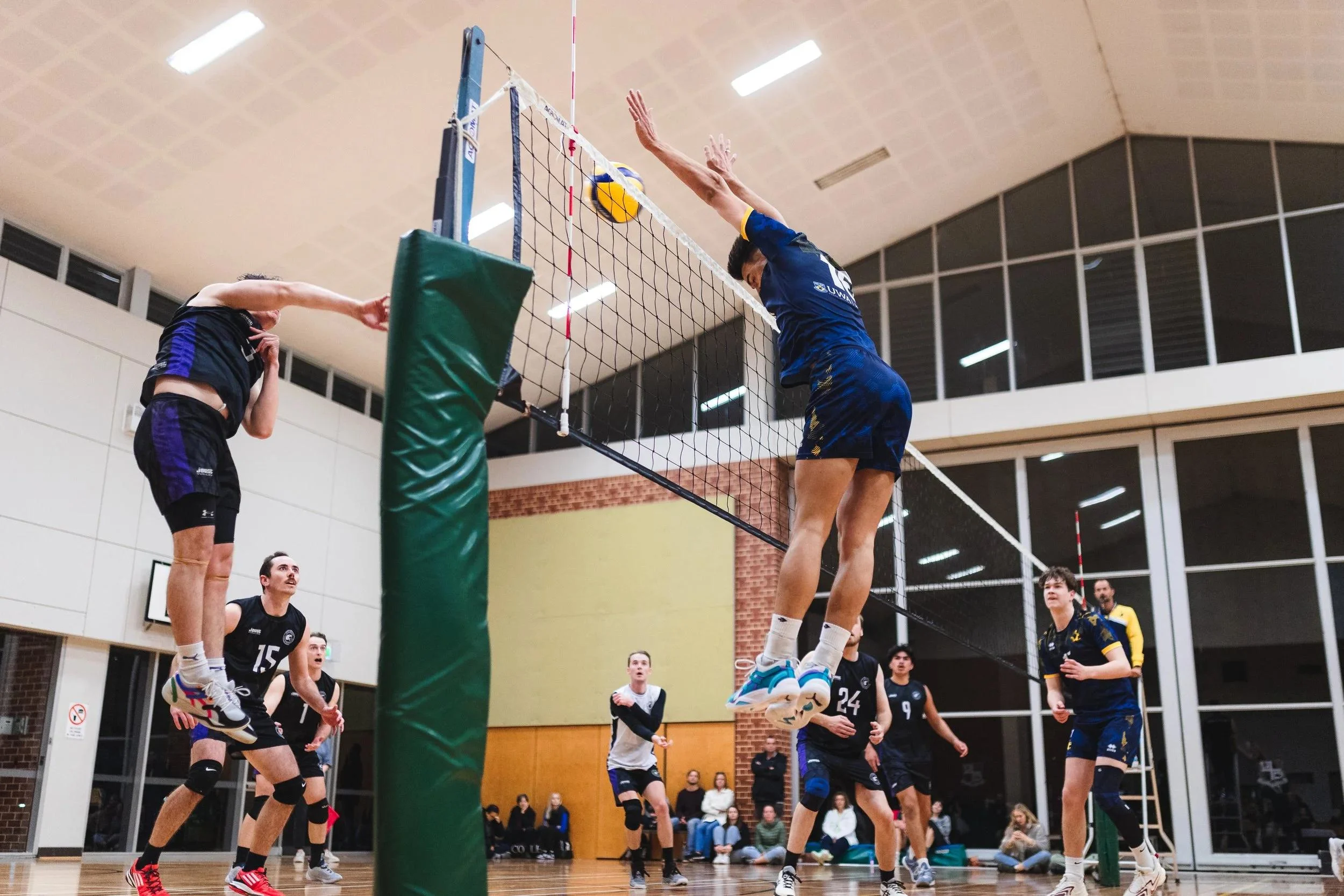
Passing and Setting Volleyball Terms
Good volleyball depends on control. The following volleyball terms describe how teams receive the ball and create an attack.
21. Pass
A controlled contact used to direct the ball toward a teammate, often the setter.
22. Forearm Pass
A pass made using the forearms. It is sometimes informally called a bump.
23. Platform
The flat surface created by joining the forearms together when passing.
Example: “Keep your platform steady.”
24. Overhead Pass
A pass made above the head using the hands and fingers.
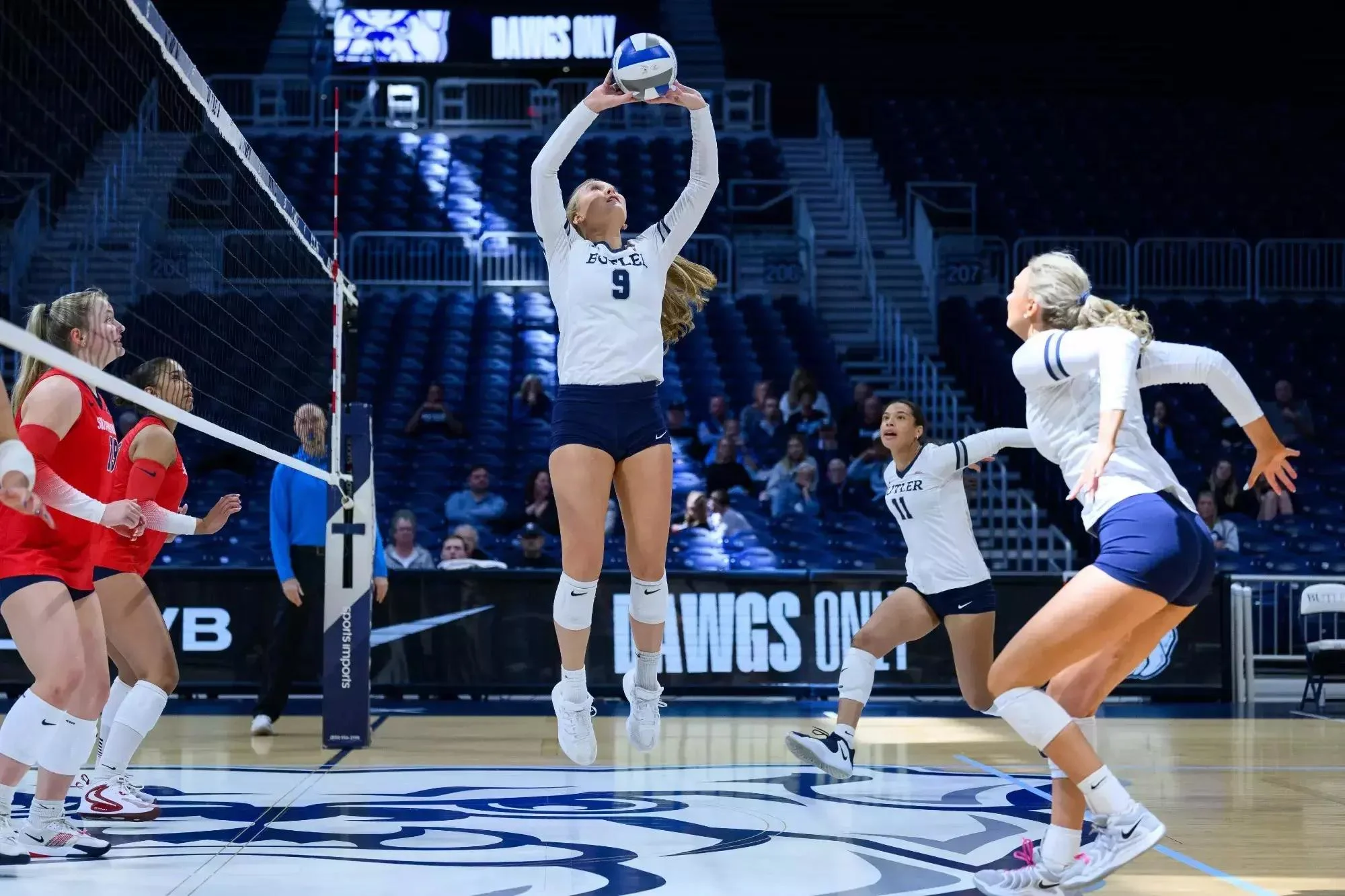
25. Set
A controlled contact that places the ball in a good position for an attacker.
Example: “That was a perfect set.”
26. Setter Dump
An attacking move where the setter unexpectedly sends the second contact over the net instead of setting an attacker.
27. Bump Set
A set made using the forearms instead of the hands.
28. Quick Set
A low, fast set designed for an attacker to hit almost immediately.
29. High Ball
A high set that gives an attacker more time to approach and hit.
30. Back Set
A set delivered behind the setter rather than in front.
These volleyball terms become much easier to understand when you watch the normal sequence of a rally: pass, set and attack.
Volleyball Terms for Attacking
This is where volleyball becomes explosive. Attacking vocabulary includes some of the most recognizable words in the sport.
31. Attack
An offensive action intended to send the ball into the opponent’s court and score.
32. Spike
A powerful attacking hit, normally performed while jumping.
Example: “She spiked the ball down the line.”
33. Kill
An attack that immediately wins the rally.
Example: “The outside hitter has 15 kills.”
34. Tip
A soft attacking touch used instead of a powerful hit.
35. Dink
A light, controlled attacking touch into an open area of the opponent’s court. Tip is more universally used, while dink is common informal volleyball language.
36. Roll Shot
A controlled attack hit with less power, usually designed to go over or around the block.
37. Line Shot
An attack directed down the sideline.
38. Cross-Court Shot
An attack hit diagonally across the court.
39. Approach
The sequence of steps an attacker takes before jumping to hit.
40. Hitting Error
An attack that results in the attacking team losing the rally, for example by hitting the ball out or into the net.
When commentators discuss attacking volleyball terms, kill is particularly important. A kill is not simply a hard hit; it is an attack that results directly in a point.
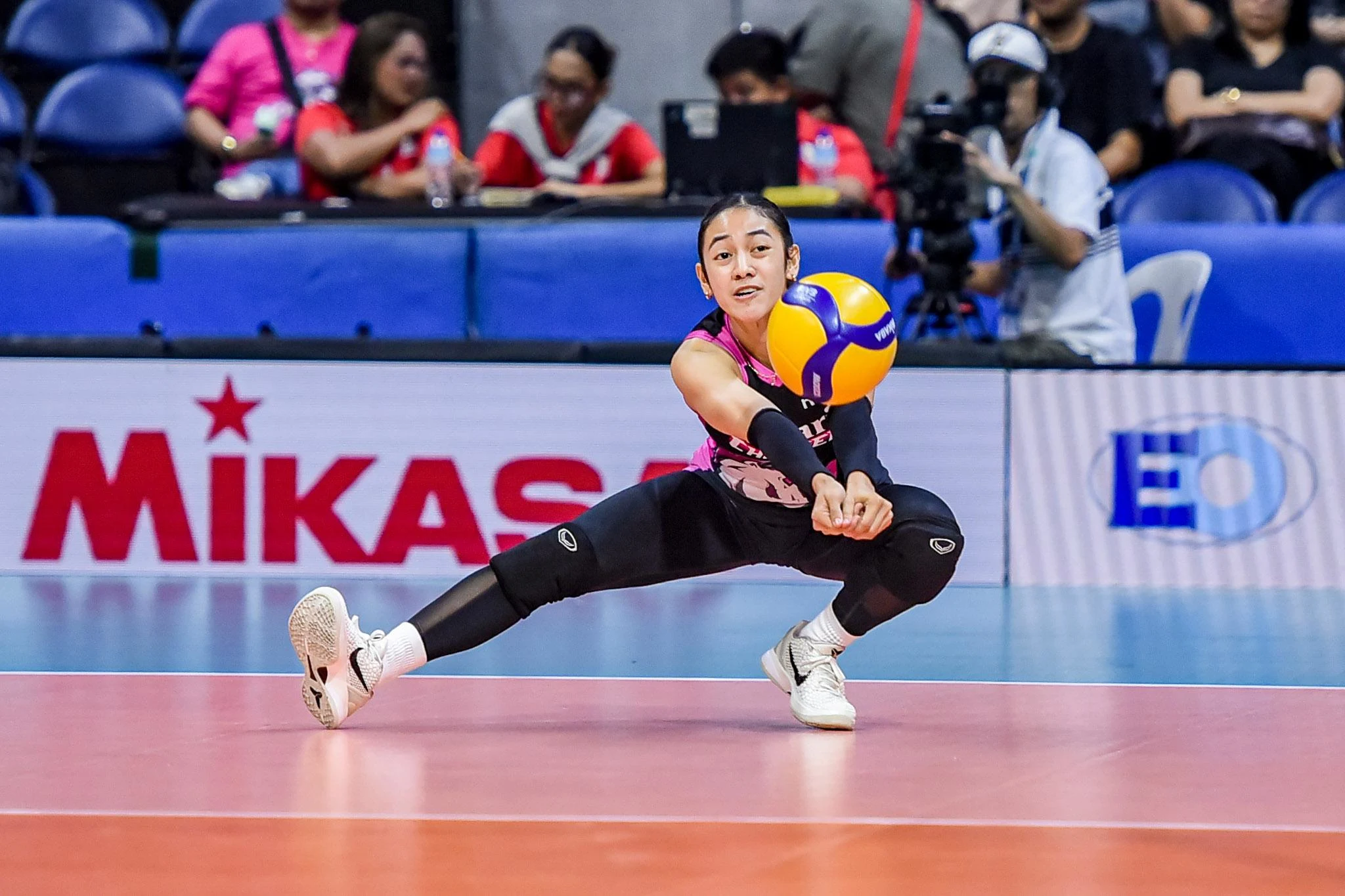
Blocking Volleyball Terms
Blocking happens at the net and is one of the most important defensive weapons in volleyball.
41. Block
An action near the net where a player attempts to stop or redirect an opponent’s attack.
42. Solo Block
A block performed by one player.
43. Double Block
Two players blocking together.
44. Triple Block
Three players forming a block together.
45. Block Touch
When the attacking ball contacts a blocker.
Under international rules, a block contact does not count as one of the team’s three hits.
46. Stuff Block
A strong block that sends the attack directly back onto the attacking team’s court.
47. Soft Block
A controlled block designed to slow the ball down so teammates can defend it.
48. Joust
A situation above the net where players from opposing teams contact and compete for the ball at the same time.
49. Penetration
In blocking language, reaching the hands over the net into the opponent’s space without illegally interfering with play.
50. Close the Block
To move the blockers together so there is little or no space between them.
Knowing these volleyball terms helps you understand why a successful defense starts before the ball even crosses the net.
Defensive Volleyball Terms
Defense can produce some of the most exciting moments in a match. These volleyball terms describe how players keep difficult balls alive.
51. Dig
A defensive play used to prevent an opponent’s attack from touching the floor.
Example: “What a dig by the libero!”
52. Pancake
A defensive move where a player puts a hand flat on the floor so the ball contacts the hand instead of the court.
53. Dive
Throwing or extending the body toward the floor to reach a difficult ball.
54. Sprawl
A defensive movement where a player extends forward and down to keep the ball alive.
55. Cover
Positioning around an attacker so teammates can recover the ball if the attack is blocked.
56. Free Ball
A relatively easy ball sent over the net without a strong attack.
Example: “Free ball! Get ready to attack.”
57. Down Ball
An attacking ball hit while the player remains on the ground rather than jumping for a full-power spike.
58. Transition
The movement from defense to offense, or from offense back to defense.
59. Emergency Save
An informal phrase for a difficult defensive contact that keeps a rally alive.
60. Pursuit
Chasing a ball away from its expected path or outside the normal playing area in an attempt to keep it in play.
If you watch sports in English, you will hear similar action words across many games. Our guide to English phrases for watching sports online explains more expressions used by commentators and fans.
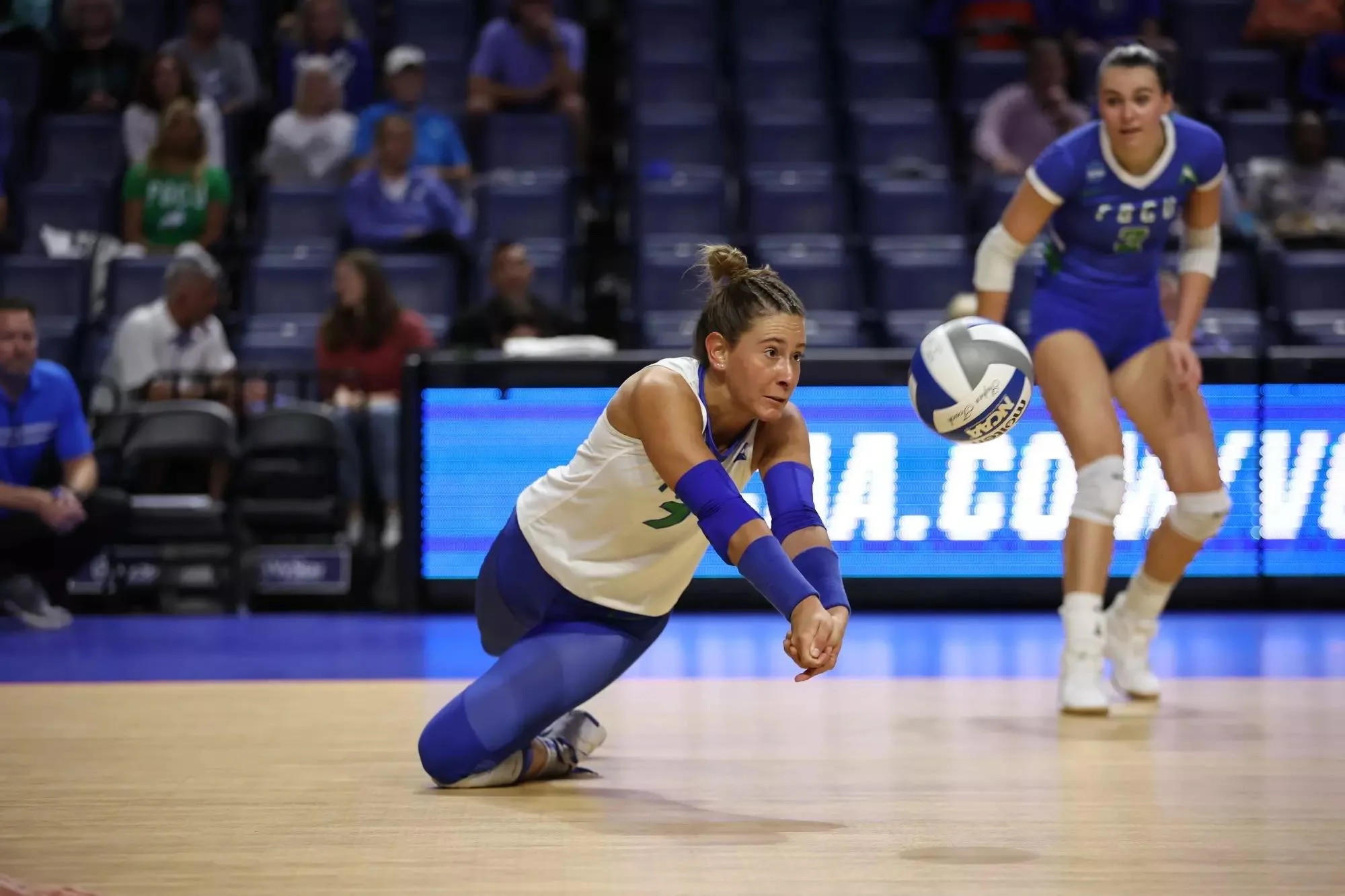
Volleyball Positions and Player Terms
Understanding player roles is essential because modern volleyball is highly specialized. These volleyball terms explain who does what on the court.
61. Setter
The player who organizes the attack and usually takes the team’s second contact.
You can think of the setter as the person who decides which attacker receives the ball.
62. Outside Hitter
An attacker who normally plays on the left side and often has major responsibilities in both attacking and serve receive.
63. Opposite Hitter
A player who normally attacks from the right side and plays opposite the setter in the rotation. The position is also called right-side hitter.
64. Middle Blocker
A front-row specialist responsible for quick attacks and blocking through the middle of the net.
65. Libero
A specialized defensive player who wears a jersey that contrasts with the rest of the team and operates under special replacement and playing restrictions.
66. Defensive Specialist
A player mainly used to strengthen back-row defense and passing.
67. Front Row
The three rotational positions closest to the net.
68. Back Row
The three rotational positions farther from the net.
69. Position 1
The back-right rotational position. This is also the serving position.
70. Position 2
The front-right rotational position.
71. Position 3
The front-center rotational position.
72. Position 4
The front-left rotational position.
73. Position 5
The back-left rotational position.
74. Position 6
The back-center rotational position.
75. Substitution
Replacing one player with another according to the competition’s substitution rules.
The official FIVB system numbers the front-row positions 4, 3 and 2 and the back-row positions 5, 6 and 1.
Learning player positions is one of the most useful groups of volleyball terms because it lets you understand rotations, tactics and commentary instead of simply following the ball.
If you enjoy learning position vocabulary, compare this with our basketball vocabulary guide or our hockey vocabulary guide. Different sports use very different names to describe similar ideas such as attack, defense, positioning and teamwork.
Volleyball Court Terms
You also need to know the names of the areas around the court. These volleyball terms make tactical explanations much easier to understand.
76. Court
The marked playing area where the game takes place.
77. Net
The barrier dividing the two teams.
78. Antenna
A flexible rod attached near each side of the net that helps define the legal crossing space for the ball.
79. Sideline
The boundary line running along each side of the court.
80. End Line
The boundary line at the back of each court.
81. Center Line
The line underneath the net separating the two sides of the court.
82. Attack Line
The line three metres from the center line. It is also commonly called the three-metre line.
83. Front Zone
The area between the center line and attack line.
84. Back Zone
The area behind the attack line toward the end line.
85. Free Zone
The area surrounding the playing court where players may continue certain plays.
Understanding these court volleyball terms is particularly important when learning the difference between front-row and back-row attacks.
Volleyball Rules and Terms
You do not need to memorize the entire rulebook to enjoy a match, but these volleyball terms explain many of the whistles and referee decisions you will hear.
86. Boundary Line
A line marking the legal playing area. A ball contacting a boundary line is considered in.
87. Three Contacts
A team normally has a maximum of three contacts to return the ball, in addition to a block contact under FIVB rules.
88. Double Contact
An illegal consecutive contact by the same player when it does not fall within an allowed exception under the rules.
89. Four Hits
A fault committed when a team uses more than the permitted number of contacts before returning the ball.
90. Net Fault
A fault involving illegal player contact with the net during the action of playing the ball.
91. Foot Fault
A serving fault caused when the server illegally contacts the court or ground outside the permitted service area at the moment of service.
92. Rotation Fault
A fault connected with serving in the incorrect rotational order.
93. Positional Fault
A fault that occurs when players are not in the required rotational positions at the moment the service is hit.
Current FIVB rules require the receiving team to maintain its rotational order at the service hit, after which players can move into their playing positions.
94. Ball In
A ball that legally touches the playing court, including a boundary line.
95. Ball Out
A ball that lands completely outside the boundary lines or otherwise meets the rule definition of an out ball.
96. Touch
When a player makes contact with the ball.
You will often hear someone shout:
“Touch!”
This may indicate that the ball contacted a blocker before going out.
97. Timeout
An official interruption requested by a team according to the competition rules.
98. Set Point
A point that could decide the current set.
Example: “Brazil has set point at 24–22.”
99. Match Point
A point that could decide the entire match.
Example: “They saved two match points.”
100. Challenge
In competitions using a video challenge system, a formal request to review certain referee decisions using video technology.
For exact competition rules, substitutions and current interpretations, use the FIVB’s current official volleyball rules rather than relying on old rule summaries. The current international edition covers 2025–2028.
Common Volleyball Phrases You Will Hear During a Game
Knowing individual volleyball terms is useful, but real players often communicate with short phrases.
“Mine!”
The player is telling teammates that they will play the ball.
“Help!”
A player needs a teammate to take the next contact.
“Free ball!”
The opponent is sending an easier ball over the net, giving the team an opportunity to organize its attack.
“Out!”
A player believes the ball will land outside the court.
“Short!”
The ball is dropping near the front of the court.
“Deep!”
The ball is travelling toward the back of the court.
“Line!”
Usually refers to the attacking or defensive space near the sideline.
“Cross!”
Refers to a cross-court attacking direction.
“Cover!”
Players should prepare to recover a blocked attack.
“One more!”
An informal way to encourage the team to keep the ball controlled and continue the play.
These phrases are useful because volleyball communication has to be fast. Players rarely have time for long sentences during a rally.
Volleyball Slang and Informal Vocabulary
Some volleyball terms are more informal than the official language used in a rulebook.
For example:
Stuffed — When an attacker is strongly blocked and the ball comes straight back down.
Roof — Informal language for a powerful block.
Tool the block — Intentionally hit the ball off the blockers so it goes out and the attacking team wins the point.
Paint the line — Hit the ball extremely close to or directly on a boundary line.
Heat — A very powerful attack or serve.
Bounce — A powerful attack that hits the floor and rebounds dramatically.
Hands — Often used when an attacker deliberately aims at the blockers’ hands.
On two — An attack made on the team’s second contact rather than the expected third.
Seam — The space between two defenders or passers.
Out of system — A situation where a poor first contact prevents the team from running its normal offense.
These expressions are especially useful when listening to experienced players, coaches or volleyball commentary.
Volleyball Vocabulary for English Learners
The best way to remember volleyball terms is not to memorize 100 definitions in one sitting.
Learn the words in groups.
Start with:
serve → pass → set → spike
These four words describe the basic flow of many rallies.
Then add:
ace → kill → block → dig
After that, learn the player positions:
setter → outside hitter → opposite → middle blocker → libero
Finally, start listening for tactical language such as:
transition → quick set → line shot → cross-court → serve receive
Try creating complete English sentences rather than memorizing isolated words.
Instead of learning only:
“dig”
say:
“The libero made a great dig.”
Instead of only:
“ace”
say:
“She served an ace at set point.”
Instead of only:
“block”
say:
“The middle blocker closed the block.”
Learning vocabulary in context makes it much easier to use naturally when speaking.
Learn English Through Different Sports
Sports are excellent for learning English because the vocabulary is connected to visible actions. When you hear serve, block or dig, you can immediately see what the speaker means.
Once you have learned these volleyball terms, try comparing the language with other sports.
In tennis, serve and volley have different tactical meanings. Our tennis vocabulary guide explains the language used on a tennis court.
Basketball uses terms such as rebound, assist, turnover and fast break. You can learn those in our basketball vocabulary guide.
Football has its own vocabulary for positions, tactics and scoring. See our football vocabulary guide.
For another major American sport, our baseball vocabulary guide explains terms such as pitcher, strikeout, home run and grand slam.
And if you follow ice hockey, our hockey vocabulary guide covers terms such as faceoff, power play and penalty kill.
Comparing sports vocabulary helps English learners notice how the same words can change meaning depending on context.
How to Practice Volleyball Terms
There are several simple ways to make these volleyball terms part of your active English vocabulary.
First, watch a short volleyball highlight in English. Listen for five words from this article.
Next, watch it again with captions if they are available.
Then describe what happened:
“The player served.”
“The libero received the ball.”
“The setter made a quick set.”
“The middle blocker attacked.”
“The other team made a dig.”
Finally, try explaining one rally without looking at this guide.
You do not need perfect grammar. The goal is to connect the English words with the action you see.
FAQs About Volleyball Terms
What are the most important volleyball terms for beginners?
The most important volleyball terms for beginners include serve, rally, pass, set, spike, kill, block, dig, ace, rotation, setter and libero. Learning these first will help you understand most basic volleyball conversations.
What does kill mean in volleyball?
A kill is an attack that directly results in a point for the attacking team.
For example:
“She finished the rally with a kill.”
What does dig mean in volleyball?
A dig is a defensive play that keeps an opponent’s attack from hitting the floor. Liberos and other back-row defenders often make digs.
What is the difference between a set and a spike?
A set places the ball in position for an attacker. A spike is an attacking hit intended to send the ball powerfully into the opponent’s court.
A common sequence is:
pass → set → spike
What is a libero in volleyball?
A libero is a specialized defensive player. The libero wears a contrasting jersey and operates under special rules regarding replacement and certain playing actions.
What does ace mean in volleyball?
An ace is a legal serve that directly results in a point because the opponent cannot successfully return it.
How many times can a team touch the ball?
In standard indoor volleyball, a team normally has up to three hits to return the ball. Under FIVB rules, contact during a block does not count as one of those three team hits.
What are the six volleyball positions on the court?
The six rotational court positions are numbered 1 through 6. Position 1 is back-right, position 2 front-right, position 3 front-center, position 4 front-left, position 5 back-left and position 6 back-center.
These rotational positions are different from specialized player roles such as setter, outside hitter, opposite, middle blocker and libero.
What is the three-metre line in volleyball?
The three-metre line is another name for the attack line. It separates the front zone from the back zone and is important for rules involving back-row attacks.
What is volleyball terminology?
Volleyball terminology simply means the specialized vocabulary used to describe the sport. It includes volleyball terms for serving, passing, setting, attacking, blocking, defending, positions, court areas, scoring and rules.
Final Thoughts on Volleyball Terms
You do not need to learn every word before watching your next match.
Start with the volleyball terms you hear most often:
serve, rally, pass, set, spike, kill, block, dig, ace, setter and libero.
Once those words become familiar, add court positions, serving styles, defensive actions and tactical language.
The important part is connecting each word with a real action.
Watch a rally. Listen to the commentary. Identify the pass, the set and the attack. Notice the block. Listen for the commentator to say kill, dig or ace.
Little by little, these volleyball terms stop feeling like vocabulary you are studying and start becoming English you understand automatically.
That is the goal: not simply knowing the words, but being able to hear them, understand them and use them confidently when talking about the game.
2 thoughts on “Volleyball Terms: 100 Volleyball Words and Phrases Explained”
Pingback: Pickleball Terms: 75 Words Every Player Should Know
Pingback: Cricket Terms: 100 Cricket Words and Phrases Explained