
 English
 Arabic
 Chinese (Simplified)
 Dutch
Dutch French
 German
 Italian
 Portuguese
 Russian
 Spanish
Cricket has a language of its own.
Watch a match in English and you will hear commentators talking about wickets, overs, boundaries, yorkers, bouncers, ducks, centuries, slips and googlies. Even people who speak English fluently can find some of these words confusing when they first start watching the game.
For English learners, understanding cricket terms makes it much easier to follow a match, listen to commentary and talk about cricket with other fans.
This guide explains 100 important cricket terms in simple English. You will learn vocabulary for batting, bowling, fielding, scoring, player positions, rules and cricket slang, with examples showing how the language is actually used.
If you enjoy learning English through sport, you can also explore our Volleyball Terms guide and Pickleball Terms guide.
Watch and Learn Cricket English
Watching cricket with English commentary is excellent listening practice because you hear vocabulary while watching the action happen.
INSERT YOUR LEARN LAUGH SPEAK SPORTS-COMMENTARY VIDEO HERE
While watching, listen for common words such as:
wicket, over, boundary, bowler, batter, six, four, catch and run.
You do not need to understand every sentence immediately. Start by recognizing the important cricket terms and connecting each word with what you can see on screen.
You can also read our English phrases for watching sports online to understand more of the language used by commentators and fans.

Quick Answer: What Are Cricket Terms?
Cricket terms are the specialized words and phrases used to describe the players, equipment, scoring, batting, bowling, fielding, rules and tactics of cricket.
Some of the most important words for beginners are:
batter, bowler, wicket, run, over, innings, four, six, catch, boundary and umpire.
For example:
“He scored a century.”
“The bowler took three wickets.”
“She hit the ball for six.”
“That was a brilliant catch.”
Once you understand these basic expressions, cricket commentary becomes much easier to follow.
The official Laws of the game are maintained by Marylebone Cricket Club. If you need to check an exact rule, use the current MCC Laws of Cricket. International matches also operate under the relevant ICC Playing Conditions.
Basic Cricket Terms
Let’s begin with the cricket terms every new fan should understand.
1. Cricket
A bat-and-ball sport played between two teams, normally with 11 players on each side.
2. Match
The complete contest between two cricket teams.
Example: “Australia won the match.”
3. Batter
The player trying to hit the ball and score runs.
You may still hear the older word batsman, but modern official cricket terminology uses the gender-neutral word batter.
4. Bowler
The player who delivers the ball toward the batter.
Example: “The bowler took two wickets in the over.”
5. Fielder
A player trying to stop, catch or return the ball while the opposing team is batting.
6. Wicketkeeper
The specialist fielder positioned behind the wicket at the striker’s end.
7. Umpire
An official responsible for making decisions and applying the Laws during the match.
8. Captain
The player who leads the team and makes important tactical decisions.
9. Innings
A period during which a team or individual player bats.
Notice that innings ends in s even when talking about one innings.
10. Toss
The coin toss before a match that determines which captain gets the first choice of batting or fielding.
These basic cricket terms give you the foundation you need before moving into more technical vocabulary.
Cricket Equipment and Pitch Terms
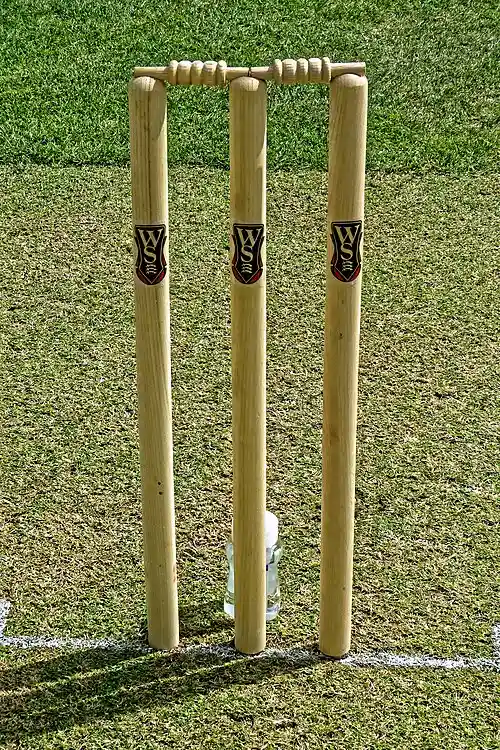
The next group of cricket terms describes the equipment and different parts of the playing area.
11. Bat
The wooden equipment used by the batter to hit the ball.
12. Ball
The hard ball delivered by the bowler and hit by the batter.
13. Wicket
One of the most confusing words in cricket because it can have different meanings.
It can refer to the physical set of stumps and bails or to the dismissal of a batter.
Example: “The bowler took five wickets.”
14. Stumps
The three vertical posts that form the main part of a wicket.
15. Bails
The two small pieces placed across the top of the stumps.
16. Pitch
The central rectangular area where the bowler delivers the ball and the batters play.
Do not confuse the pitch with the entire cricket field.
17. Crease
One of the marked lines around the wicket. Different creases are important for batting, bowling and run-out decisions.
18. Boundary
The outside edge of the playing area.
The word boundary can also describe a scoring shot worth four or six runs.
19. Pavilion
A building at a cricket ground traditionally containing facilities for players, officials and spectators.
20. Sight Screen
A large screen positioned beyond the boundary behind the bowler to help the batter see the ball clearly.
Knowing these cricket terms makes it much easier to understand commentators when they describe where something happened on the field.
Cricket Scoring Terms
Scoring can seem complicated when you first watch cricket, but the main cricket terms are straightforward.
21. Run
The basic unit of scoring.
Batters can score by running between the wickets, hitting boundaries or through other scoring situations.
22. Four
A boundary worth four runs, typically when a ball hit by the batter reaches or crosses the boundary after touching the ground.
Example: “He hit the ball through cover for four.”
23. Six
Six runs scored when a ball hit by the bat crosses the boundary without first touching the ground.
Example: “What a shot! That’s six!”
24. Score
The number of runs made by a batter or team.
25. Total
The complete number of runs accumulated by a team.
26. Partnership
The runs scored while two particular batters are batting together.
Example: “They have built a 100-run partnership.”
27. Fifty
When a batter reaches 50 runs in an innings.
It is also called a half-century.
28. Century
When a batter scores 100 runs in an innings.
Example: “She scored her first international century.”
29. Double Century
A score of 200 runs by one batter in a single innings.
30. Duck
When a batter is dismissed without scoring a run.
This is one of those cricket terms that sounds particularly strange to English learners because it has nothing to do with the animal.
Cricket Bowling Terms
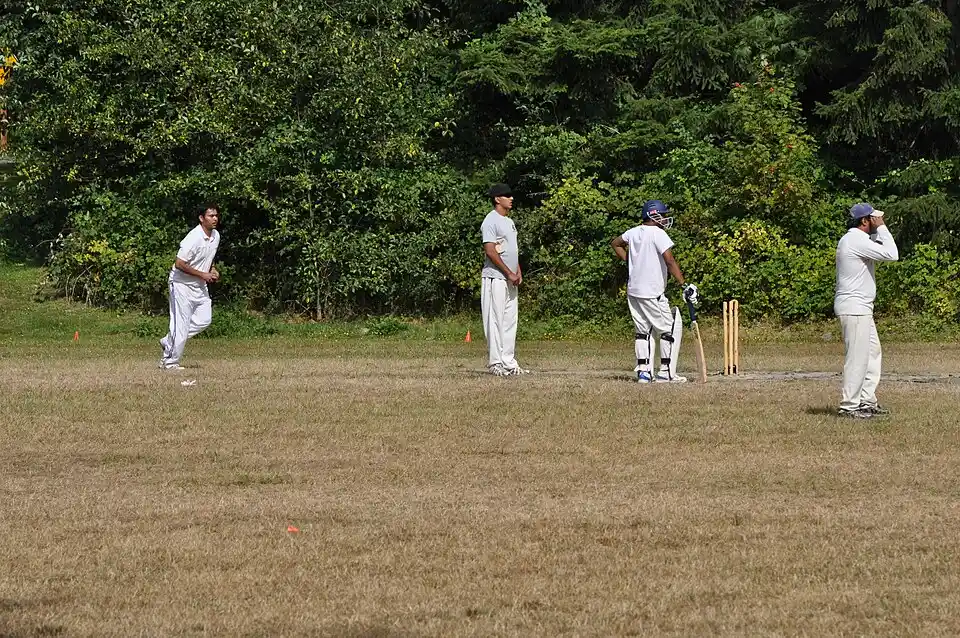
Bowling has some of the richest vocabulary in the sport. Learning these cricket terms will make professional commentary much easier to understand.
31. Delivery
One ball delivered by the bowler toward the batter.
Example: “That was an excellent delivery.”
32. Over
A set of six valid deliveries bowled from one end of the pitch.
33. Maiden Over
An over in which the bowler concedes no runs charged against them.
34. Fast Bowler
A bowler who relies heavily on speed.
35. Pace Bowler
A general term for a bowler who primarily uses pace rather than spin.
36. Spinner
A bowler who deliberately puts significant spin on the ball.
37. Off-Spin
A style of finger-spin bowling that causes the ball to turn in a particular direction after pitching.
38. Leg-Spin
A style of spin bowling usually produced using the wrist and fingers.
39. Yorker
A delivery that pitches very close to the batter’s feet or popping crease.
A good yorker can be extremely difficult to hit.
40. Bouncer
A short-pitched delivery designed to rise sharply toward the batter.
41. Full Toss
A delivery that reaches the batter without bouncing on the pitch first.
42. Good Length
An area of the pitch where the ball lands at a distance that can make it difficult for the batter to decide whether to play forward or back.
43. Short Ball
A delivery pitched relatively far from the batter so that it rises higher after bouncing.
44. Swing
Movement of the ball through the air.
45. Seam
Movement off the pitch that can occur when the ball lands on or around its raised seam.
46. Inswinger
A delivery that swings inward toward the batter in the relevant bowler-batter matchup.
47. Outswinger
A delivery that swings away from the batter in the corresponding matchup.
48. Googly
A deceptive delivery from a leg-spinner that turns differently from the batter’s expected leg-break.
49. Slower Ball
A delivery deliberately bowled more slowly than the bowler’s normal pace to deceive the batter.
50. Hat-Trick
Three wickets taken by the same bowler with three consecutive legal deliveries.
These bowling cricket terms appear constantly during professional matches, particularly when commentators analyze how a bowler is trying to dismiss a batter.
Cricket Batting Terms
The next group of cricket terms describes batting shots, techniques and statistics.
51. Shot
An attempt by the batter to play the ball with the bat.
52. Drive
A controlled attacking shot generally played with a relatively straight bat.
53. Cover Drive
A drive directed through the cover region.
You will often hear commentators praise an elegant cover drive.
54. Straight Drive
A drive played relatively straight back past the bowler.
55. Cut
A shot generally played against a shorter ball outside the batter’s off side.
56. Pull
An attacking shot commonly played against a shorter delivery and directed toward the leg side.
57. Hook
An attacking shot against a short, high-bouncing delivery.
58. Sweep
A shot often used against spin bowling where the batter gets low and directs the ball toward the leg side.
59. Reverse Sweep
A sweep played using a reversed hand and bat position to direct the ball toward the opposite side.
60. Defensive Shot
A shot primarily intended to protect the wicket rather than aggressively score runs.
61. Edge
Contact where the ball catches the edge of the bat rather than the main face.
Example: “He edged the ball to the wicketkeeper.”
62. Inside Edge
When the ball contacts the edge of the bat closer to the batter’s body.
63. Outside Edge
When the ball catches the outer edge of the bat, often creating a catching opportunity behind the wicket.
64. Leave
When the batter deliberately chooses not to play at a delivery.
Example: “Good leave. The ball was outside off stump.”
65. Strike Rate
A statistic showing how quickly a batter scores. In common scorecards, batting strike rate is expressed as runs scored per 100 balls faced.
Once you know these batting cricket terms, match analysis becomes much easier to understand because commentators constantly discuss shot selection and technique.
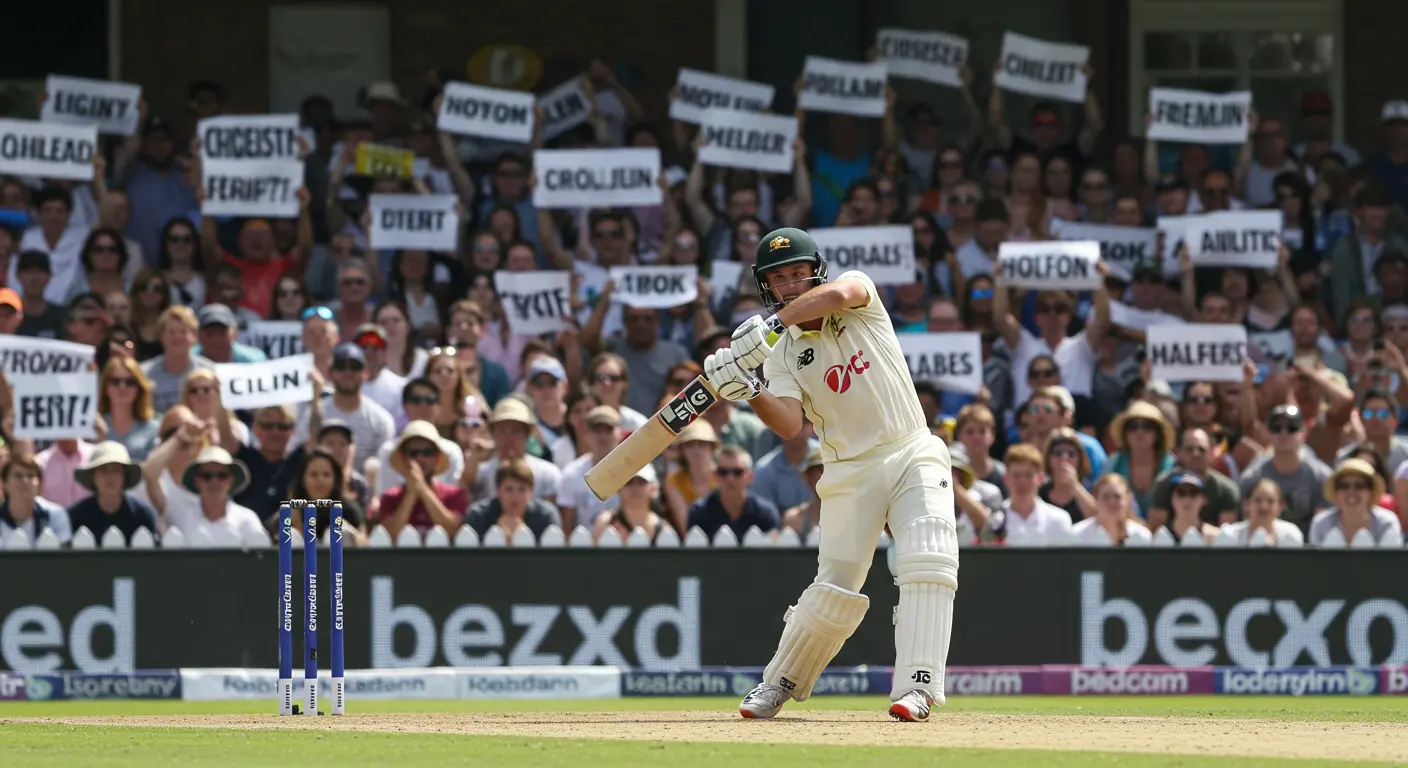
Cricket Fielding Positions and Terms
Fielding vocabulary is one of the hardest parts of cricket for beginners because the sport has many unusually named positions.
These cricket terms will help you understand where fielders are standing.
66. Slip
A close catching position behind the batter on the off side.
Teams can use several slips at the same time.
67. Gully
A catching position generally located between the slips and point.
68. Point
A fielding position roughly square of the batter on the off side.
69. Cover
A fielding region on the off side between point and mid-off.
70. Mid-Off
A position relatively straight and on the off side of the bowler.
71. Mid-On
A corresponding position on the leg side.
72. Mid-Wicket
A fielding position on the leg side between mid-on and square leg.
73. Square Leg
A fielding position roughly square of the batter on the leg side.
74. Fine Leg
A fielding position behind square on the leg side.
75. Third
A fielding position behind square on the off side, traditionally known as third man.
76. Long-On
A deep fielding position near the boundary on the leg side.
77. Long-Off
A deep fielding position near the boundary on the off side.
78. Deep
When deep appears in the name of a fielding position, it generally means the fielder is positioned farther from the batter and closer to the boundary.
79. Close-In Fielder
A fielder positioned very close to the batter to create catching opportunities.
80. Silly Point
A very close fielding position on the off side.
Yes, silly point really is part of cricket vocabulary.
Fielding cricket terms can take time to learn. Watching a match while looking at the field is much easier than trying to memorize every position from a list.
Cricket Dismissal Terms
A batter can be dismissed in several different ways. These cricket terms explain the dismissals you will hear about most often.
81. Bowled
The delivery hits and legally puts down the batter’s wicket.
Example: “He’s bowled!”
82. Caught
A fielder legally catches a ball hit by the bat before it touches the ground.
83. LBW
LBW means Leg Before Wicket.
A batter may be dismissed LBW when the ball hits their person and the requirements of the LBW Law are satisfied.
It is more complicated than simply saying “the ball hit the batter’s leg.” For exact decisions, the current MCC Laws should always be used.
84. Run Out
A dismissal that can occur when a batter is out of their ground and the wicket is legally put down, subject to the conditions of the relevant Law.
85. Stumped
A dismissal generally involving the wicketkeeper putting down the wicket when the striker is out of their ground and not attempting a run, provided the conditions of the Stumped Law are satisfied.
86. Hit Wicket
A dismissal that occurs when the striker puts down their own wicket in circumstances covered by the Hit Wicket Law.
87. Appeal
Players asking the umpire to make a decision about whether a batter is out.
The famous cricket call is:
“How’s that?”
In fast speech, it often sounds like:
“Howzat?”
88. Not Out
The umpire’s decision that the batter has not been dismissed.
89. Wicket
In scoring and commentary, wicket can also mean the dismissal of a batter.
Example: “They lost three wickets in the first ten overs.”
90. Five-Wicket Haul
When a bowler takes five wickets in one innings.
You may also hear fans and commentators call this a five-for.
These dismissal cricket terms are especially important because taking wickets is one of the central objectives of the fielding team.
Cricket Rules and Match Terms
The final ten cricket terms explain common rules and match situations.
91. No-Ball
An illegal delivery called by the umpire for one of the reasons specified in the Laws or applicable playing conditions.
A no-ball adds an extra to the batting team’s score and may have additional consequences depending on the format.
92. Wide
A delivery called wide when it passes sufficiently far from the striker to meet the relevant rule criteria.
A wide adds an extra run to the batting team’s score.
93. Extra
A run that is not credited to the batter.
Types of extras include wides, no-balls, byes and leg byes.
94. Bye
Runs that can be scored when a legal ball passes the striker without touching the bat or person, subject to the Laws.
95. Leg Bye
Runs that can be scored after a legal delivery touches the striker’s person when the conditions of the relevant Law are met.
96. Free Hit
A special delivery awarded after certain no-balls under applicable limited-overs playing conditions. The ways in which the striker can be dismissed from a free hit are restricted.
97. Powerplay
A period of limited-overs cricket in which particular fielding restrictions apply.
Exact powerplay rules depend on the format and competition.
98. DRS
DRS means Decision Review System.
It is a technology-assisted process used in international cricket to review certain umpiring decisions under ICC playing conditions.
99. Run Rate
The average number of runs a team scores per over.
Example: “Their current run rate is six runs per over.”
100. Required Run Rate
The average number of runs per over a chasing team needs from the remaining overs to reach its target.
Example: “The required run rate has increased to ten per over.”
For exact rule interpretations, check the current MCC Laws of Cricket. International cricket also has format-specific ICC Playing Conditions.
Test, ODI and T20 Cricket
You will also hear cricket terms describing different formats of the game.
Test cricket is the longest international format. A Test match can last up to five days.
ODI means One Day International. Each team normally has a maximum innings of 50 overs.
T20 means Twenty20. Each team normally has a maximum innings of 20 overs.
The fundamental vocabulary remains similar across the formats, but certain expressions become more common depending on the type of match.
For example, powerplay, required run rate, death overs and free hit are especially common when discussing limited-overs cricket.
Common Cricket Slang
Official terminology is only one part of the language.
Players, commentators and fans also use informal cricket terms and slang.
Golden duck — being dismissed from the first ball you face without scoring.
Tailender — a player batting near the bottom of the batting order, traditionally a specialist bowler rather than a strong batter.
Nightwatcher — a lower-order batter sent in near the end of a day’s play to protect a more accomplished batter from having to bat in difficult conditions.
Sitter — an apparently easy catch.
Jaffa — informal praise for an exceptionally good delivery.
Pie — slang for a poor delivery that is relatively easy to hit.
Nervous nineties — the period when a batter is approaching 100 runs and may feel additional pressure about reaching a century.
Death overs — the final overs of an innings in limited-overs cricket.
Pinch hitter — a batter sent in with the intention of scoring aggressively.
All-rounder — a player capable of making significant contributions with both batting and bowling.
You are much more likely to hear words such as Jaffa, sitter and pie from commentators or fans than to find them in formal Laws.
Cricket Phrases Used in Everyday English
Some cricket terms have moved beyond sport and become expressions used in everyday English.
“On a sticky wicket”
Meaning: to be in a difficult situation.
Example: “We’re on a sticky wicket with this project because the deadline has changed.”
“Bowled over”
Meaning: extremely impressed or surprised.
Example: “I was bowled over by their presentation.”
“Play a straight bat”
Meaning: to deal with something carefully, honestly or defensively.
Example: “She played a straight bat when the interviewer asked about the problem.”
“Hit someone for six”
In British English, this can mean to shock or strongly affect someone.
Example: “The sudden announcement really hit him for six.”
“It’s not cricket”
A traditional British expression meaning something is unfair or unacceptable.
These expressions are useful because they show how sports vocabulary can become part of normal conversation.
Cricket Vocabulary for English Learners
The best way to learn cricket terms is not to memorize all 100 definitions at once.
Start with ten:
batter → bowler → wicket → ball → run → over → innings → four → six → catch
Then connect them in a sequence.
For example:
“The bowler delivered the ball.”
“The batter played a cover drive.”
“The ball reached the boundary.”
“Four runs.”
Or:
“The bowler delivered an outswinger.”
“The batter got an outside edge.”
“The fielder at slip caught it.”
“Wicket!”
Complete sentences help you connect vocabulary with grammar and real actions.
Instead of memorizing:
yorker = ball near feet
try:
“The bowler delivered a perfect yorker.”
Instead of memorizing:
century = 100 runs
say:
“She scored her first century.”
This is a much more natural way to build sports English.
Learn English Through Different Sports
Once you understand these cricket terms, compare them with vocabulary from other sports.
Our Volleyball Terms guide explains words such as spike, dig, block, setter and libero.
Our Pickleball Terms guide covers dink, kitchen, volley, third-shot drop and ATP.
If you enjoy racket sports, our Tennis Vocabulary guide explains ace, deuce, break point, volley and tiebreak.
For American sports English, our Baseball Vocabulary guide covers pitcher, strikeout, home run, bullpen and grand slam.
You can also learn the language of the world’s most popular football competitions in our Football Vocabulary guide.
And if you enjoy another sport with a strong connection to English-speaking countries, our Rugby Vocabulary guide explains terms such as scrum, ruck, lineout and try.
Comparing different sports is useful because some words appear in several games while others are completely unique.
How to Practice Cricket Terms
Choose a short cricket highlight with English commentary.
Watch it once without stopping.
Then watch it again and listen for five cricket terms from this article.
For example:
bowler
wicket
boundary
over
six
Next, describe what happened using simple English:
“The bowler delivered a short ball.”
“The batter played a pull shot.”
“The ball went over the boundary.”
“Six runs.”
Then try another example:
“The bowler delivered the ball.”
“The batter got an outside edge.”
“The wicketkeeper caught it.”
“The batter was out.”
Finally, watch another clip and try to describe the action without looking at this guide.
You can also practise with our English phrases for watching sports online, which covers commentary, fan reactions and common sports expressions.
FAQs About Cricket Terms
What are the most important cricket terms for beginners?
The most important cricket terms for beginners include batter, bowler, wicket, run, over, innings, boundary, four, six, catch and umpire.
Learning these words first will make basic cricket commentary much easier to understand.
What is a wicket in cricket?
Wicket can have different meanings.
It can refer to the physical stumps and bails, and it can also refer to the dismissal of a batter.
For example:
“The bowler hit the wicket.”
and:
“The bowler took three wickets.”
Context tells you which meaning is intended.
What is an over in cricket?
An over consists of six valid deliveries.
Wides and no-balls do not count as one of those six valid deliveries.
What does LBW mean in cricket?
LBW means Leg Before Wicket.
It is a method of dismissal governed by several conditions. It is more complicated than simply being hit on the leg, so use the current MCC Laws when you need to understand an exact LBW decision.
What is a duck in cricket?
A duck means a batter has been dismissed without scoring.
A golden duck means the batter was dismissed from the first ball they faced without scoring.
What is a yorker in cricket?
A yorker is a delivery that pitches very close to the batter’s feet or popping crease.
A well-executed yorker is difficult to attack and is especially useful near the end of a limited-overs innings.
What is the difference between a four and a six?
A four is normally scored when a ball hit by the batter reaches or crosses the boundary after touching the ground.
A six is scored when a ball hit by the bat crosses the boundary without first touching the ground.
What does DRS mean in cricket?
DRS means Decision Review System.
It is a technology-assisted review process used in international cricket for certain umpiring decisions according to ICC playing conditions.
What is the difference between a batter and a bowler?
The batter tries to score runs and protect their wicket.
The bowler delivers the ball and tries to dismiss the batter while restricting runs.
What does century mean in cricket?
A century means an individual batter has scored 100 runs in an innings.
A score of 50 is commonly called a fifty or half-century.
Why are there so many cricket terms?
Cricket has a long history and includes many different shots, deliveries, dismissals, fielding positions, tactics and match formats.
That has created a large amount of specialized vocabulary.
For English learners, it can seem difficult initially, but the same cricket terms repeat frequently during commentary.
Final Thoughts on Cricket Terms
You do not need to learn every expression before watching your next match.
Start with the cricket terms you will hear constantly:
batter, bowler, wicket, run, over, innings, four, six and boundary.
Then add batting and bowling vocabulary:
drive, pull, yorker, bouncer, spinner, swing and edge.
After that, start learning fielding positions, dismissals, tactics and slang.
The important part is connecting the English with the action.
Watch the bowler.
Listen to the commentator.
See the batter hit a boundary.
Hear the word four.
See a fielder take a catch.
Hear the word wicket.
The more often you connect the language with what you see, the easier these cricket terms become to understand and remember.
Eventually, they stop feeling like vocabulary you are studying.
They become English you naturally understand when you watch the game.
One thought on “Cricket Terms: 100 Cricket Words and Phrases Explained”
Pingback: Guide to Basketball Vocabulary: The Language of the Court