
 English
 Arabic
 Chinese (Simplified)
 Dutch
Dutch French
 German
 Italian
 Portuguese
 Russian
 Spanish
The first week is always easy. You’re excited, you bought the gear, you watched a few videos, you’re telling friends about the new thing you’re doing. Then comes week three, when the novelty has worn off and the actual grind starts, and suddenly finding thirty minutes a day feels impossible.
Almost everyone who tries to learn something new quits around this point. Not because they lack discipline, and not because the skill is too hard. They quit because nobody ever taught them what consistency actually requires, which has very little to do with motivation and almost everything to do with designing your life so that quitting is harder than showing up.
Motivation is a terrible foundation
The single biggest mistake people make with new skills is assuming that because they started strong, the same energy will carry them through. It won’t. Motivation is a feeling, and feelings are weather. They change every few hours.
If you’ve set up a practice routine that requires you to feel inspired to follow through, you’ve already lost. By week two or three, the novelty fades, and the old pull of your comfortable routines comes back hard. Whatever you were excited about will start feeling like a chore.
The people who actually build skills over months and years aren’t more motivated than you. They’ve just built systems that don’t require motivation to function. That’s the real unlock.
Shrink the session until you can’t say no
The most underrated trick in skill-building is making your minimum session so small it feels embarrassing to skip. Not thirty minutes. Not an hour. Five minutes. Ten at most.
The point isn’t that five minutes is enough to make real progress on a given day. The point is that it’s enough to keep the habit alive. And once you’ve sat down to do five minutes, you usually do more anyway. But on the days you don’t feel like it, at all, five minutes is doable, and five minutes keeps the chain going.
Streaks matter more than volume, especially in the first few months. The brain is building the identity layer (“I’m the kind of person who does this”) at the same time it’s building the skill itself. Break the streak and the identity wobbles. Keep it going, even with tiny sessions, and it hardens into something automatic.
How Learning a Second Language Improves Career Opportunities
Tie it to something you already do
Willpower is a limited resource. Decisions burn it. The more you force yourself to decide, every single day, when you’ll practice and for how long, the faster you’ll run out of mental energy to actually do it.
The fix is almost comically simple. Attach your new practice to something you already do without thinking. After morning coffee, you practice for fifteen minutes. Before dinner, you play the piano for ten. The second you park your car at the gym, you head to the range instead of the treadmill. The existing habit becomes the trigger, and you stop having to decide.
This is why people who practice at random times throughout their week tend to fall off, while people who practice at the same time every day, even for shorter sessions, tend to stick.
Structured environments beat willpower
Here’s something nobody likes hearing: if you’ve tried three times to learn something on your own and quit each time, the issue probably isn’t you. It’s that learning alone, in an unstructured way, is genuinely harder than learning in an environment built for it.
Gyms work for fitness because they change the context. You go somewhere specifically designed for the activity, with other people doing the same thing, and your brain stops fighting you. The same principle applies to pretty much every skill.
If you’re trying to pick up a craft with real technique involved, signing up for something like professional bartending school training will get you further in six weeks than six months of flipping bottles in your kitchen. Not because the knowledge is secret, but because the environment does half the work of keeping you consistent. You show up because there’s a class. You practice because there’s an instructor watching. Accountability is baked into the structure.
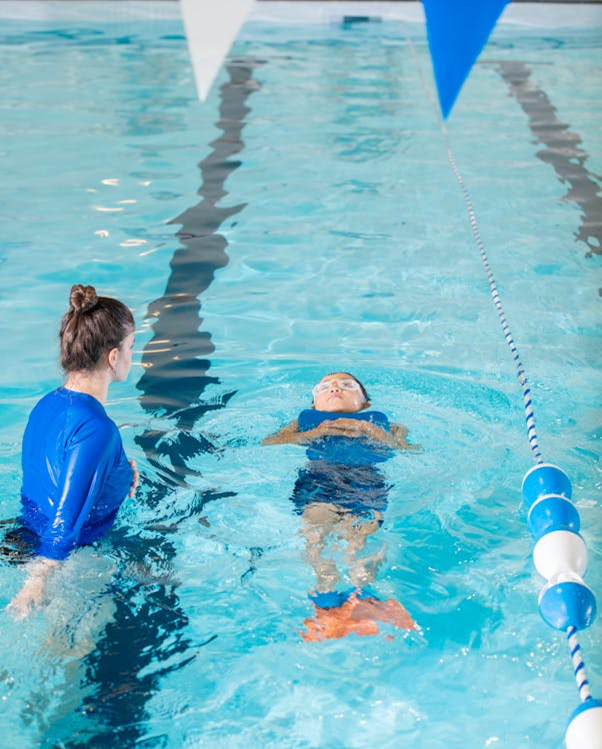
The same logic applies to almost any physical skill. Kids who learn to swim at home from a parent rarely become confident swimmers. Kids who go to a program like Nemo Swim school twice a week progress almost invisibly between sessions, because consistency is handled by the schedule rather than by the kid’s desire to practice. Adults benefit from exactly the same structure. We just pretend we’re above it.
Track something, but keep it stupid simple
People who track their practice tend to stick with it longer than people who don’t. But most trackers fail because they’re too elaborate. A color-coded spreadsheet with metrics for every sub-skill is a great way to spend a weekend setting up a system you’ll abandon by Tuesday.
What actually works: a wall calendar and a marker. Every day you practice, you mark the day. That’s it. The goal becomes not breaking the chain, which is a surprisingly powerful motivator once a few weeks have stacked up. You’d be amazed how many people keep going at month three purely because they don’t want to ruin a streak they can see.
Some people prefer an app. Fine. Just keep whatever you use so minimal that checking it takes five seconds.
Plan for the bad days, because they’re coming
Everyone pictures consistency as showing up every day feeling great. In reality, consistency is mostly about what you do on the days you don’t feel great. The tired days. The travel days. The week you got sick. The stretch where something at work is chewing up all your attention.
The trick is to decide in advance what the “minimum viable” version of your practice looks like on those days. Not skipping. Just scaling. If your normal session is forty-five minutes at the tennis court, your bad-day version might be ten minutes of grip and swing drills in your living room. If your normal session is an hour at the piano, your bad-day version might be running scales for five minutes before bed.
What you’re really doing is protecting the streak while removing the pressure. Skipping entirely is what breaks people. Doing something, even something tiny, keeps the wheel turning.
Don’t chase novelty
A quiet reason people lose consistency: they keep starting new things. Every new skill has that first-week dopamine rush, and it’s easy to mistake that excitement for actual interest. Three weeks in, when the grind starts, the brain starts looking for the next shiny thing to start instead of finishing the current one.
If you notice yourself browsing for a new hobby six weeks after starting the last one, that’s usually a warning sign, not inspiration. The deep satisfaction of actually getting good at something only kicks in somewhere around the six-month mark. Most people never make it that far, because they bail during the boring middle.
Commit to one thing at a time. Give it at least ninety days. Then decide.
How to Think Clearly in English During Meetings (No Translating)
One final thing
Consistency sounds like a character trait but it’s really a design problem. People who seem naturally disciplined aren’t grinding through willpower every day. They’ve just built lives where the practice happens almost on its own, with small sessions, fixed triggers, structured environments, and enough tracking to see progress.
If you’re willing to be strategic about that setup, instead of romantic about motivation, you’ll outlast almost everyone who started the same thing you did. And that’s really all consistency is. Outlasting.
2 thoughts on “How to Stay Consistent When Learning Something New”
Pingback: How CPR And First Aid Courses Empower Individuals To Help Others? - Learn Laugh Speak
Pingback: Tavernier Scuba Diving: Explore Vibrant Reefs and Wrecks in Tavernier, Florida - Learn Laugh Speak