
 English
 Arabic
 Chinese (Simplified)
 Dutch
Dutch French
 German
 Italian
 Portuguese
 Russian
 Spanish
Future skills for adults are not only about technology.
That is the mistake people often make.
When people hear “future skills,” they usually think about AI, coding, automation, or digital tools.
Those skills matter.
But the future of work will not only reward people who know how to use new technology.
It will reward adults who can keep learning, communicate clearly, adapt quickly, and use what they know in real situations.
That is a different kind of skill.
And for many adults, it is the difference between feeling stuck and feeling ready for what comes next.
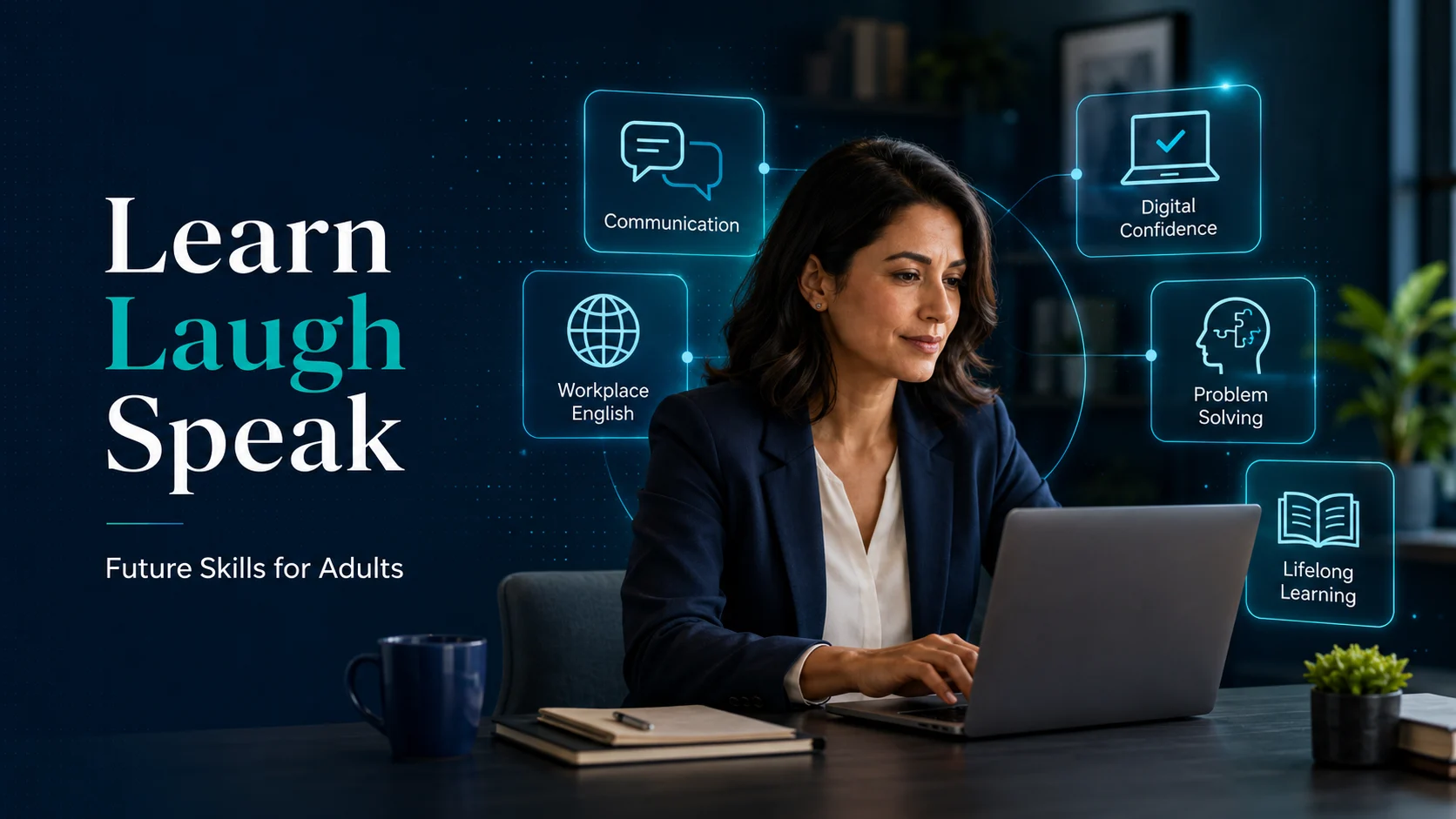
The Skills Adults Learned Years Ago Are Not Always Enough Now
Many adults were educated for a different working world.
A world where skills changed more slowly.
A world where one qualification could support one career for many years.
A world where communication was often local, face-to-face, and predictable.
That world has changed.
Now, adults may need to join video meetings, use online platforms, understand workplace tools, communicate with international teams, and learn new systems quickly.
This does not mean old skills are useless.
Experience still matters.
But experience needs to be updated.
The workplace is not asking adults to forget what they know.
It is asking them to build on it.
That is why future skills for adults should not feel like starting again.
They should feel like upgrading what is already there.
The Workplace Is Changing Faster Than Most Adults Were Prepared For
Work is changing quickly, and not only because of AI.
Roles are becoming more flexible.
Teams are more digital.
Communication is faster.
Training is often online.
Many workers need to solve problems without waiting for perfect instructions.
The World Economic Forum’s Future of Jobs Report 2025 looks at how employers expect jobs and skills to change from 2025 to 2030, based on responses from more than 1,000 employers representing over 14 million workers.
That kind of change affects adults directly.
It means learning cannot be something people finish once.
It becomes something they return to again and again.
Not because they failed before.
Because the workplace keeps moving.
Future Skills for Adults Are Not Only Digital
Digital skills are important.
Adults need to feel comfortable using tools, platforms, dashboards, apps, and online learning systems.
But digital skill alone is not enough.
A person may know how to use a platform but still struggle to explain a problem clearly.
They may understand a tool but avoid speaking in a meeting.
They may complete a task but feel unsure when asked to write a professional message in English.
So the future skill is not only:
Can you use the tool?
It is:
Can you use the tool, understand the task, communicate clearly, and keep improving?
That is why future skills need to combine practical, digital and human skills with support for adult learning!
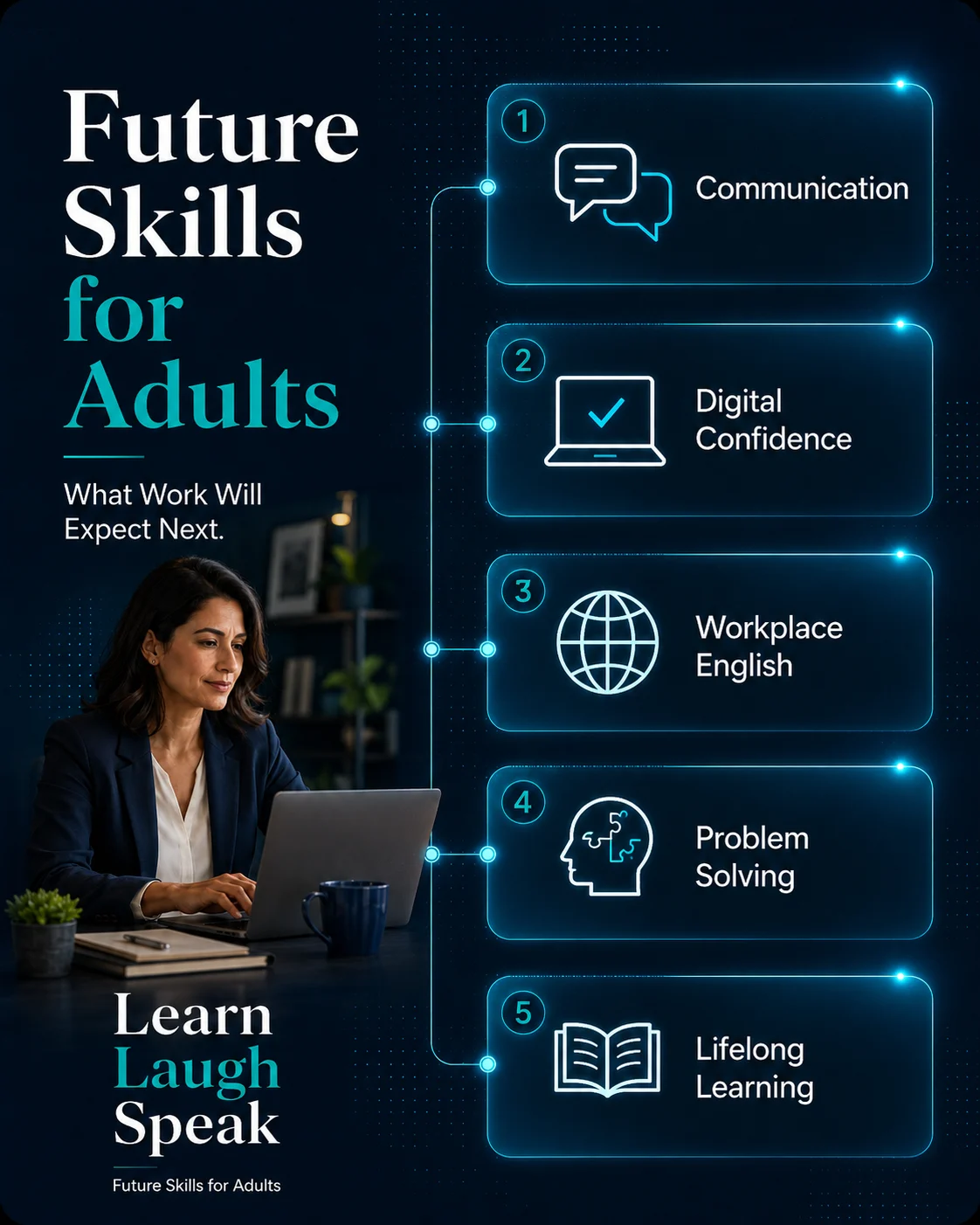
The Six Future Skills Adults Need Most Now
| Future Skill | What It Looks Like at Work | Why It Matters |
|---|---|---|
| Communication | Explaining ideas clearly in meetings, emails, and messages | Helps adults be understood and trusted |
| Digital confidence | Learning new tools without panic | Keeps adults adaptable when systems change |
| Workplace English | Reading, writing, speaking, and listening professionally | Opens more international opportunities |
| Problem-solving | Making decisions when instructions are incomplete | Builds independence and confidence |
| Feedback skills | Using corrections to improve faster | Prevents repeated mistakes from becoming habits |
| Lifelong learning | Updating skills regularly | Keeps adults ready for change |
These skills are not separate in real life.
They work together.
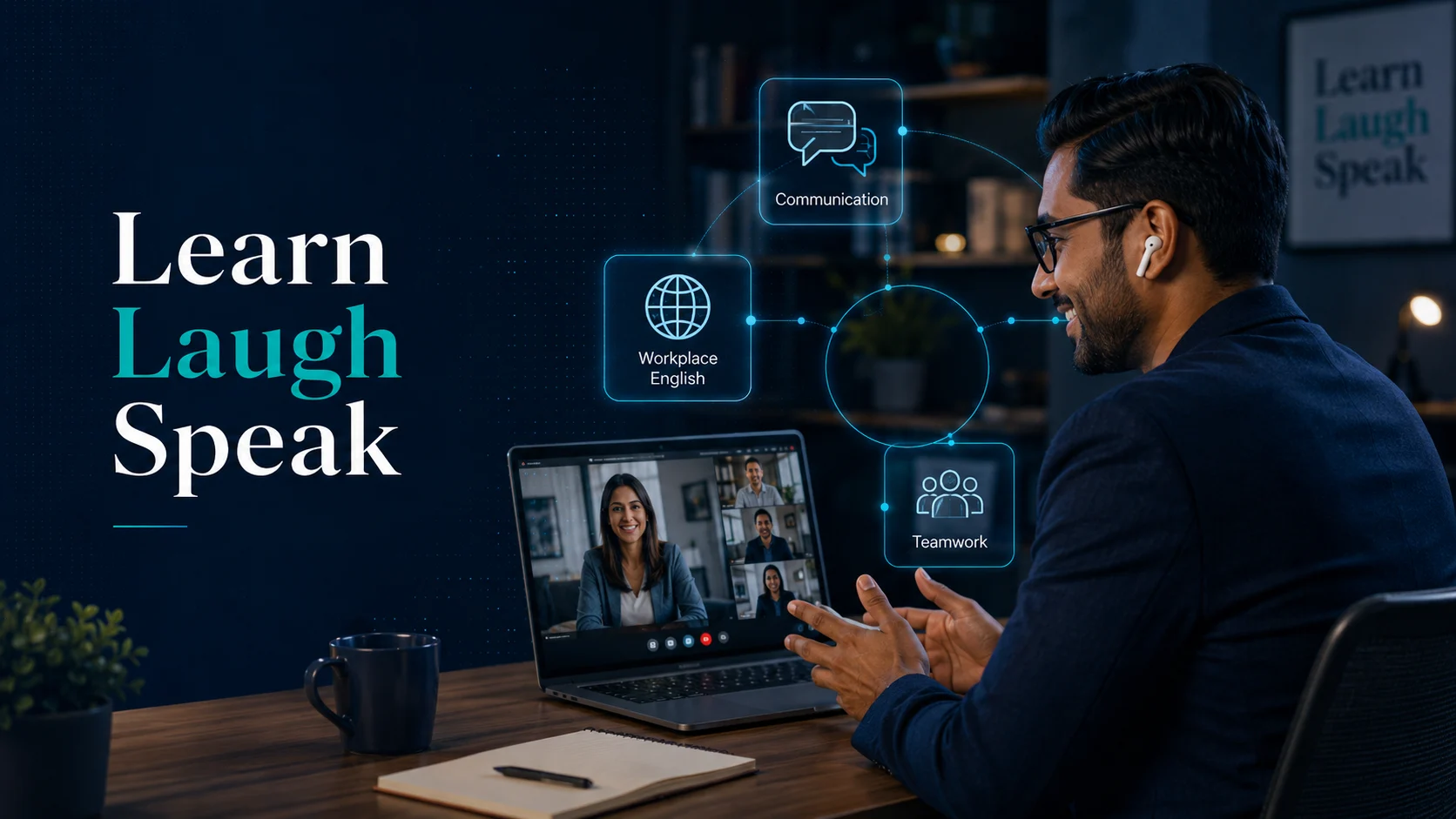
For example, an adult may join a video meeting in English and need to listen, respond, ask a question, understand the platform, and explain an idea clearly.
That is not just English.
That is not just technology.
That is a future workplace situation.
Why English Is Becoming a Future Workplace Skill
English is often treated like a school subject.
For adults, it is more practical than that.
English can affect job opportunities, workplace confidence, international communication, online training, digital tools, customer service, and professional growth.
Many workplace systems use English.
Many companies work across borders.
Many online courses, apps, guides, and support documents are written in English.
So English is not only about grammar.
It is about access.
Access to information.
Access to better communication.
Access to more professional opportunities.
Access to confidence in situations where English is expected.
For many adults, English is one of the most useful future skills for adults because it connects directly to work, learning, and growth.
Why Learning How to Learn Matters More Than Memorizing
In the past, memorizing information could take a person a long way.
Now, information is easy to find.
The harder part is knowing what matters, how to use it, and how to keep improving when something changes.
That is why adults need learning skills, not only subject knowledge.
They need to know how to:
- notice gaps
- ask better questions
- use feedback
- practise consistently
- adapt to new tools
- apply knowledge in real situations
OECD’s 2025 adult learning report highlights how adult learning systems need to improve access and effectiveness as labour markets change, while also looking at participation, delivery, and barriers for adult learners.
That matters because adults do not need endless content.
They need learning that helps them move forward from where they are now.
How Adults Can Build Future Skills Without Starting Again
Adults do not need to learn everything at once.
That is overwhelming.
A better approach is to ask:
What skill helps me next?
Maybe the answer is clearer writing.
Maybe it is confidence in meetings.
Maybe it is understanding English training materials.
Maybe it is learning how to use feedback.
Maybe it is building enough digital confidence to try new tools without feeling lost.
This makes learning more realistic.
Instead of trying to become “future ready” in one big step, adults can build one useful skill at a time.
That is how progress becomes manageable.
Why Feedback Turns Future Skills Into Real Progress
Future skills cannot be built only by reading about them.
Adults need to practise.
Then they need feedback.
Then they also need motivation.
Feedback shows what is working and what needs to change.
This is especially important in English learning.
A student may write a sentence that is understandable but not natural.
They may speak clearly enough to be understood but still need more professional structure.
They may know the right words but use them in the wrong context.
Without feedback, those small problems can stay hidden.
With feedback, they become clear next steps.
That is how skill grows.
Not from guessing.
From trying, correcting, and trying again.
How Learn Laugh Speak Supports Future-Ready English
At Learn Laugh Speak, English is not treated as a random school subject.
It is treated as a practical skill adults need for real situations.
Students begin with a level assessment so they start from the correct place.
That matters because adults arrive with different histories.
Some have prior learning experience.
Some have hidden gaps.
Some can read English but struggle to speak.
Some need workplace writing.
Some need confidence in meetings.
From there, each student follows a personalized learning path based on their level, progress, mistakes, and needs.
This supports future skills for adults because students are not simply completing lessons.
They are building usable English.
English for communication.
English for work.
English for digital learning.
English for confidence.
English for professional growth.
The goal is to help adults learn what they need, when they need it, and move forward with a skill they can actually use.
Why Confidence Belongs in the Future Skills Conversation
Confidence is often left out of future skills discussions.
But it should not be.
Adults may have knowledge and still hesitate.
They may understand the task but avoid speaking.
They may have experience but not know how to explain it clearly in English.
They may know they need to learn, but feel embarrassed about starting again.
Confidence affects action.
And action affects progress.
That is why future skills need to be taught in a way that builds confidence, not just knowledge.
Small wins matter.
Correct starting points matter.
Clear feedback matters.
Visible progress matters.
When adults see progress, they are more likely to keep learning.
What Modern Education Should Remember
The future of learning is not only about newer tools.
It is about better learning design.
Adults need learning that is:
- practical
- flexible
- personalized
- connected to work
- supported by feedback
- clear about progress
- respectful of prior experience
The OECD Skills Outlook 2025 focuses on building 21st-century skills and highlights the importance of broadening access to high-quality learning into adulthood, including key skills such as literacy, numeracy, adaptive problem solving, and social and emotional skills.
UNESCO’s lifelong learning work also supports the idea that learning should continue across life and across different settings, not only inside formal education.
That is the real shift.
Learning is no longer something adults leave behind.
It is something they keep using to stay ready.
Final Thought on Future Skills for Adults
Future skills for adults are not only about preparing for technology.
They are about preparing for change.
Adults need communication, digital confidence, workplace English, problem-solving, feedback skills, and the ability to keep learning.
The future of work will continue to change.
But adults do not need to learn everything at once.
They need the right next skill.
They need learning that fits real life.
They need support that helps them move forward with confidence.
That is why future skills for adults should be practical, personal, and connected to real opportunities.
One thought on “Future Skills for Adults: What Work Will Expect From You Next”
Pingback: How Adults Learn Best: Why Education Needs a Different Approach