English
 Arabic
 Chinese (Simplified)
 Dutch
Dutch French
 German
 Italian
 Portuguese
 Russian
 Spanish
We’ve all had nights where sleep just doesn’t come. You lie in bed, hoping to drift off, but your mind keeps running – replaying conversations, planning tomorrow, or worrying about things you can’t control at 2 a.m.
The worst part? The more you try to force sleep, the more awake you feel.
Instead of turning it into a frustrating experience, you can use this time in a more relaxed and intentional way. The goal isn’t to “stay productive,” but to gently guide your mind toward calmness so sleep can arrive naturally.
Why It’s So Hard to Fall Asleep Sometimes
Falling asleep isn’t just about being physically tired – it’s about mental stillness. If your brain is overstimulated, stressed, or stuck in a loop of thoughts, your body won’t fully relax.
Modern habits also play a role. Irregular sleep schedules, late-night screen exposure, and constant mental engagement make it harder for your brain to switch off. Even small stressors can feel amplified at night because there are fewer distractions.

Avoiding the Usual Trap: Why Scrolling Makes It Worse
When sleep doesn’t come, most people instinctively reach for their phones. It feels harmless – just a few minutes of scrolling – but it often leads to an hour or more of stimulation.
The issue isn’t just the content, but also the light emitted by screens. According to Harvard Health, exposure to blue light at night can suppress melatonin, the hormone that regulates sleep cycles.
Instead of helping you relax, scrolling keeps your brain active and delays the natural process of falling asleep.
Listen to Calming Music or Relaxing Sounds
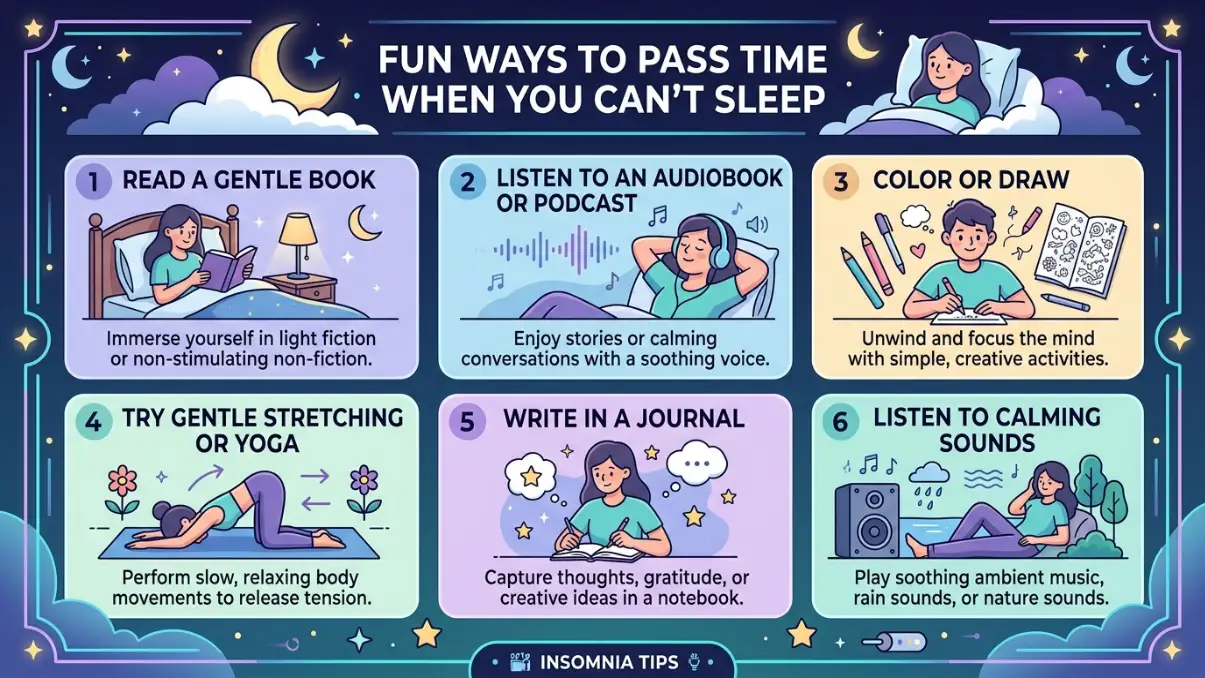
Sound has a powerful effect on your mental state. Soft music, rain sounds, or ambient noise can help slow your thoughts and create a peaceful environment.
The key is choosing something predictable and gentle. Your brain starts to associate these sounds with relaxation, making it easier to transition into sleep over time.
Try Light Reading to Ease Your Mind
Reading is one of the simplest ways to redirect your thoughts. When you focus on a calm, low-stimulation piece of content, your mind gradually shifts away from stress and into a more relaxed state.
The type of reading matters. Avoid intense thrillers or anything emotionally charged. Instead, go for something light – short articles, familiar books, or slow-paced storytelling.
Practice Simple Breathing or Mindfulness Exercises
Sometimes your body is ready for sleep, but your mind refuses to cooperate. In these moments, controlled breathing can act as a reset button.
A simple technique like the following can make a noticeable difference:
- Inhale slowly for 4 seconds
- Hold your breath for 4 seconds
- Exhale gently for 6 seconds
Repeating this cycle a few times helps calm your nervous system and reduces mental noise.
Adult Learning Support: Why Adults Need Guidance, Not Just Lessons
Write Down Your Thoughts to Clear Your Mind
Nighttime often amplifies thoughts because there’s nothing else competing for your attention. Writing them down can help break that cycle.
Instead of letting ideas spin endlessly in your head, putting them on paper creates a sense of closure. You’re essentially telling your brain, “This can wait until tomorrow.”
Even a few lines can make your mind feel noticeably lighter.
Do Something Creative Without Pressure
Creativity doesn’t have to be structured or goal-driven. In fact, late at night, it works best when it’s completely pressure-free.
Simple activities like doodling, sketching, or casually writing can give your mind something to focus on without overwhelming it. This gentle engagement often helps quiet intrusive thoughts.
Learning Gaps in Adults: Why Progress Slows Even When Students Work Hard
Have a Casual Conversation to Feel More Relaxed
Sometimes, what you really need isn’t silence – it’s connection. Talking to someone, even briefly, can shift your mood and make you feel less alone.
Late-night conversations tend to be more relaxed and unfiltered, which can make them surprisingly comforting. Whether it’s a quick call with a friend or exploring new ways to connect, even a short interaction can ease restlessness.
Some people also turn to options like phone chat line number, when they’re looking for a simple, low-pressure way to talk and pass time during sleepless hours. The idea isn’t to seek anything serious – it’s just about having a real conversation that helps you unwind.
Listen to Podcasts or Late-Night Audio
If silence feels uncomfortable, podcasts can be a great alternative. They provide just enough engagement to keep your mind occupied without demanding full attention.
Choose something slow-paced and easy to follow. The goal isn’t to stay alert, but to gently distract your thoughts until your body naturally starts to relax.
Organize Small Things Around You (Without Overdoing It)
If you feel physically restless, doing a small, simple task can help release that energy.
This doesn’t mean deep cleaning or starting a project. Instead, focus on light activities like:
- Arranging your bedside area
- Preparing clothes for the next day
- Tidying a small space
These actions create a subtle sense of control and calm without overstimulating your mind.
Avoid Overthinking the Clock
One of the biggest mistakes during sleepless nights is constantly checking the time. It creates pressure and anxiety, making it even harder to relax.
The more you think, “I need to sleep now,” the more your brain resists. Turning your clock away or ignoring time altogether can help remove that mental pressure.
Create a Simple Night Routine That Works for You
Consistency plays a major role in sleep quality. When your body recognizes certain patterns, it begins to associate them with rest.
A simple routine doesn’t have to be complicated. It might include dim lighting, calming sounds, or a few minutes of quiet activity. Over time, these signals help your brain understand when it’s time to wind down.
Conclusion
Not being able to sleep doesn’t have to feel like wasted time. Instead of fighting it, you can use those quiet hours to relax, reset, and reconnect with yourself in small ways.
Whether it’s listening to something soothing, reading a few pages, or having a simple conversation, these moments can help ease your mind and gently guide you back toward sleep.
Sometimes, the best way to fall asleep is to stop trying so hard – and just let it happen.