
 English
 Arabic
 Chinese (Simplified)
 Dutch
Dutch French
 German
 Italian
 Portuguese
 Russian
 Spanish
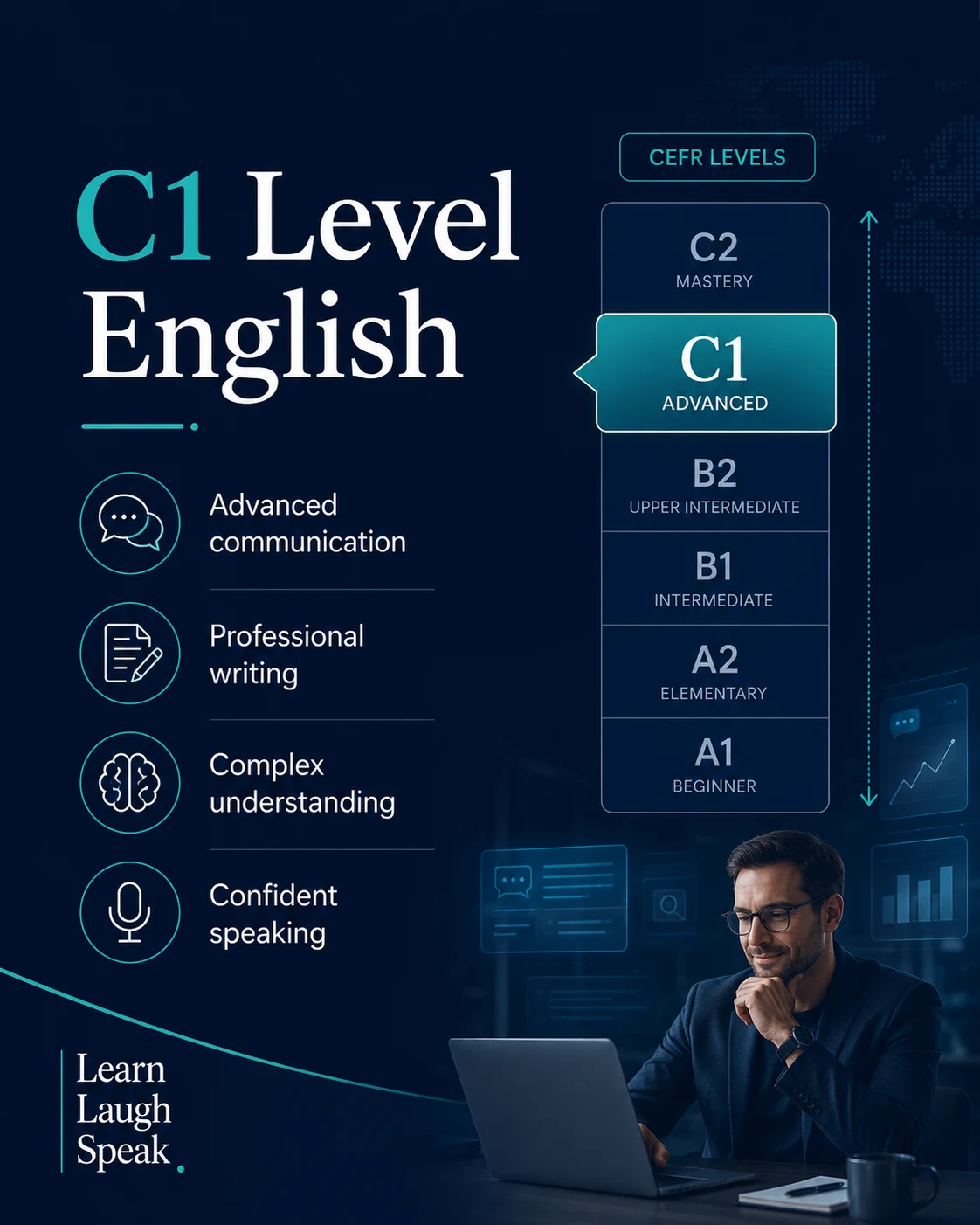
C1 level English is an advanced level of English in the CEFR system.
At this level, learners can usually understand complex texts, speak fluently in many professional situations, write clearly, and use English with confidence for work, study, travel, and everyday communication.
C1 does not mean your English is perfect.
It means you are an advanced independent user who can communicate clearly, understand detailed information, and express ideas with good control.
In this guide, we will explain what Level C1 of the English language means, how it fits into the CEFR system, what C1 learners can usually do, and how you can check your own English level.
Quick Answer: What Is C1 Level English?
C1 level English means you are an advanced English learner according to the Common European Framework of Reference for Languages, also known as CEFR.
C1 is above B2 and below C2.
At C1, learners can usually:
- speak fluently in many professional and social situations
- understand longer texts, reports, presentations, and conversations
- write clear and detailed emails, reports, essays, or explanations
- express opinions and ideas with confidence
- understand complex topics without needing constant support
A C1 learner may still make mistakes, but those mistakes usually do not stop communication.
What Is the CEFR?
CEFR stands for Common European Framework of Reference for Languages.
It was created by the Council of Europe to provide a standard way to describe language ability across different countries, schools, exams, and language programs.
Although the name includes “European,” the CEFR is now used around the world to describe language levels in English and many other languages.
The CEFR divides language ability into six main levels:
| CEFR Level | Simple Meaning |
|---|---|
| A1 | Beginner |
| A2 | Elementary |
| B1 | Intermediate |
| B2 | Upper-intermediate |
| C1 | Advanced |
| C2 | Proficient |
These levels help learners, teachers, employers, universities, and language schools understand what someone can usually do in reading, writing, speaking, and listening.
Where Does C1 Fit in the CEFR Scale?
The CEFR has three broad groups:
- A levels are basic users
- B levels are independent users
- C levels are advanced or proficient users
C1 level English belongs to the advanced group.
This means a learner at C1 can use English in many complex situations with confidence.
C1 is not the same as C2.
C2 is the highest CEFR level and shows very high control, accuracy, and flexibility in English.
C1 is still advanced, but the learner may sometimes need more time with very technical language, idioms, fast speech, or highly academic writing.
What Can You Do at C1 Level English?
A learner at C1 level English can usually use English across work, study, and daily life with strong confidence.
| Skill | What C1 Learners Can Usually Do |
|---|---|
| Speaking | Speak fluently in meetings, interviews, presentations, and conversations |
| Listening | Understand longer discussions, presentations, podcasts, and different accents |
| Reading | Understand complex articles, reports, professional documents, and detailed texts |
| Writing | Write clear emails, reports, essays, summaries, and detailed explanations |
| Vocabulary | Use a wide range of words and expressions with good control |
| Grammar | Use complex grammar with fewer mistakes |
| Communication | Explain ideas, give opinions, discuss problems, and respond naturally |
At C1, English becomes much more flexible.
You are not only answering simple questions.
You are explaining, comparing, negotiating, presenting, and discussing ideas in more detail.
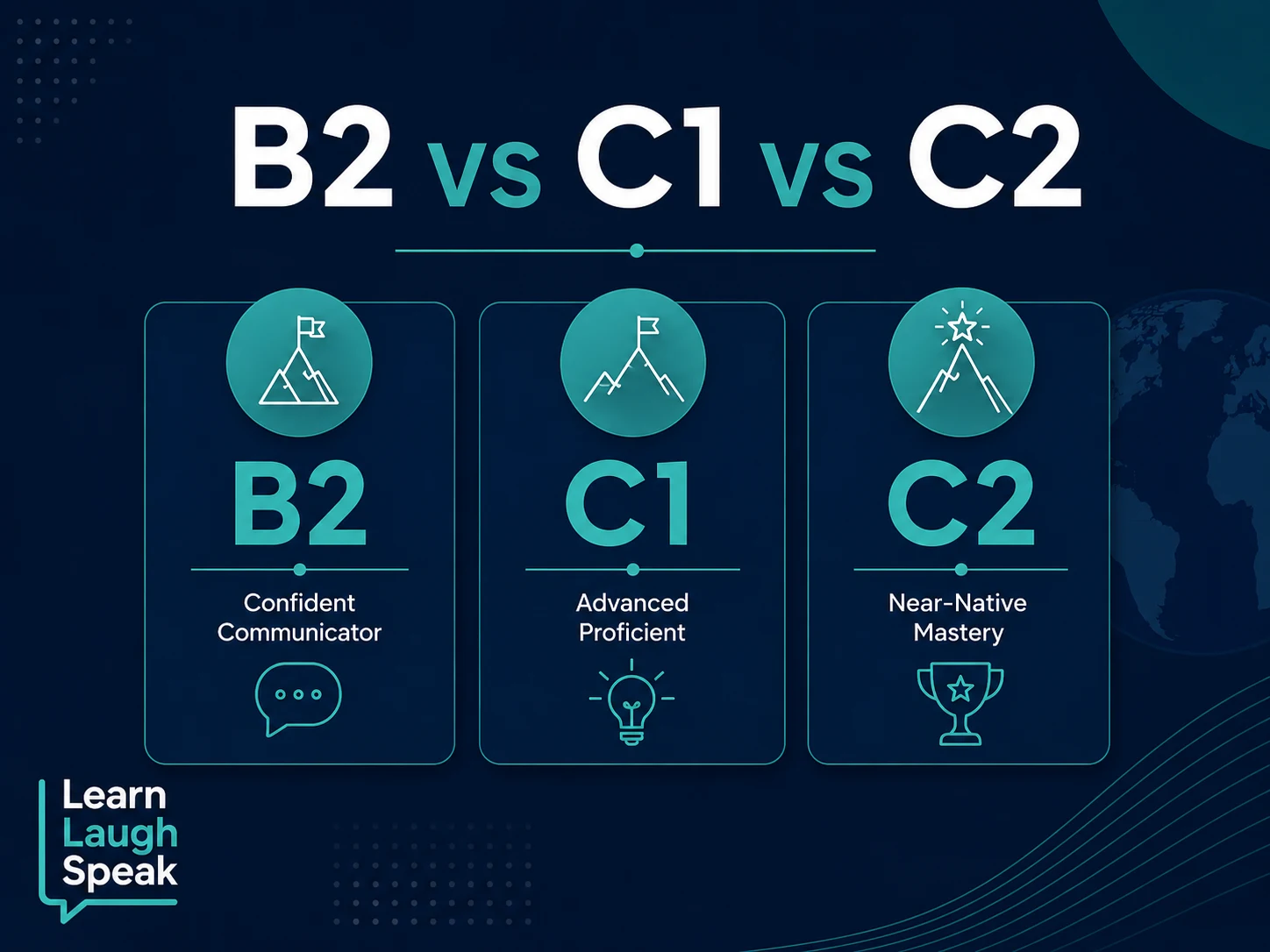
C1 Level English Compared to B2 and C2
Many learners want to know the difference between B2, C1, and C2.
This is important because all three levels show strong English ability, but they are not the same.
| Level | Simple Meaning |
|---|---|
| B2 | Upper-intermediate. You can communicate well, but may still struggle with complex topics, fast speech, or detailed writing. |
| C1 | Advanced. You can use English confidently in work, study, and detailed conversations. |
| C2 | Proficient. You can use English with very high accuracy, flexibility, and precision in almost any situation. |
A B2 learner can often communicate well.
A C1 learner can usually communicate with more confidence, detail, and control.
A C2 learner can use English at a very high level, often close to an educated native or near-native user in many situations.
C1 Level English at Work
C1 level English is very useful for professional communication.
At this level, you can usually handle many workplace situations in English, including:
- joining professional meetings
- explaining project updates
- writing detailed business emails
- preparing reports
- giving presentations
- handling client conversations
- discussing problems and solutions
- negotiating or explaining options
- understanding company documents
- responding to complex questions
For example, a C1 learner may be able to say:
“While the deadline is challenging, I believe we can complete the project on time if we prioritize the most urgent tasks first.”
This sentence shows control, structure, and professional tone.
That is the kind of communication expected from advanced English users.

How Do You Know If You Are C1?
You may be close to C1 level English if you can use English independently in many different situations.
Here are some signs:
- you can understand long articles, reports, and professional documents
- you can join meetings without needing constant translation
- you can explain opinions clearly and support them with reasons
- you can write professional emails with the right tone
- you can understand most conversations, even when they are fast
- you can speak about abstract or complex topics
- you can correct yourself when you make mistakes
- you can communicate at work without feeling blocked all the time
You may still make grammar or vocabulary mistakes.
That is normal.
The difference is that your mistakes do not usually stop people from understanding you.
Testing Students’ Proficiency Levels
To find out your CEFR level, the best and fastest way is to take a level assessment or placement test.
English language schools, institutes, online learning platforms, and official exam providers often use tests to place students at the correct level.
This is important because every learner has different experience, strengths, weaknesses, and previous knowledge.
Some learners may be strong in reading but weaker in speaking.
Others may understand grammar but struggle with listening.
A good placement test helps identify your current level so you do not waste time studying lessons that are too easy or too difficult.
Using CEFR Levels to Self-Assess
Language learners also use CEFR levels to self-assess their progress.
Self-assessment helps you understand:
- what you can already do
- what skills need more practice
- what level you are working toward
- what type of lessons are suitable for you
- how much progress you are making over time
The CEFR is useful because it gives learners a clear structure.
Instead of saying only:
“My English is good.”
You can say:
“I am around B2 and working toward C1.”
That is much clearer for teachers, employers, schools, and learners.
The Official Language Proficiency Test
If you need official proof of your English level for work, university, immigration, or professional English purposes, you may need to take an official language proficiency test.
Common English proficiency tests include:
- IELTS
- Cambridge English exams
- TOEFL
- other CEFR-aligned assessments
These tests can help confirm your English proficiency for employers, colleges, universities, or other official requirements.
It is important to understand the difference between official certification and learning placement.
For official certification, learners usually take recognized exams such as IELTS, Cambridge English, TOEFL, or another approved assessment.
For learning placement, a platform like Learn Laugh Speak can help students identify their current level and follow the right learning path from A1 to C2.
Learn Laugh Speak and C1 Level English
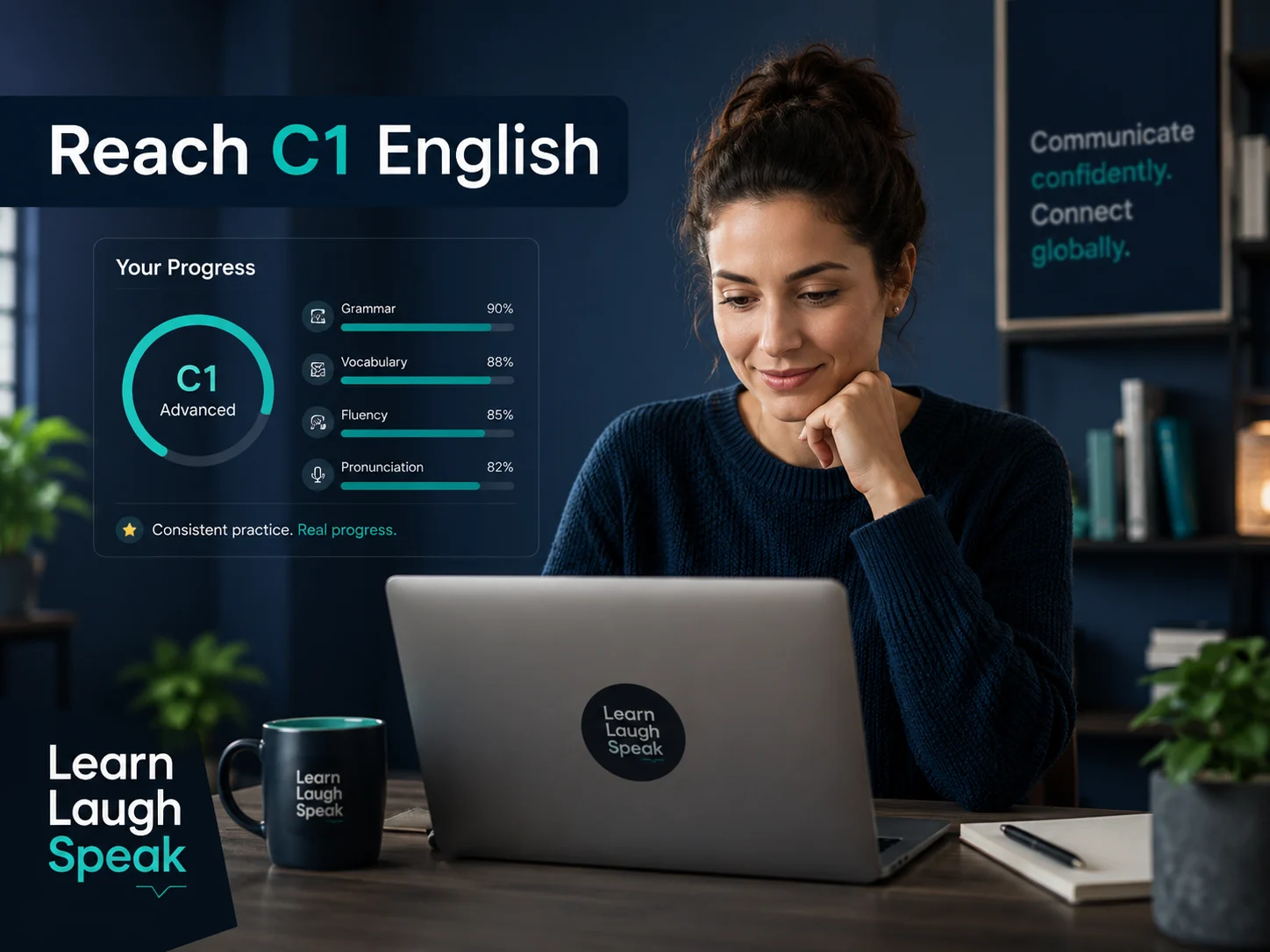
Learn Laugh Speak helps adult learners understand their English level and improve step by step.
Every student starts with a level assessment from A1 to C2.
From there, learners follow a structured learning path based on their level, mistakes, goals, and progress.
This helps students avoid guessing what to study next.
Learn Laugh Speak supports reading, writing, speaking, and listening, with structured lessons and instant corrections to help adults improve their English correctly.
For learners aiming for C1 level English, this structure is important because advanced English requires more than basic vocabulary.
You need to practise:
- professional communication
- clear writing
- accurate grammar
- listening comprehension
- speaking fluency
- workplace phrases
- advanced sentence structure
- confidence in real conversations
Final Thoughts on Level C1 of the English Language
C1 level English is an advanced level of English.
It shows that you can understand complex information, communicate clearly, write professionally, and speak with confidence in many real situations.
C1 does not mean perfect English.
It means strong, flexible, independent English.
If your goal is to reach C1, focus on structured practice, regular correction, and real communication.
The more you practise English in useful situations, the easier it becomes to move from understanding English to using it confidently.
Thank you for reading.
This was written by Bryce Purnell, founder of Learn Laugh Speak.
8 thoughts on “Level C1 Of The English Language Explained”
Fantastic piece of info. I am in love with this website.
Thank you Kellye! Glad you love it!
How I can do the test
Hi Karar! Click here https://learnlaughspeak.com/testingstudentsEnglishlevels/ put your email in and wait to go to the test.
Let get more information about the test
Hi Karar! Click here https://learnlaughspeak.com/testingstudentsEnglishlevels/ put your email in and wait to go to the test.
Pingback: How to Confirm Tasks Positively in English (Pro Tips)
Pingback: Speak with Purpose: How to Sound Clearer in English at Work