
 English
 Arabic
 Chinese (Simplified)
 Dutch
Dutch French
 German
 Italian
 Portuguese
 Russian
 Spanish
More pool owners are looking for ways to spend less time cleaning and more time actually using the pool. During summer, the same problems come back again and again: leaves after wind, bugs near the edge, sand on the floor, pollen on the surface, and sunscreen residue around the waterline.
Robotic pool cleaners are getting more attention in 2026 because they can handle much of this repeated physical work. Instead of connecting a manual vacuum or brushing every visible area by hand, owners can run a pool cleaning robot that moves through the water, collects debris in its own filter, and helps keep the pool looking better between normal maintenance days.
The category has also become more crowded. There are corded and cordless models, basic floor cleaners, smart pool cleaners with navigation, models that handle walls and waterlines, and premium robots with app control or advanced automation. That gives buyers more choice, but it also means they need to compare carefully.
How Robotic Pool Cleaners Work In Simple Terms
Motors, Brushes, Suction, and Filters
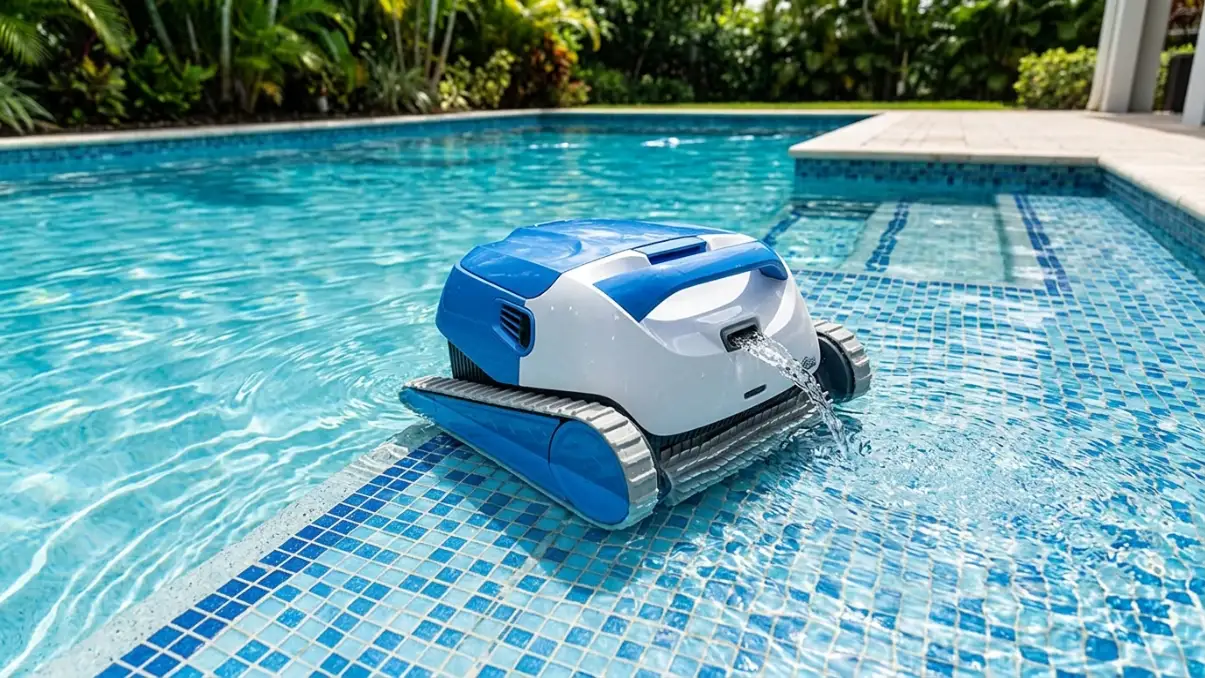
A robotic pool cleaner is easier to understand than it may seem. Most models use motors to move around the pool. Brushes loosen dirt from the floor, walls, or waterline. Suction pulls debris into the cleaner. An internal filter basket or cartridge collects leaves, bugs, sand, pollen, dust, and other small particles.
This is different from a suction-side cleaner that depends more directly on the pool’s pump and filtration system. Many robotic cleaners work independently, so they can collect debris without sending everything through the main pool filter.
That does not mean the main pool system becomes unnecessary. The pump, filter, and water chemistry still matter. The robot simply helps with the physical cleaning part, which is often the part owners find most tiring.
Corded and Cordless Models Work Differently
Corded cleaners connect to a power supply and may provide steady power for longer cleaning cycles. Cordless pool cleaners use batteries, so they are often easier to place in the pool, remove, and store. There are no hoses or cables stretched across the pool area.
Cordless convenience is helpful, but buyers should still check the details. Battery life, charging time, pool size, cleaner weight, and cleaning coverage all affect whether a cordless cleaner feels easy in real life.
The Features That Matter Most in 2026
Robotic pool cleaner technology keeps improving, but buyers should not choose only by the longest feature list. The best features are the ones that solve real pool problems.
Pool size coverage should be checked first. A cleaner that is too small for the pool may need repeated cycles. Cleaning zones also matter. Some robots clean only the floor, while others support walls, the waterline, or surface debris. Navigation is useful for larger or more complex pools because it can reduce repeated movement and missed areas.
Filtration is another major point. A large basket helps with leaves and bugs. A finer filter helps with pollen, sand, and smaller debris. Weight and retrieval matter too, especially if the owner has to lift the cleaner out after every cycle.
For buyers comparing the best automatic pool cleaner, the smarter approach is to look at the whole routine: pool size, debris type, cleaning zones, filter access, runtime, warranty, and how easy the cleaner is to use every week.
| Feature | Why it matters | Who needs it most |
| Waterline cleaning | Helps reduce oily buildup and visible marks | Pools used often by family or guests |
| Large debris basket | Holds more leaves and bugs | Pools near trees or gardens |
| Fine filtration | Captures pollen, sand, and dust | Pools that look dull after wind |
| Smart navigation | Reduces missed spots and repeated paths | Large or irregular pools |
| Cordless design | Makes setup and storage easier | Owners who clean often |
| Easy retrieval | Reduces hassle after each cycle | Above-ground and deeper pools |
Why Cordless Pool Cleaners Are Popular, But Not Perfect
Convenience Factor
Cordless models are popular because they remove one of the most annoying parts of pool cleaning: setup. There is no cable to untangle, no hose to connect, and less equipment around the pool when people want to swim.
This is especially useful after a windy day, a storm, a pool party, or a weekend of daily swimming. The owner can place the cleaner in the water, start the cycle, and handle other small tasks while the robot works.
For many households, that easier setup makes cleaning happen more often. A cleaner that is simple to use is more likely to become part of the routine.
What to Check Before Choosing Cordless
Cordless is not automatically better for every pool. A large pool may need longer runtime. A pool with heavy debris may need stronger collection and filtration. A cleaner that takes a long time to charge may not fit a busy summer routine.
Weight also matters. If the robot is difficult to lift after it fills with water, owners may use it less often. Before choosing cordless, check whether one cycle can cover the pool, how long charging takes, how the cleaner parks or returns, and how easy it is to empty.
How EdTech Platforms Can Deliver Seamless Business English Training Across Devices
Beatbot Cordless Pool Vacuum Robots To Consider In 2026
Beatbot is one of the brands worth comparing in 2026 because its lineup covers different pool needs instead of only one type of owner. For larger or more complex pools, AquaSense 2 Ultra is the strongest option when advanced navigation, broader cleaning coverage, and demanding layouts matter. AquaSense 2 Pro is also a strong premium choice for owners who want support for the floor, walls, waterline, and surface-related debris without choosing the most advanced model. For simpler pools or more accessible budgets, Sora 70, Sora 30, and Sora 10 can be matched by pool size, cleaning frequency, and debris level. In a normal summer routine, the robot might run after a windy afternoon or weekend swim while the owner checks water balance and rinses the filter basket. Coverage like robotic pool cleaner news 2026 can also help buyers understand which features are worth attention, such as navigation, cleaning zones, filtration, and cordless handling. Beatbot can reduce manual cleaning, but owners still need filtration, water testing, and safe pool habits.
Common Mistakes Buyers Should Avoid
The first mistake is buying only by price. A low-cost cleaner may work well for a small simple pool, but it may disappoint in a larger pool with walls, steps, or heavy debris.
Another mistake is assuming every robotic cleaner climbs walls or cleans the waterline. Some models focus mainly on the floor. Others offer broader cleaning zones. Buyers should read the product details carefully instead of relying only on photos.
It is also easy to ignore filter type and debris capacity. A cleaner that handles leaves may not capture fine pollen well. A model with a small basket may need frequent emptying in a yard with trees.
Cordless buyers should check runtime before ordering. A cordless cleaner that cannot finish the pool in one cycle may still be useful, but expectations should be realistic. Warranty, replacement filters, brushes, tracks, and charger availability should also be part of the decision.
Most importantly, a robotic cleaner does not replace water chemistry, circulation, or filtration. It makes cleaning easier, but pool care still needs regular checks.
Easy Maintenance Habits After Buying a Pool Robot
A robotic pool cleaner works better when it is cared for regularly. Empty and rinse the debris basket after cleaning. Check brushes, wheels, tracks, charging contacts, and filter panels from time to time. Store the cleaner properly when it is not in use.
Before running the robot, remove toys, large sticks, and loose objects that may block movement. If the pool has heavy debris after a storm, skim the largest pieces first so the robot can work more efficiently.
Water care should continue as usual. Test pH, sanitizer, and alkalinity. Run the pool pump as recommended. Maintain the main filter. These simple habits help the robot do its job and keep the pool easier to manage through the season.
Choosing A Robotic Pool Cleaner With Confidence in 2026
Robotic pool cleaners in 2026 offer more choices, better convenience, and smarter features than many older models. That is good for pool owners, but it also makes careful comparison more important.
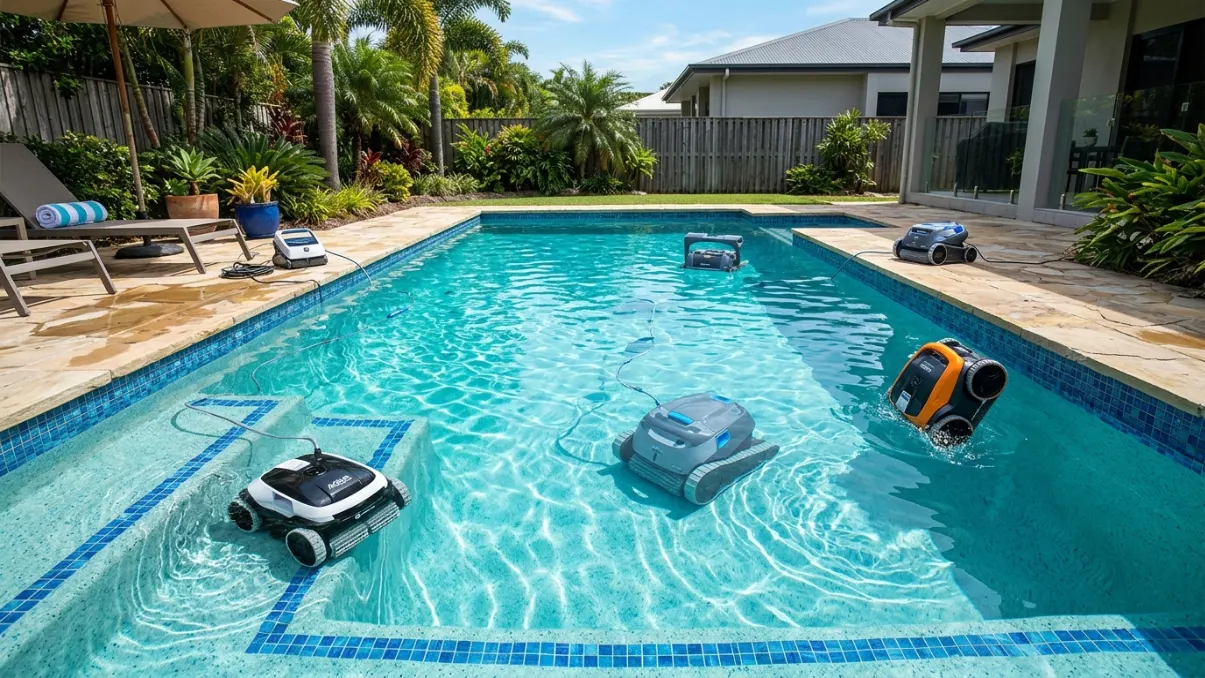
The right cleaner depends on pool size, cleaning zones, corded or cordless design, navigation, filtration, weight, runtime, warranty, and daily maintenance. A small simple pool may need easy handling more than premium automation. A larger or more complex pool may benefit from stronger navigation, broader coverage, and a larger filter basket.
Choose a cleaner that fits the pool’s real layout, debris level, and summer routine. When the robot is matched well and supported with regular water testing and filter care, pool cleaning becomes easier to repeat—and the pool is more likely to stay ready when people want to swim.