
 English
 Arabic
 Chinese (Simplified)
 Dutch
Dutch French
 German
 Italian
 Portuguese
 Russian
 Spanish
Starting a print-on-demand business has never been more accessible. You no longer need to hold inventory, manage production, or invest thousands of dollars before making your first sale. But while the business model is simple to start, launching successfully still requires research, design, product setup, copywriting, branding, and marketing.
That is where AI tools are changing the game.
Entrepreneurs and side-hustlers can now use AI to move faster through the early stages of building a print-on-demand business. From finding profitable niches to creating design ideas, writing product descriptions, and planning marketing campaigns, AI can shorten the path from idea to launch.
The result is not a shortcut that replaces strategy. Instead, AI works best as a productivity multiplier. It helps sellers test ideas faster, reduce manual work, and make better decisions before spending time and money on products that may not sell.

Why AI Fits the Print-on-Demand Model
Print-on-demand is already a lean business model. Sellers create designs, upload them to products, and only produce items after a customer places an order. This removes many of the traditional risks associated with e-commerce.
AI makes the model even leaner by helping with the work that normally slows new sellers down.
A beginner might spend weeks researching niches, creating designs, writing product listings, and preparing a store. With the right AI tools, much of that groundwork can be done in days. AI can suggest niche ideas, analyze customer interests, generate design concepts, write SEO-friendly descriptions, and create marketing content.
This is especially useful for entrepreneurs who are starting a POD business while working a full-time job. Instead of getting stuck in planning mode, they can move from research to execution much faster.

Finding Better Niches With AI
One of the biggest mistakes new POD sellers make is choosing products based only on personal preference. A funny shirt idea or attractive design may seem promising, but that does not always mean there is demand.
AI tools can help sellers approach niche research more strategically.
For example, a seller can use AI to brainstorm niche audiences such as pet owners, teachers, nurses, fitness enthusiasts, new parents, gamers, gardeners, or remote workers. From there, AI can generate product angles, slogan ideas, seasonal opportunities, and customer pain points.
Instead of asking, “What should I sell?” a better AI prompt would be:
“Give me 20 print-on-demand niche ideas for buyers who purchase personalized gifts online. Include audience type, product ideas, emotional motivation, and possible design themes.”
This type of prompt gives sellers more useful output because it connects the product idea to buyer psychology.
AI can also help identify micro-niches. For example, instead of targeting “dog lovers,” a seller might focus on “rescue dog moms,” “golden retriever dads,” or “new puppy owners.” These narrower audiences are often easier to market to because the message feels more personal.
Creating Product Ideas Faster
Once a niche is selected, the next challenge is creating product ideas.
AI can help generate slogans, visual concepts, product themes, and design variations. This is useful because print-on-demand success often comes from testing multiple ideas rather than relying on one perfect design.
A seller launching a fitness-themed POD store, for example, could use AI to generate ideas for:
- Motivational gym shirts
- Water bottles with fitness quotes
- Tote bags for yoga lovers
- Posters for home gyms
- Mugs for personal trainers
The goal is not to copy AI output directly. The best approach is to use AI as a brainstorming partner and then refine the ideas with human creativity, brand positioning, and originality.
For design-based products, AI image tools can also help create visual concepts. Sellers can generate rough ideas, mood boards, patterns, illustrations, or typography directions before turning them into finished designs.
Entrepreneurs interested in digital products can also use AI to explore artwork-based business models. For example, learning how to sell digital art can be a useful starting point before expanding those creative assets into physical POD products such as posters, apparel, mugs, and home decor.
Writing Product Listings With AI

Even strong products can fail if the listing does not communicate value clearly.
A good product listing needs more than a basic description. It should explain who the product is for, why it matters, what makes it unique, and why someone should buy it now.
AI can help write:
- Product titles
- Descriptions
- Bullet points
- SEO tags
- Meta descriptions
- Marketplace listings
- Ad copy
- Email promotions
For example, instead of writing “Funny coffee mug for moms,” AI can help create a more compelling description focused on the buyer:
“Celebrate the chaos and joy of motherhood with a personalized coffee mug designed for moms who run on caffeine, love, and a little bit of humor.”
That type of copy connects emotionally with the customer, which is important in POD because many purchases are gift-driven or identity-driven.
AI can also create multiple versions of the same listing for different platforms. A Shopify product page may need a richer description, while an Etsy listing may need keyword-focused copy and scannable details.
Building a Brand Identity
Many POD stores fail because they look generic. The products may be fine, but the store lacks a clear identity.
AI can help new sellers define a brand before launch. It can suggest brand names, taglines, audience positioning, tone of voice, color palette ideas, and content themes.
For example, a seller targeting eco-conscious parents could use AI to shape a brand around warmth, sustainability, family values, and mindful gifting. A seller targeting gamers might choose a more playful, bold, and community-driven voice.
This matters because customers rarely buy only because a product exists. They buy because the product feels relevant to their identity, lifestyle, or relationship with someone else.
A clear brand also makes marketing easier. Once the audience and message are defined, AI can help create consistent social posts, email campaigns, landing pages, and product copy.
Speeding Up Store Setup
Launching a POD store involves many small tasks. These can quickly become overwhelming for beginners.
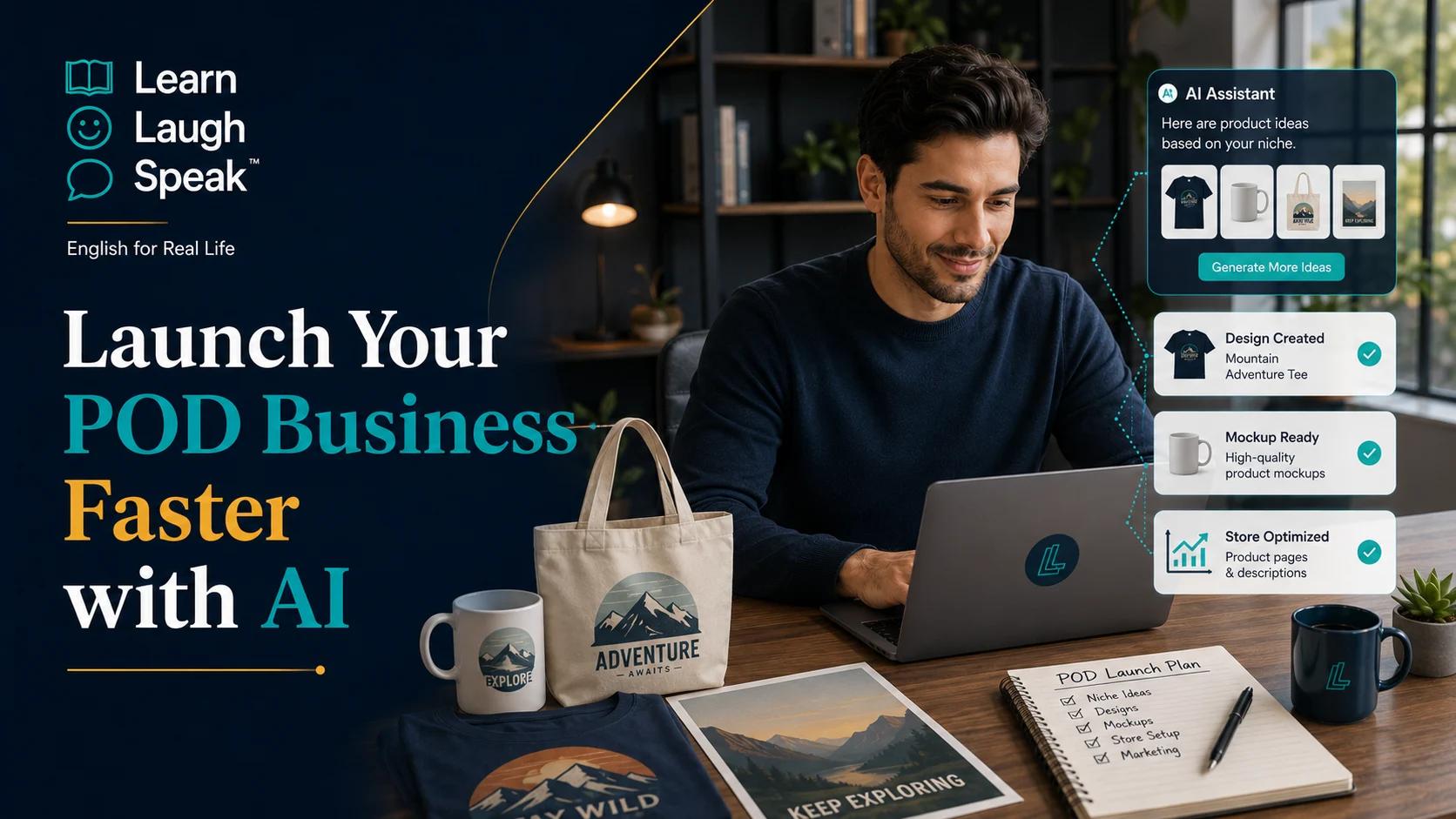
AI can help organize the process into a clear launch plan. A seller can ask AI to create a step-by-step checklist covering niche research, product creation, store setup, pricing, product descriptions, policies, and marketing.
This can turn a vague idea into a practical workflow.
For example, a simple launch plan might include:
- Choose one niche audience.
- Create 10 product ideas.
- Validate search interest and competitor demand.
- Design 5 initial products.
- Upload products to a POD platform.
- Write optimized listings.
- Connect the store to Shopify, Etsy, or another sales channel.
- Create launch content for social media.
- Test ads or organic promotion.
- Review performance and improve.
This structure helps sellers avoid spending too much time on low-impact tasks before validating whether customers actually want the products.
Why Fulfillment Platforms Still Matter
AI can help with research, design, writing, and marketing, but it does not handle production or shipping. That is why choosing the right print-on-demand platform remains one of the most important decisions.
Printify and Printful are two of the best platforms for starting a print-on-demand business because they help sellers turn digital ideas into physical products without managing inventory.
Printify is popular for its large product catalog, supplier network, and flexibility. It allows sellers to compare production partners and choose products that fit their pricing, quality, and shipping needs.
Printful is also a strong option, especially for sellers who value reliable fulfillment, branding options, and educational resources. For entrepreneurs exploring how to make money with ai, combining AI-generated ideas with a fulfillment platform like Printful can be a practical way to move from concept to commerce.
The key is to understand that AI and POD platforms solve different problems. AI helps create and market the idea. Printify and Printful help produce and deliver the product.
Using AI for Marketing and Content
Once a store is live, marketing becomes the next challenge.
AI can help create content for social media, blog posts, email newsletters, ad campaigns, and influencer outreach. This is especially valuable for side-hustlers who do not have time to create content from scratch every day.
For example, AI can generate:
- Instagram captions
- TikTok video ideas
- Pinterest pin descriptions
- Facebook ad variations
- Email welcome sequences
- Blog topic ideas
- Customer support templates
A seller promoting personalized pet products could ask AI to create 30 days of social media content focused on pet owner humor, gift ideas, customer stories, and seasonal promotions.
AI can also help repurpose content. One blog post can become several social captions, a short email, a video script, and multiple ad hooks.
This allows new POD sellers to show up consistently without spending all their time writing.
Avoiding Common AI Mistakes

AI is powerful, but it should not be used carelessly.
One common mistake is publishing AI-generated designs or copy without reviewing them. Sellers should always check for accuracy, originality, grammar, and brand fit.
Another mistake is creating generic products. If everyone is using the same prompts and tools, the output can start to look similar. The best sellers use AI for speed but still add human insight, creativity, and market understanding.
It is also important to review commercial usage rights for any AI-generated images, fonts, or design elements. Before selling products, sellers should make sure they have the proper rights to use the assets commercially.
AI should support the business, not replace careful decision-making.
A Simple AI-Powered POD Launch Workflow
For entrepreneurs who want to launch quickly, a structured workflow can help turn ideas into products more efficiently.
Start with niche research. Use AI to brainstorm target audiences, product categories, and emotional buying triggers.
Next, validate demand by analyzing search trends, marketplace competition, social media conversations, and online communities.
Then create product concepts. AI can help generate slogans, themes, design ideas, and unique selling angles.
After that, refine your strongest concepts by eliminating ideas that are overly generic, unclear, or difficult to produce profitably.
Once your product ideas are ready, use a print-on-demand platform such as Printify or Printful to create mockups and prepare product listings. Before choosing a fulfillment partner, it’s worth researching factors such as product selection, pricing, production locations, and customer feedback. Many sellers also read Printify reviews and other platform reviews to better understand real-world experiences before launching their stores.
Next, use AI to create product descriptions, SEO titles, email campaigns, ad copy, and launch content.
Finally, publish your products, promote them through your preferred marketing channels, track performance metrics, and optimize based on customer behavior and sales data.
This process allows sellers to move quickly while still making informed decisions about product development, fulfillment, and long-term business growth.
Final Thoughts
AI has made it easier than ever to launch a print-on-demand business faster. It can help entrepreneurs research niches, create product ideas, write listings, build a brand, and market their store with less manual effort.
But the best results come when AI is paired with human creativity and a reliable fulfillment platform.
Printify and Printful remain two of the best platforms for starting a print-on-demand business because they handle the production and logistics that AI cannot. When combined with smart AI tools, they give entrepreneurs a practical way to turn ideas into real products and start selling faster.
For side-hustlers, this combination can be powerful. AI reduces the time it takes to get started, while print-on-demand reduces the financial risk of launching.
The opportunity is not just to create more products. It is to test better ideas, move faster, and build a business with more confidence.