
 English
 Arabic
 Chinese (Simplified)
 Dutch
Dutch French
 German
 Italian
 Portuguese
 Russian
 Spanish
Most people try to improve their English in the same ways. Reading. Listening. Maybe flashcards. It works… up to a point.
Then progress slows down.
You start forgetting words you already learned. You miss small details in conversations. You read a sentence twice and still feel unsure.
That’s not a vocabulary problem.
It’s a focus problem. And a pattern problem.
Language isn’t just words. It’s patterns of sounds, rhythm, structure, timing. Once you see that, you can train your brain in ways that don’t look like “language learning” at all.
Some of them feel a bit unusual. Stick with me.
1. Train your ear with rhythm, not meaning

Try this.
Listen to English audio you don’t fully understand. A podcast, a short video, anything. Don’t worry about meaning. Just focus on rhythm.
Where does the speaker pause? Which words sound longer? Which ones disappear?
At first, it feels strange. You want to understand everything. But that pressure actually blocks learning.
When you focus on rhythm, your brain starts noticing patterns:
- Stress in sentences
- Natural pauses
- The “music” of English
That helps more than translating every word.
Later, when you go back to meaning, things click faster.
2. Copy patterns, not sentences
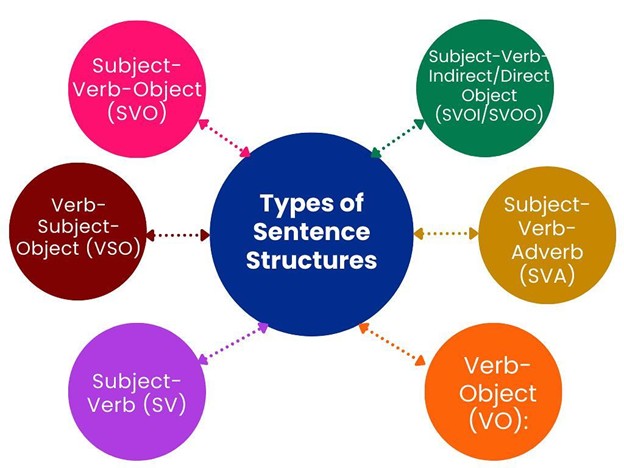
A lot of learners memorize full sentences. That’s fine. But it’s slow.
Instead, take one structure and reuse it in different ways.
For example:
“I’m used to + verb-ing”
Now build your own variations:
- I’m used to waking up early
- I’m used to working late
- I’m used to speaking English at work
Same pattern. Different content.
Your brain loves repetition. Not boring repetition, pattern repetition.
Small shift. Big difference.
Also Read: Common English sentence patterns
3. Use constraints to improve focus
Here’s a simple exercise.
Give yourself a rule:
- Speak for 2 minutes using only present tense
- Write a paragraph without using “very”
- Describe something using only short sentences
At first, it feels limiting. That’s the point.
Constraints force your brain to pay attention. You can’t go on autopilot.
And when you’re focused, you notice mistakes faster.
Try it once. You’ll feel the difference.
4. Practice with non-language systems
This one surprises people.
You can improve language skills by practicing something that isn’t language.
Think about patterns again.
Music, coding, even simple signal systems; they all train your brain to recognize structure and timing. That skill transfers to language.
For example, some learners use tools like a morse code translator as a quick way to explore patterns through sound and rhythm. You type text, hear the signals, and start noticing timing differences: short, long, pause.
It’s not about learning Morse code. It’s about training attention.
When you come back to English, your listening improves. You catch small differences you missed before.
Worth trying? Absolutely..
5. Slow down on purpose

Most learners try to go faster.
Faster reading. Faster speaking. Faster progress.
But speed hides problems.
Try the opposite.
Read one paragraph slowly. Very slowly. Notice every word. Every punctuation mark.
Or speak slowly, even if it feels unnatural:
“I… would… like… to… explain… this… idea…”
It forces clarity.
You start thinking about structure, not just words. You hear your own mistakes.
And then, when you speed up again, your accuracy improves.
6. Use “micro-focus” sessions

Long study sessions don’t always work. Your attention drops.
Instead, try 5-minute sessions with full focus.
Set a timer. Choose one small task:
- Listen to one short clip
- Learn 3 new words
- Practice one sentence pattern
That’s it.
No distractions. No multitasking.
Five minutes sounds small. But real focus for five minutes beats one hour of half-attention.
Do this a few times a day. It adds up.
7. Notice what you ignore
Here’s a question.
When you listen to English, what do you ignore?
Small words like “a,” “the,” “to,” “of”? Word endings like “-ed” or “-s”?
Most learners skip them.
But those small details carry meaning.
Try this:
Listen to a sentence and focus only on endings.
That’s it. Nothing else.
You’ll hear things you missed before.
And those small details improve your grammar naturally, without memorizing rules.
Related article: 5 skills to improve your english skills
8. Mix focus and relaxation
You don’t need to focus all the time. That’s exhausting.
Balance it.
Do a focused exercise. Then relax with something easy:
- Watch a simple video
- Listen to music
- Read something fun
Your brain processes patterns in the background. You don’t always see it happening.
But it is.
9. Accept confusion (it’s part of the process)
Sometimes you won’t understand.
That’s normal.
Actually, it’s useful.
Confusion means your brain is trying to build new patterns. If everything feels easy, you’re not learning much.
So when you feel stuck, don’t panic.
Stay with it a bit longer.
Things usually make sense later, often when you least expect it.
10. Keep it a bit playful

If learning feels heavy, you’ll avoid it.
So make it lighter.
Try unusual exercises. Experiment. Use tools in creative ways. Even something simple like listening to patterns or playing with signals can refresh your motivation.
You don’t need perfect methods.
You need methods you’ll actually use.
Final thought
Happy Student Studying And Having Coffee At Home, Selective Focus
Improving your English isn’t only about learning more words.
It’s about training your brain to notice patterns, stay focused, and react faster.
And sometimes, the best way to do that is to step outside traditional study methods.
Try one idea from this list.
Just one.
See how it feels.