
 English
 Arabic
 Chinese (Simplified)
 Dutch
Dutch French
 German
 Italian
 Portuguese
 Russian
 Spanish
Learning to speak finance English isn’t about using complex words.
If you work around money, budgets, or reports, you already know this moment.
You understand the numbers.
You know what needs to happen.
But when it’s time to explain it in English, the conversation suddenly feels heavier.
It’s about sounding clear, calm, and professional when decisions, deadlines, and expectations are involved.
This guide focuses on real workplace language — the kind used in meetings, emails, and conversations with managers and clients.
Pro tip – follow Bloomberg and other news pages Yahoo Finance is another great one to learn new words and terms.

Why Professionals Need to Speak Finance English Clearly
In finance-related conversations, small language mistakes can create big problems.
A manager might think a project is approved when it’s still under review.
A client might believe a payment is late when it’s actually processing.
A teammate might misunderstand a forecast as a guarantee.
When you speak finance English clearly, you reduce risk, not just confusion.
People trust what you say — and how you say it.
Trading Vocabulary: Essential Terms for English Learners
How to Speak Finance English in Meetings
Meetings are where finance language feels most exposed. People expect clarity, not complexity.
A Simple Professional Structure
Use this pattern: Situation → Number → Meaning → Next Step
Example
“Our expenses increased by 12% this quarter, mainly due to supplier costs. If this continues, we may need to adjust the budget for Q2.”
This connects numbers to decisions — which is what leadership listens for.
Speak Finance English When Discussing Sensitive Money Topics
Budget limits, payments, and costs can feel uncomfortable, especially in international teams.
Instead of sounding direct or emotional, use professional “softening” language.
Workplace-Safe Phrases
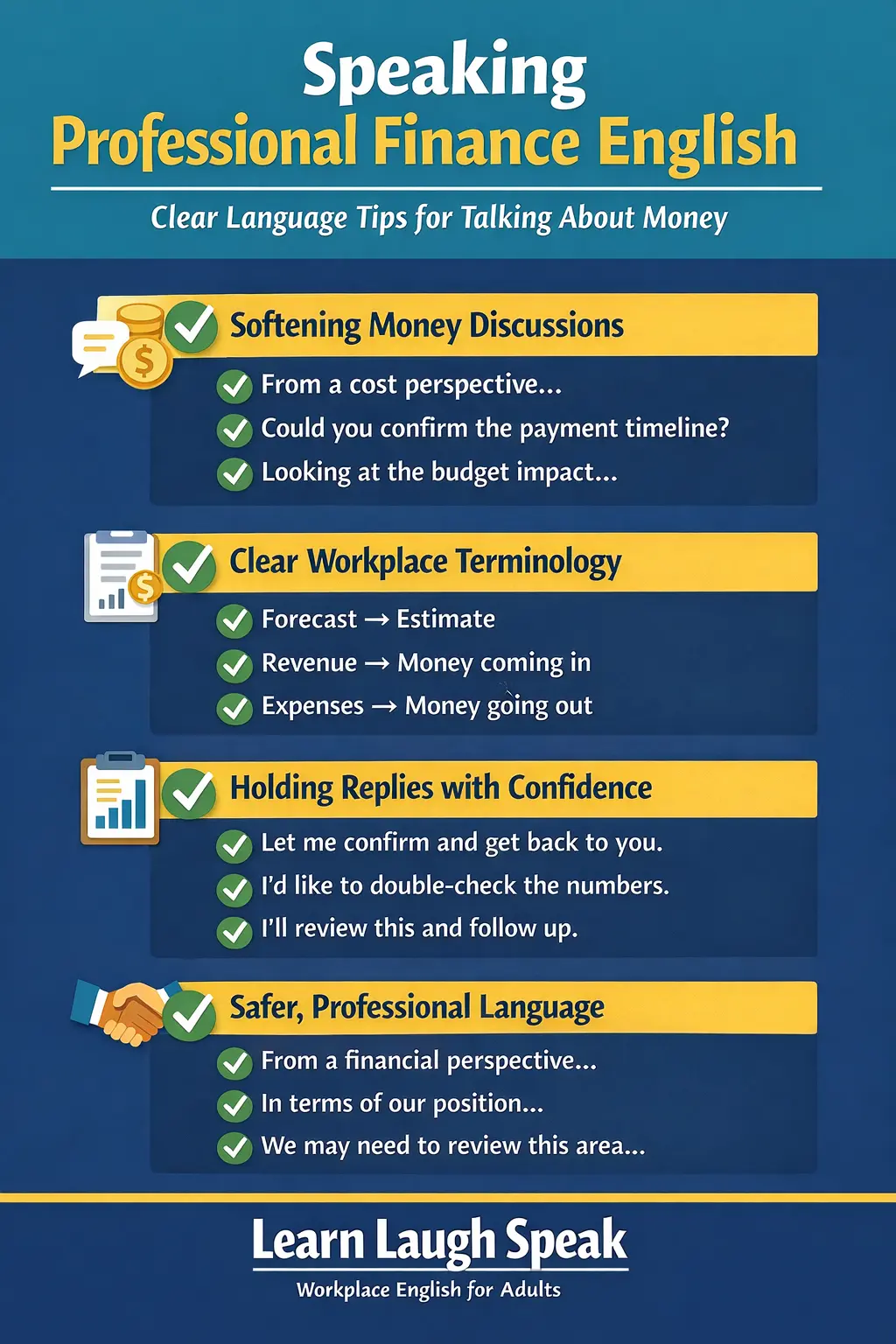
“I just wanted to clarify the payment timeline.”
“Could you confirm when the invoice is expected to be processed?”
“We may need to review the budget for this area.”
These phrases protect the relationship while keeping the message clear.
Speak Finance English for Reports and Presentations
Your job isn’t to impress people with numbers.
Your job is to help people understand what the numbers mean.
Signal Phrases That Guide Your Listener
“The key takeaway here is…”
“What this means for the team is…”
“The main change this month is…”
These phrases act like road signs in your presentation.
How to Read Numbers in English
Speak Finance English in Professional Emails
Email is where most finance misunderstandings begin — usually because messages are too long or unclear.
Simple, Human Template
Subject: Budget update for March
Hi [Name],
I wanted to share a quick update on the March budget.
We are currently 8% under forecast, mainly due to reduced operational costs. At this stage, no action is needed.
Please let me know if you’d like a more detailed breakdown.
Best regards,
[Your name]
Short. Calm. Professional.
Core Finance Terms Explained in Plain Workplace English
| Term | What It Means at Work |
|---|---|
| Forecast | An estimate of what may happen |
| Budget | A spending plan |
| Revenue | Money coming in |
| Expenses | Money going out |
| Variance | The difference between the plan and the result |
| Cash flow | How money moves in and out over time |
If you can explain these simply, you already speak finance English at a professional level.
When Is It OK to Swear in English at Work?
Speak Finance English When You Don’t Have an Answer
This happens to everyone — even senior managers.
What matters is how you respond in the moment.
Professional Holding Phrases
“Let me confirm that and get back to you.”
“I’d like to double-check the numbers before I respond.”
“I’ll review this with the team and follow up.”
These protect your credibility without sounding unsure.
Real Workplace Example to Learn From
You’re asked in a meeting:
“Are we still within budget for this project?”
Weak response:
I think so. I’m not 100% sure.
Professional response:
Based on the latest report, we’re currently within budget, but I’ll confirm the final numbers by end of day.
Same honesty. Stronger presence.
Speak Finance English Across Cultures and Teams
In global workplaces, being too direct about money can feel uncomfortable or even rude.
Safer, Professional Language
“From a cost perspective…”
“In terms of our financial position…”
“Looking at the budget impact…”
This language travels well across cultures.
Swap This for That: Professional Finance Language
| Avoid This | Use This Instead |
|---|---|
| “We’re losing money.” | “We’re seeing a negative variance.” |
| “This is too expensive.” | “This may be outside our current budget.” |
| “We don’t have enough money.” | “We may need to review our available resources.” |
| “You paid late.” | “The payment appears to still be processing.” |
Final Takeaway
To speak finance English professionally, you don’t need advanced vocabulary.
You need structure, calm delivery, and respect for how sensitive money conversations can be.
When you communicate this way, people don’t just understand your numbers.
They trust your judgment.
Learn Laugh Speak — 33,000+ CEFR-aligned lessons for adults using English at work
2 thoughts on “How to Speak Finance English Professionally and Easily”
Pingback: Going Beyond HSK: Why Studying in China Now Requires Mastering the CSCA Academic Standard - Learn Laugh Speak
Pingback: Why Every Small Business Needs Accounting Software - Learn Laugh Speak