
 English
 Arabic
 Chinese (Simplified)
 Dutch
Dutch French
 German
 Italian
 Portuguese
 Russian
 Spanish
You are lying awake at 2 a.m. because you heard glass shatter a few houses down, again. The neighborhood group chat is buzzing with stories about break‑ins, suspicious cars, and packages vanishing from porches. Everyone keeps asking the same question: how do we actually make this stop? Residents want real protection, not just more online complaints.
According to the Campbell Collaboration’s 2025 review, camera systems cut neighborhood crime by an average of 16 and 26 percent. That kind of drop gets people’s attention and gives communities a starting point for serious change. That is why more communities are investing in professional surveillance cameras that actually deliver results, not just false promises.
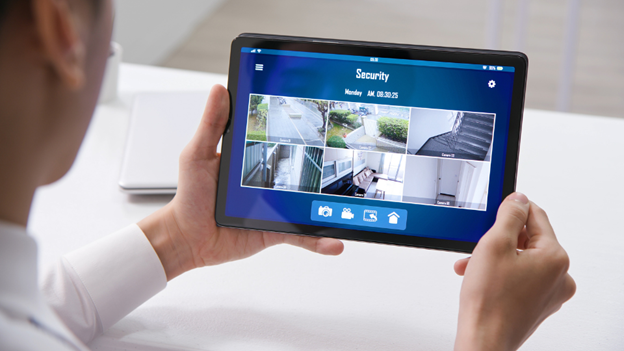
How Cameras Are Changing Neighborhood Safety In 2026
Modern surveillance cameras are no longer limited to a few doorbells pointed at individual driveways. Today’s systems connect neighborhoods through shared apps, smart lighting, and coordinated alert networks, allowing communities to act together instead of as isolated households. When deployed correctly, this collective approach improves safety in ways residents can feel within months.
A key part of this shift is smarter software. Modern surveillance cameras can distinguish between a dog, a person, and a vehicle, so residents are not flooded with useless alerts. Some neighborhoods link entry cameras to license-plate recognition tools that flag stolen vehicles or repeat offenders as they drive in. These systems can scan up to 60 license plates per second, making it difficult for suspicious vehicles to pass through unnoticed.
Maplewood Estates in Colorado Springs learned this first-hand when they integrated cameras with two-way audio into their community hub. They reduced response times to suspicious activity by 68 percent, because incidents could be verified and reported within seconds instead of hours. Results like this explain why many HOAs now treat surveillance cameras as essential infrastructure rather than optional upgrades.
Why Smart Marketers Prioritize Email Security and Verification
Measurable Impact On Crime And Fear Of Crime
Across hundreds of neighborhoods, camera networks consistently lower burglary, theft, and vandalism. The reason is simple. Visible cameras tell offenders two things: they are on record, and their license plate or face can be shared with police in minutes. That changes targets. It also changes how residents behave.
When people know common areas and access points are covered, they feel safer walking at night, and they report suspicious activity more confidently, because they know there is footage to back them up.
To get this level of benefit, though, the system has to be planned, not just bought. That planning starts with where you actually place the cameras.
Strategic Placement For Real Coverage And Roi
The most effective communities think in terms of a “security perimeter” around entries and shared spaces, and a “privacy core” around backyards and windows. Cameras go where strangers move, not where families live their private lives.
Entry and exit points are the highest priority. If you can reliably see every car that comes and goes, you can link break‑ins, thefts, and suspicious cruising to real plates and timestamps. In practice, a well‑positioned LPR camera at the main gate or subdivision entrance can watch hundreds of vehicles per hour, and in a dense area a single unit in Nashville was logging nearly 1,000 vehicles in just 20 minutes. That kind of capture volume shows why placement at chokepoints matters more than just adding more cameras.
From there, communities usually cover mail areas, parking, and playgrounds. The goal is simple: any realistic crime path in or out of the neighborhood passes at least one lens. Once that is true, you get real investigative value without turning the place into something that feels like an industrial site.
Privacy‑first Planning That Residents Can Trust
The hardest pushback rarely comes from the cost. It comes from privacy. People worry they are being watched every minute, or that someone on the board can spy on where they come and go. Those are valid worries, and if you ignore them, support for the system collapses.
A helpful way to think about it is this: cameras should watch public movement, not private life. Recent reporting showed that a 300‑mile drive across rural Virginia still passed nearly 50 LPR cameras, all feeding law‑enforcement systems. That proves wide‑area monitoring already exists on public roads. Inside a neighborhood, the job is to keep control closer to residents, with clearer rules.
Strong policies include auto‑blurring windows and fenced yards, strict 30‑day deletion unless footage is tied to a case, and shared oversight rather than one administrator. When residents can read the policy, see the signs, and know exactly how long their data lives, most become comfortable, even if they were skeptical at first.
Handled this way, privacy is not the enemy of security. It is the reason the system keeps community support year after year.
Community‑led Or Hoa‑managed Systems
The next choice is governance. Some neighborhoods let the HOA board run everything. Others form a separate security committee or cooperative that owns or oversees the equipment. Each path changes who holds power and who carries the blame if something goes wrong.
A useful comparison is below. It is not perfect, but it shows the trade‑offs in plain language.
| Model type | Control over rules | Typical startup cost | Resident engagement | Risk of mistrust |
| HOA‑managed | Board | Higher | Moderate | Higher |
| Community‑led coop | Elected committee | Lower to medium | High | Lower |
| Hybrid | Shared | Medium | High | Medium |
| Municipal partnership | City and HOA | Varies | Medium | Depends on city |
Real‑world data shows how fast this is spreading. One major vendor is already active with over 200 HOAs nationwide, often giving police access to neighborhood plate data when incidents occur. That scale alone tells you cameras are not an experiment anymore.
The key is avoiding secret deals. If residents hear about a police integration from the news instead of their own board, trust drops overnight.
Making The Cost And Roi Math Work
Most communities do not have unlimited money, so the real question is whether the numbers add up. In practice, they often do, once you look at all the benefits instead of just the invoice.
Hardware, installation, storage, and maintenance for a small to mid‑size neighborhood often land somewhere between a few thousand dollars and the price of one serious break‑in per street. Meanwhile, private license plate databases already hold around 9 billion license plate scans across the United States. When your neighborhood system can feed into, or at least support, that kind of network effect, recovering stolen cars and tracking suspects gets much easier.
Communities that document incidents before and after installation often show three to four times return over a five‑year period when you add avoided losses, insurance discounts, and property value lift. It is not magic, but it is real money.
AI Network Security | The Next Evolution in Threat Detection
Staying On The Right Side Of The Law
Camera laws are changing fast, and they vary a lot by state. Some states focus on how long you can keep footage, others care more about audio recording or facial recognition. There are also big differences in what is allowed in public versus areas where people expect privacy.
To keep things simple, you can think in three buckets. First, placement rules: no pointing into bedroom windows or over privacy fences. Second, notice rules: clear signage at entries, and often a written policy available to residents. Third, access rules: logging who views footage, why, and how long they keep copies. None of this is glamorous work, but skipping it can turn a simple theft investigation into a lawsuit.
Because of that, a short consultation with a lawyer who knows HOA or property law is usually worth the fee. It gives the board cover and reassures residents that someone neutral has checked the fine print.
Installation, Management, And Real‑world Security
Once a community votes to move ahead, the next danger is treating cameras as a one‑time project instead of a living system. Without clear roles, software updates, and reviews, even great hardware drifts into being half‑broken decoration.
There is plenty of evidence that these systems are powerful when set up correctly. During a security review in Nashville, for example, researchers found that a misconfigured plate‑reading setup was collecting data on nearly 1,000 vehicles in just 20 minutes, with live feeds exposed online. That story is a warning in two directions. The good side is that properly protected systems can give your community excellent coverage. The bad side is that sloppy networking or weak passwords can hand that coverage to strangers.
Strong neighborhoods build in routines. Someone checks all views weekly, cleans lenses, and confirms recordings. A quarterly review looks at where incidents actually happen and whether any camera needs to move. Once a year, the board or committee reviews the policy, gathers resident feedback, and adjusts. This rhythm is what separates neighborhoods that brag about their cameras from neighborhoods that actually feel safer at night.
Final Thoughts On The Role Of Cameras
In the end, surveillance cameras neighborhood safety is not just a slogan. Well‑planned systems can cut crime, shorten response times, and give residents back a sense of control. The trick is pairing good hardware with smarter rules, open communication, and ongoing care. If your community can do that, cameras turn from a source of arguments into a shared tool everyone quietly depends on.
Common Questions About Neighborhood Camera Systems
Do cameras just push crime into nearby streets instead of reducing it?
Careful studies show overall crime drops, not just movement. Offenders prefer easy, low‑risk areas, so well‑signed camera zones usually fall off their list.
Can residents see live feeds whenever they want?
That is almost never a good idea. Most communities limit live access to a small, trained group and share clips only for specific incidents.
What if half the neighborhood hates the idea?
Start with a small pilot near the worst trouble spots and put strict privacy rules in writing. Short trials with clear data often change minds.
How long should footage be kept?
Many communities pick 30 days as a default, with longer retention only when something is tied to an active case or claim.