
 English
 Arabic
 Chinese (Simplified)
 Dutch
Dutch French
 German
 Italian
 Portuguese
 Russian
 Spanish
As a freelance writer, your reputation is your most valuable asset. Clients hire you not just for your words, but for your integrity and reliability. In a digital world where content is abundant, originality is the currency of trust. This is where a professional plagiarism checker becomes an indispensable part of your toolkit, safeguarding your work and your career.
It’s easy to assume your writing is 100% original. You spent hours researching, drafting, and editing. However, accidental plagiarism is more common than you might think. A phrase that stuck in your head from a research article or a sentence structure that mirrors a source too closely can trigger a plagiarism flag. The consequences can range from a client requesting revisions to damaging your professional credibility. Using a tool to `check for plagiarism` before submission is a simple step that prevents these issues.
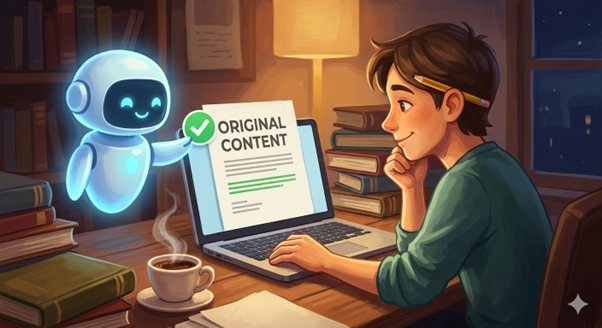
Real-World Scenarios for Freelance Writers
A plagiarism checker isn’t just for academics; it’s a daily driver for professional writers. It helps you protect your clients, your reputation, and your income. Let’s explore how this tool fits into the real-world workflow of a freelance writer.
Use Case 1: Delivering Final Drafts to High-Value Clients
Imagine you’ve just completed a 2,000-word cornerstone article for a major client. This piece is critical for their new marketing campaign. Before you send the invoice, you have one final, crucial step: ensuring the content is completely unique. Submitting plagiarized content, even unintentionally, could get your client’s website penalized by search engines and shatter the trust you’ve worked so hard to build.
By running the article through a reliable `plagiarism checker`, you can identify any sentences or paragraphs that are too similar to existing online content. The tool will highlight these sections, allowing you to revise them for originality. This final check provides you and your client with peace of mind.
Benefits of this scenario:
* Builds Client Trust: Delivering a certified-original document shows professionalism and respect for the client’s investment.
* Protects Client’s SEO: Unique content is essential for ranking on Google. A plagiarism check prevents duplicate content penalties that could harm a client’s online visibility.
* Reduces Revision Requests: Catching potential issues before submission saves time and eliminates the back-and-forth of client revisions related to originality concerns.
* Solidifies Your Reputation: Consistently delivering original work positions you as a reliable and trustworthy expert, leading to repeat business and referrals.
Use Case 2: Ghostwriting and Capturing a Unique Brand Voice
Ghostwriting is a common and lucrative field for freelancers. Your job is to write in someone else’s voice, often for a C-level executive or a brand influencer. The challenge is to research their style and subject matter extensively without accidentally copying the sources you study. The line between mimicking a voice and plagiarizing source material can be thin.
A plagiarism checker is your safety net in this situation. After drafting a blog post or a LinkedIn article in the client’s voice, you can scan it to ensure it remains original. This helps you confirm that while the tone is familiar, the words and ideas are uniquely structured. It validates that you’ve successfully channeled their voice without borrowing directly from their influences.
Benefits of this scenario:
* Ensures True Originality: It verifies that your ghostwritten content is a new creation, not just a mashup of source articles.
* Maintains Brand Integrity: You help the client build their authority with genuinely unique insights, protecting their brand from accusations of unoriginality.
* Avoids Embarrassment: Imagine a CEO’s article being flagged as similar to a competitor’s. A quick check prevents this potentially career-damaging situation.
* Strengthens Client Confidentiality: Using a trusted tool demonstrates your commitment to producing high-quality, confidential work.
Use Case 3: Creating and Citing In-Depth Research Content
For writers who specialize in technical, academic, or data-heavy content, research is everything. You might spend days reviewing studies, reports, and scholarly articles. When synthesizing large amounts of complex information, it’s possible to paraphrase a source too closely without realizing it. Even with proper citations, content that isn’t sufficiently rephrased can be flagged as plagiarism.
Using a plagiarism tool helps you spot these instances. It acts as a second pair of eyes, highlighting phrases that need more robust paraphrasing or a direct quote with proper attribution. This practice is crucial for maintaining academic and professional integrity, ensuring your work is seen as a legitimate and original analysis.
Benefits of this scenario:
* Upholds Academic Honesty: It ensures your work meets the high standards required in academic and technical writing.
* Improves Paraphrasing Skills: By seeing what gets flagged, you become a better writer, learning to synthesize and rephrase information more effectively.
* Validates Research Quality: A clean report confirms that you have properly processed and presented your research, adding to the credibility of your conclusions.
* Prevents Accidental Misconduct: It protects you from the serious consequences of academic or professional plagiarism, which can include legal action and career ruin.
Use Case 4: Repurposing Your Own Content for Different Platforms
Smart freelancers know how to work efficiently. One way is to repurpose existing content. You might turn a blog post into a script for a YouTube video, an email newsletter, or a series of social media posts. However, publishing identical or highly similar content across different platforms can lead to self-plagiarism and SEO issues like keyword cannibalization.
Before you publish a repurposed piece, running it through a plagiarism checker helps you see how much it overlaps with the original. This allows you to ensure the new version is sufficiently distinct. You can modify the structure, add new insights, and rephrase key points to create a fresh piece of content that provides unique value for each specific platform.
Benefits of this scenario:
* Avoids SEO Penalties: It helps prevent search engines from seeing your content as duplicate, which can hurt the rankings of all versions.
* Creates Genuinely Fresh Content: The check encourages you to add new value rather than just copying and pasting, making your content strategy more effective.
* Tailors Content to Each Platform: It pushes you to adapt the content for the specific audience and format of each platform, improving engagement.
* Maximizes Your Efforts: You can confidently leverage past work to reach new audiences without compromising quality or originality.
A Practical Workflow for Freelance Writers
Integrating a plagiarism check into your writing process is simple and adds immense value. Here’s a straightforward workflow you can adopt today.
- Write Your First Draft: Focus on getting your ideas down. Concentrate on structure, flow, and hitting all the key points your client asked for. Don’t worry about perfection at this stage; just write.
- Edit and Refine: Once the draft is complete, begin your editing process. Check for grammar, spelling, clarity, and tone. Make sure the piece is polished and meets the project’s requirements.
- Run the Plagiarism Scan: Before you consider the draft final, copy and paste the text into a trusted plagiarism checker. Run the scan and wait for the report. This should only take a few minutes.
- Analyze and Revise: The report will show a percentage score and highlight any sections that match other online content. Review each flagged section carefully.
* If it’s a common phrase, you can likely ignore it.
* If it’s a sentence that needs better paraphrasing, revise it.
* If it’s a direct quote, ensure it’s properly attributed.
- Perform a Final Scan: After making revisions, run the text through the checker one last time. A clean report gives you the confidence to submit your work, knowing it is original and professional.
Conclusion: More Than a Tool, It’s a Standard
For a freelance writer, a plagiarism checker is not a luxury; it’s a fundamental part of a professional workflow. It serves as your quality control, your reputation shield, and your trust-builder. By consistently verifying the originality of your work, you demonstrate a commitment to excellence that clients notice and appreciate.
Adopting this simple practice protects you from accidental mistakes, strengthens your client relationships, and ultimately helps you build a sustainable and successful freelance writing career. It’s a small step that pays huge dividends in credibility and peace of mind.