
 English
 Arabic
 Chinese (Simplified)
 Dutch
Dutch French
 German
 Italian
 Portuguese
 Russian
 Spanish
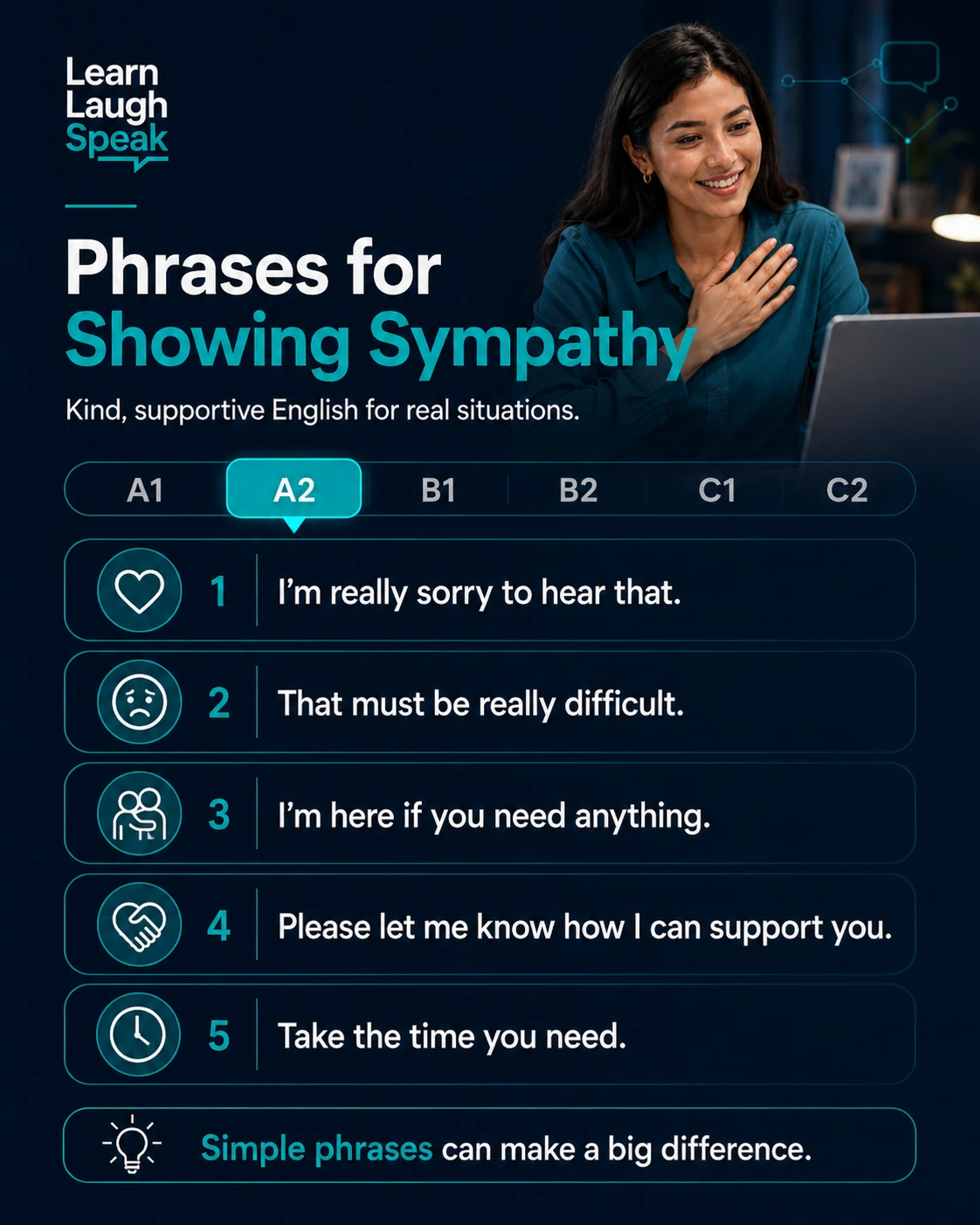
Useful phrases for showing sympathy include “I’m really sorry to hear that,” “That must be really difficult,” “I’m here if you need anything,” and “Please let me know how I can support you.” These phrases help you sound kind, respectful, and professional when someone is going through a hard time.
Learning phrases for showing sympathy in English is important for both professional and personal conversations. Whether a colleague is dealing with stress, a customer is upset, a friend is having a difficult day, or someone has experienced a loss, the right words can help them feel heard and supported.
In English, sympathy should sound sincere, calm, and respectful. You do not need long or dramatic sentences. Often, simple words said with the right tone are the most helpful.

Why Phrases for Showing Sympathy Matter
Knowing the right phrases for showing sympathy helps you communicate with kindness during difficult moments. This is especially important at work, where your words need to be supportive but still professional.
Using sympathy phrases can help you:
- show that you care
- support colleagues, customers, and friends
- avoid sounding cold or dismissive
- create a respectful workplace culture
- respond better in difficult conversations
- improve your professional English communication
For example, if a colleague says they are having a difficult time, saying “That must be really hard for you” sounds much better than staying silent or saying “Don’t worry about it.”
Sympathy is not about fixing the person’s problem immediately. It is about acknowledging their feelings and showing support.
Phrases for Showing Sympathy in General Situations
These phrases for showing sympathy work in many situations, both at work and in daily life. They are useful when someone shares bad news, stress, disappointment, or a personal challenge.
| Situation | Useful phrase |
|---|---|
| Someone shares bad news | “I’m really sorry to hear that.” |
| Someone is struggling | “That must be really difficult.” |
| Someone feels overwhelmed | “I can imagine this is a lot to deal with.” |
| Someone needs support | “I’m here if you need anything.” |
| Someone is upset | “I’m sorry you’re going through this.” |
| Someone needs time | “Please take the time you need.” |
Example:
“I’m really sorry to hear that. Please let me know if there’s anything I can do to help.”
This phrase is simple, warm, and appropriate in many situations.
Phrases for Showing Sympathy at Work
In professional settings, sympathy should be supportive but not too personal. You want to show care without making the person feel uncomfortable.
Useful phrases for showing sympathy at work include:
- “I’m sorry you’re dealing with this.”
- “That sounds like a very difficult situation.”
- “Please let me know how I can support you.”
- “Take the time you need. We’re here to support you.”
- “I understand this must be stressful.”
- “Please don’t hesitate to reach out if you need assistance.”
- “I’m sorry this has been such a challenging time.”
- “We can adjust the deadline if you need more time.”
Example:
“I’m sorry you’re dealing with this. Please let me know how I can support you with the workload this week.”
This works well because it shows sympathy and offers practical workplace support.
Workplace example:
If a colleague is dealing with a family emergency, you could say:
“I’m really sorry to hear that. Please take the time you need, and I’ll help cover anything urgent today.”
This sounds kind, practical, and professional.
Phrases for Showing Sympathy to a Colleague
When speaking to a colleague, keep your tone warm but respectful. You do not need to ask for private details. It is better to show support and give them space.
Useful phrases include:
- “I’m sorry you’re going through this.”
- “That sounds really hard.”
- “I’m here if you need to talk.”
- “Please don’t feel pressured to explain everything.”
- “Let me know if I can help with anything at work.”
- “You don’t have to handle everything alone.”
- “I hope things become easier soon.”
- “Take care of yourself. Work can wait if needed.”
Example:
“I’m sorry you’re going through this. Please don’t feel pressured to explain everything, but I’m here if you need anything.”
This phrase is respectful because it does not push the person to share more than they want.
Phrases for Showing Sympathy in Emails or Messages
Sometimes you need to show sympathy in writing. This might be in an email, chat message, or workplace communication tool. Written sympathy should be short, clear, and sincere.
Useful email and message phrases include:
- “I’m very sorry to hear this.”
- “My thoughts are with you during this difficult time.”
- “Please take the time you need.”
- “Let me know if there is anything I can do to support you.”
- “I’m sorry you’re having to deal with this.”
- “Wishing you strength during this time.”
- “Please don’t worry about work right now.”
- “We’re here to support you.”
Email example: supporting a colleague
Subject: Thinking of You
Hi [Name],
I’m really sorry to hear what you’re going through. Please take the time you need, and don’t worry about anything urgent today.
If there is anything I can help with, please let me know.
Take care,
[Your Name]
Message example: short support
Hi [Name], I’m sorry you’re dealing with this. Please let me know if I can support you in any way.
These examples are useful because they are kind without being too long or dramatic.
Phrases for Showing Sympathy and Emotional Support
Sometimes a person does not need advice. They just need to feel that someone is listening.
Useful phrases for showing sympathy and emotional support include:
- “You’re not alone in this.”
- “It’s okay to feel this way.”
- “I’m here to listen if you need to talk.”
- “Take your time. You don’t need to rush.”
- “That sounds really painful.”
- “I can understand why you feel that way.”
- “You’re doing the best you can.”
- “I know this is not easy.”
Example:
“You’re not alone in this. I’m here to listen if you need to talk.”
This phrase is helpful because it offers support without forcing advice.
Phrases for Showing Sympathy When Someone Has Lost Someone
When someone experiences a loss, it is important to use careful and respectful language. Keep the message simple, sincere, and kind.
Useful phrases include:
- “I’m deeply sorry for your loss.”
- “My thoughts are with you and your family.”
- “Please accept my sincere condolences.”
- “I can’t imagine how difficult this must be.”
- “I’m here for you if you need anything.”
- “Wishing you comfort during this difficult time.”
- “Please take all the time you need.”
- “I’m so sorry you and your family are going through this.”
Example:
“I’m deeply sorry for your loss. My thoughts are with you and your family during this difficult time.”
This is appropriate for professional and personal situations.
Phrases for Showing Sympathy When Someone Is Stressed
Stress is common at work, especially during busy periods, difficult projects, customer complaints, or personal challenges. A supportive phrase can help someone feel less alone.
Useful phrases include:
- “That sounds like a lot to manage.”
- “I understand this must be stressful.”
- “You’re handling a difficult situation.”
- “Please let me know if I can help with anything.”
- “Don’t be too hard on yourself.”
- “You’re doing your best in a tough situation.”
- “Let’s see what we can do to make this easier.”
- “Would it help if we reviewed the priorities together?”
Example:
“That sounds like a lot to manage. Would it help if we reviewed the priorities together?”
This is especially useful at work because it offers practical support.
Phrases for Showing Sympathy to a Customer
In customer service, sympathy is very important. Customers may be upset, disappointed, confused, or stressed. Your words should acknowledge their feelings and move toward a solution.
Useful customer service phrases include:
- “I’m sorry you’ve had this experience.”
- “I understand how frustrating this must be.”
- “Thank you for explaining the situation.”
- “I can see why this would be upsetting.”
- “Let me look into this for you.”
- “I’ll do my best to help resolve this.”
- “I’m sorry for the inconvenience.”
- “Thank you for your patience while we fix this.”
Example:
Customer: “I’ve been waiting for a response for three days.”
Staff: “I’m sorry you’ve had to wait so long. I understand how frustrating this must be, and I’ll look into this for you now.”
This response shows sympathy and gives the customer a clear next step.
What Not to Say and What to Say Instead
When someone is upset or going through a hard time, some phrases can sound dismissive even if you mean well. Here are better options.
| What not to say | What to say instead |
| “It’s not a big deal.” | “I understand this is important to you.” |
| “Don’t worry about it.” | “I know this must be stressful.” |
| “At least it’s not worse.” | “I’m sorry you’re going through this.” |
| “I know exactly how you feel.” | “I can only imagine how difficult this is.” |
| “You’ll be fine.” | “I’m here if you need support.” |
| “Just stay positive.” | “It’s okay to feel this way.” |
| “That happened to me too.” | “I’m sorry this is happening to you.” |
| “You should…” | “Would it help if we talked through some options?” |
The goal is to support the person, not minimize their feelings or immediately give advice.
Common Mistakes with Phrases for Showing Sympathy
English learners often worry about saying the wrong thing when someone is upset. Here are common mistakes to avoid.
1. Trying to fix everything too quickly
Sometimes people need support before solutions.
Too fast: “You should do this.”
Better: “I’m sorry you’re dealing with this. Would it help to talk through some options?”
2. Sounding too casual
Too casual: “That sucks.”
Better: “I’m really sorry to hear that.”
3. Asking too many personal questions
Too personal: “What exactly happened?”
Better: “You don’t have to explain everything, but I’m here if you need support.”
4. Making the conversation about yourself
Not helpful: “The same thing happened to me.”
Better: “I’m sorry this is happening to you.”
5. Using dramatic language
Too dramatic: “This is the worst thing ever.”
Better: “I know this must be very difficult.”
How to Sound Sincere When Showing Sympathy
The words are important, but tone matters too. A good sympathy phrase should sound natural and honest.
To sound sincere:
- speak slowly and calmly
- use a warm tone
- keep the message short
- avoid forced positivity
- do not interrupt
- listen carefully
- offer help only if you can really help
- respect the person’s privacy
For example:
“I’m sorry you’re going through this. I’m here if you need anything.”
This is short, but meaningful. You do not need to say too much.
Learn Phrases for Showing Sympathy with Learn Laugh Speak
Learn Laugh Speak helps adult English learners build practical communication skills for real life and work. This includes difficult conversations where tone, politeness, and emotional awareness are important.
If you want to use phrases for showing sympathy naturally, you need to practise more than vocabulary. You need to understand when to use each phrase, how formal it sounds, and how to speak with the right tone.
Learn Laugh Speak helps learners improve English for:
- workplace conversations
- customer service
- hospitality
- emails and messages
- emotional support
- professional communication
- daily English situations
With structured lessons and level-based practice, you can build confidence in real English conversations step by step.

FAQs About Phrases for Showing Sympathy
What are good phrases for showing sympathy in English?
Good phrases include “I’m really sorry to hear that,” “That must be really difficult,” “I’m here if you need anything,” and “Please let me know how I can support you.” These phrases sound kind, clear, and respectful.
How do you show sympathy professionally?
To show sympathy professionally, keep your message warm but respectful. You can say “I’m sorry you’re dealing with this. Please let me know how I can support you.” Avoid asking too many personal questions.
What can I say instead of “sorry for your loss”?
You can say “My thoughts are with you and your family,” “Please accept my sincere condolences,” or “Wishing you comfort during this difficult time.”
How do you support a colleague in English?
You can say “I’m sorry you’re going through this,” “Please take the time you need,” or “Let me know if I can help with anything at work.” These phrases are supportive and professional.
What should I avoid saying when showing sympathy?
Avoid phrases that dismiss feelings, such as “It’s not a big deal,” “Just stay positive,” or “You’ll be fine.” Instead, acknowledge the person’s feelings and offer support.
Final Thoughts on Phrases for Showing Sympathy
Learning phrases for showing sympathy helps you communicate with kindness, respect, and confidence in English. These phrases are useful at work, in customer service, in personal conversations, and in difficult moments when someone needs support.
You do not need perfect English to show care. Simple phrases like “I’m sorry to hear that,” “That must be really hard,” and “I’m here if you need anything” can make a real difference.
The key is to be sincere, listen carefully, and choose words that support the person without dismissing their feelings.
With practice, you can use English to show kindness and professionalism in even the most difficult conversations.
2 thoughts on “Useful Phrases for Showing Sympathy or Support in English”
Pingback: What is Constructive Feedback in Business English?
Pingback: How Advanced Adult English Learners Build Fluency Faster