
 English
 Arabic
 Chinese (Simplified)
 Dutch
Dutch French
 German
 Italian
 Portuguese
 Russian
 Spanish
To tell someone you’re sick in English, keep your message short, polite, and clear. Useful phrases include “I’m sorry, I’m not feeling well today,” “I think I’m coming down with something,” “Unfortunately, I won’t be able to make it,” and “Could we reschedule for another time?”
When you are not feeling well, it can be difficult to find the right words in English. You may need to message your manager, cancel a meeting, tell a colleague, or explain why you cannot attend an event.
You do not need to share every detail about your illness. In most professional situations, it is better to be simple and respectful. The goal is to explain the situation, apologise if needed, and offer the next step.
This guide will help you tell someone you’re sick in English politely, professionally, and naturally.
Why It Matters How You Tell Someone You’re Sick
When you are sick, your health comes first. But communication still matters, especially at work.
A good message helps you:
- explain why you cannot attend
- avoid sounding rude or careless
- show respect for the other person’s time
- keep your manager or team informed
- reschedule clearly
- sound professional in English
- avoid giving too much personal detail
For example:
Too casual:
“I’m sick. Not coming.”
Better:
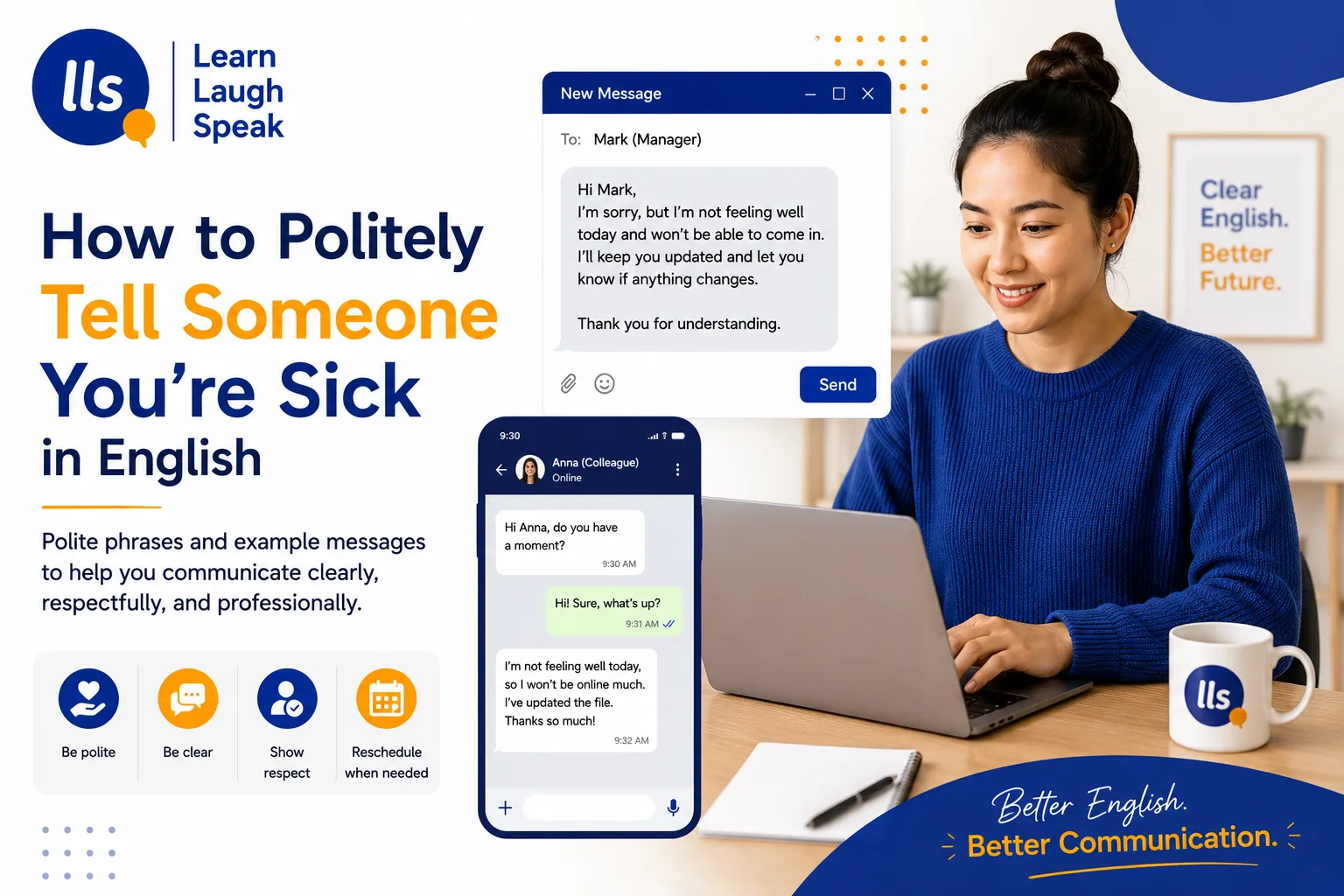
“Hi Mark, I’m sorry, but I’m not feeling well today and won’t be able to come in. I’ll keep you updated and let you know if anything changes.”
The second message is still short, but it sounds much more professional.
10 Polite Ways to Tell Someone You’re Sick in English
Here are practical phrases you can use in different situations.
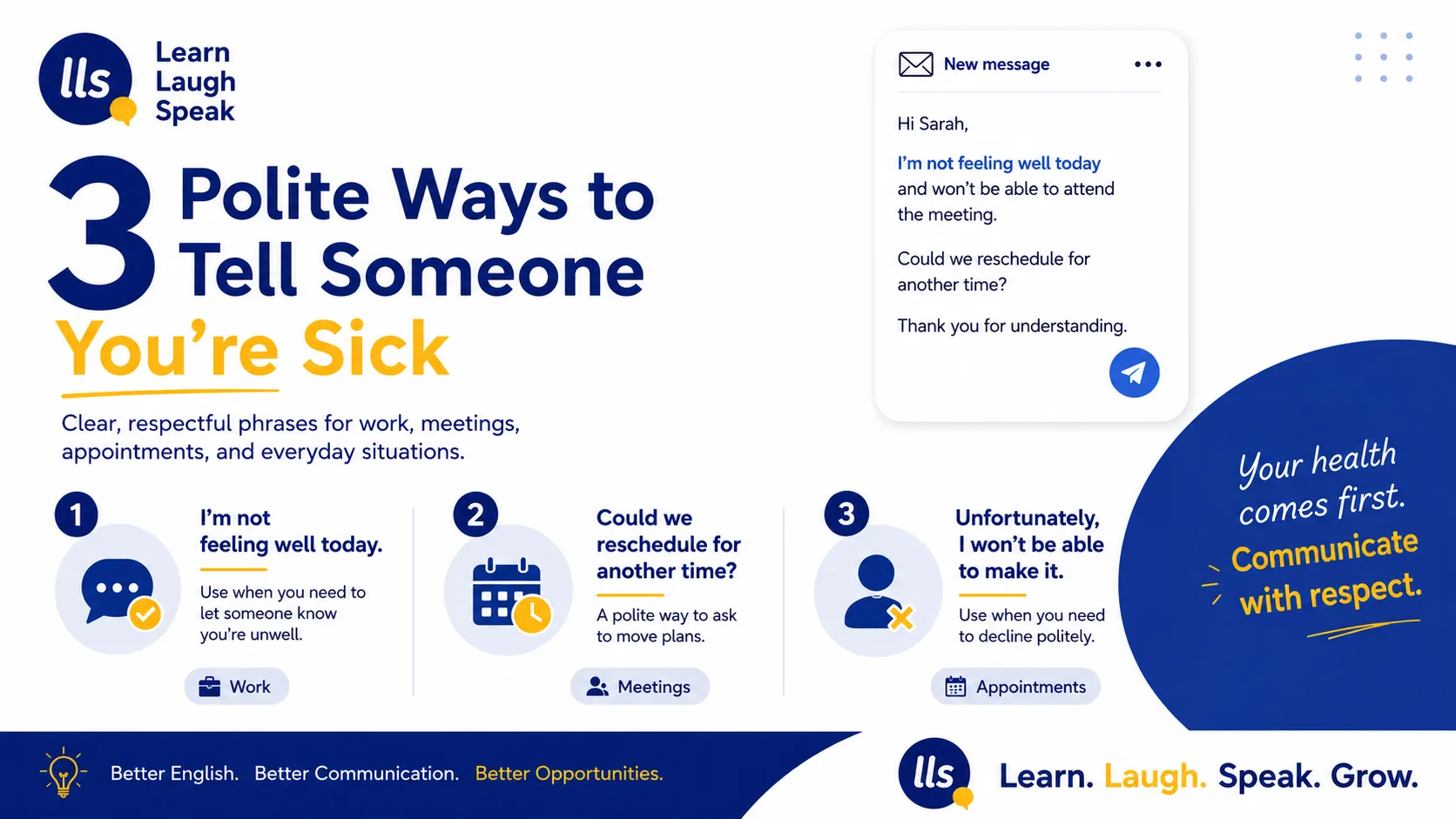
1. “I’m sorry, I’m not feeling well today.”
This is one of the safest and most natural phrases.
Use it when you do not want to give too many details.
Example:
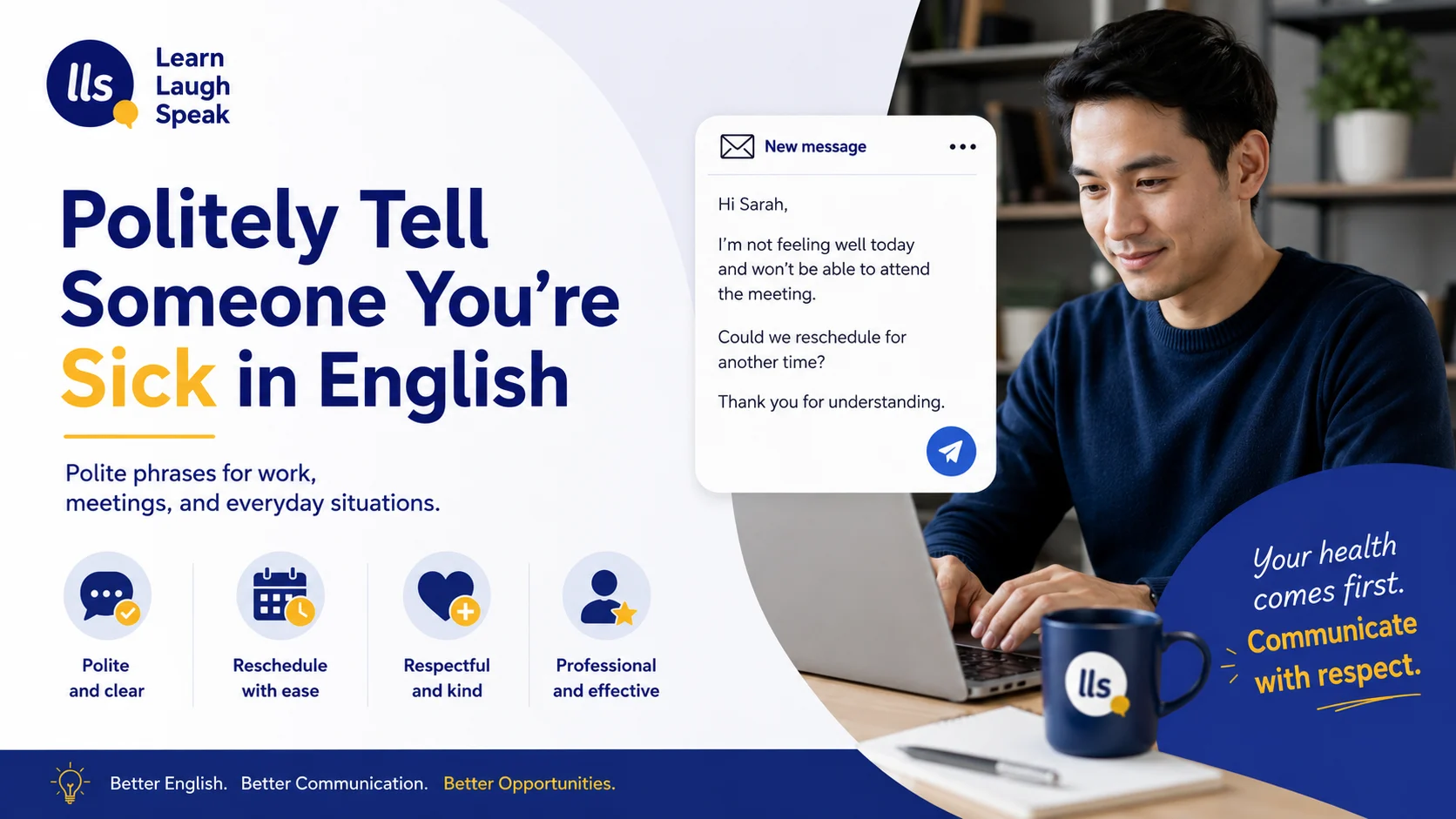
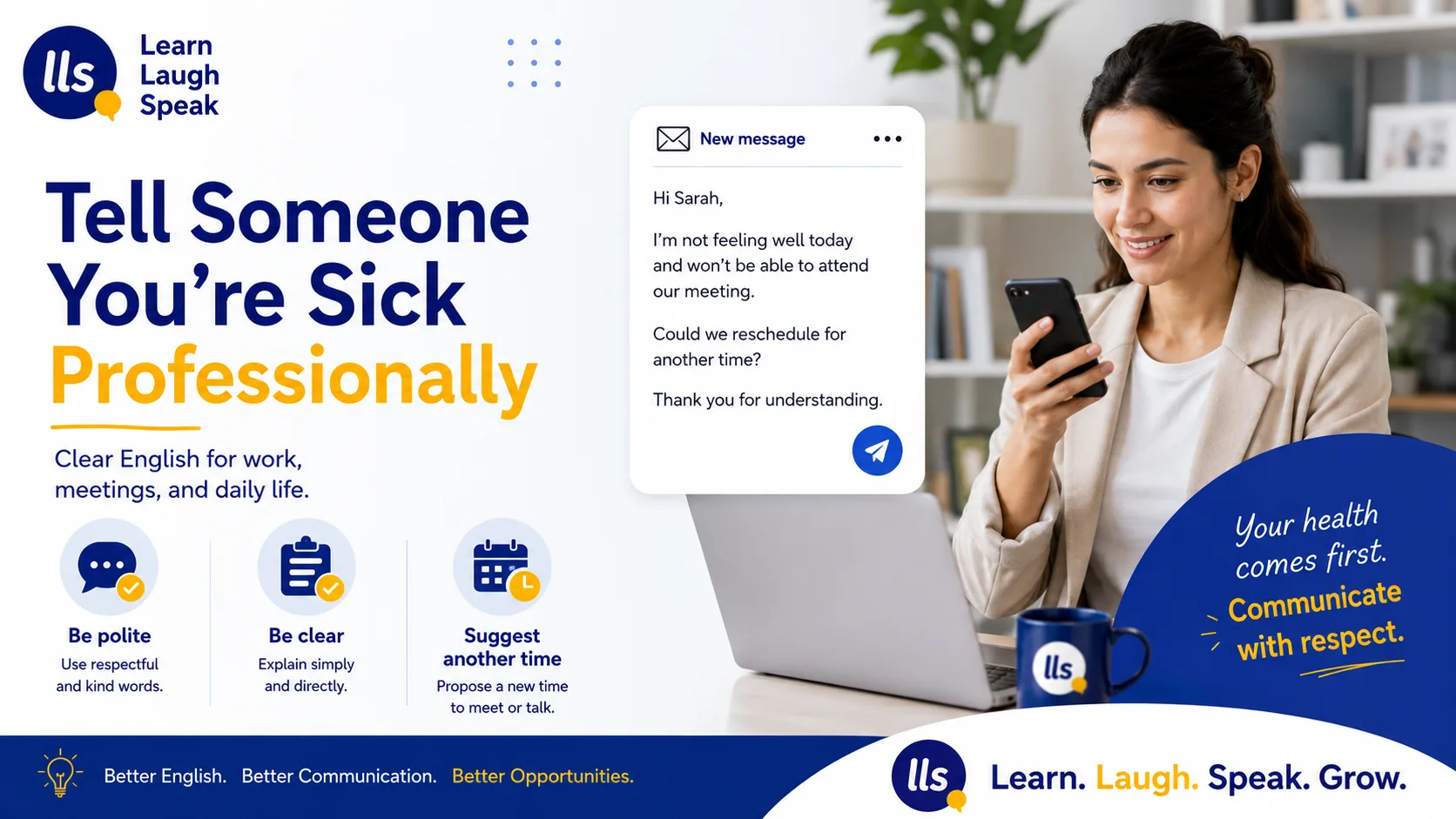
“Hi Sarah, I’m sorry, I’m not feeling well today and won’t be able to attend the meeting.”
This phrase works for work, school, meetings, appointments, and casual plans.
2. “I think I’m coming down with something.”
This means you feel like you are starting to get sick.
Example:
“I think I’m coming down with something, so I’m going to rest and avoid coming in today.”
This sounds natural when you feel a cold, flu, or general illness starting.
3. “I’m feeling under the weather.”
This is a common English expression that means you feel unwell.
Example:
“I’m feeling a bit under the weather today, so I may need to take the day off.”
This sounds softer than saying “I’m sick.”
4. “I’m afraid I won’t be able to make it.”
Use this when you need to cancel a meeting, event, interview, or appointment.
Example:
“I’m afraid I won’t be able to make it today. I’m not feeling well and need to rest.”
This is polite and professional.
5. “Unfortunately, I won’t be able to come in today.”
This is a clear workplace phrase.
Example:
“Hi James, unfortunately, I won’t be able to come in today as I’m unwell.”
You can add:
“I’ll check in tomorrow morning.”
6. “Could we reschedule for another time?”
Use this when you cannot attend a meeting or appointment.
Example:
“I’m sorry, I’m not feeling well today. Could we reschedule for another time?”
This shows respect because you are offering a solution.
7. “I don’t think I’ll be able to attend.”
This is useful when you are not sure if you can go.
Example:
“I don’t think I’ll be able to attend this afternoon. I’m feeling unwell and need to rest.”
This sounds polite and honest.
8. “I need to take a sick day.”
This is direct and common in workplace English.
Example:
“Hi Emma, I’m not feeling well today and need to take a sick day.”
This is simple and professional.
9. “I’ll keep you updated.”
Use this when your manager or colleague may need more information later.
Example:
“I’m going to rest today and I’ll keep you updated about tomorrow.”
This is helpful because it shows responsibility.
10. “Sorry for the short notice.”
Use this when you need to cancel at the last minute.
Example:
“Sorry for the short notice, but I’m not feeling well and won’t be able to make it today.”
This phrase is polite because it recognises the inconvenience.
How to Tell Your Manager You’re Sick
When messaging your manager, keep the message clear and professional.
You should include:
- a greeting
- a short explanation
- whether you can work or need time off
- any urgent handover information
- a polite closing
Example:
Hi David,
I’m sorry, but I’m not feeling well today and need to take a sick day. I’ll rest and keep you updated about tomorrow. I’ve sent the client notes to Maria in case anything urgent comes up.
Thank you for understanding.
This message works because it is clear, responsible, and not too detailed.
Tell Someone You’re Sick: Co-worker
A message to a colleague can be a little less formal, but it should still be clear.
Example:
Hi Ana, I’m not feeling well today, so I won’t be online much. I’ve updated the shared file, but could you please check if anything urgent comes through? Thanks so much.
This helps your colleague understand what you need without sounding demanding.
How to Tell Someone You’re Sick and Need to Reschedule
If you need to cancel a meeting, appointment, or call, it is polite to suggest rescheduling.
Useful phrases:
“Could we reschedule for another time?”
“Would it be possible to move this to tomorrow?”
“Can we find another time later this week?”
“I’m sorry for the inconvenience. I’d be happy to reschedule when I’m feeling better.”
Example:
Hi Rachel, I’m sorry, but I’m not feeling well today and won’t be able to join our call. Could we reschedule for later this week? Thank you for understanding.
This sounds professional and considerate.
How to Tell Someone You’re Sick Before an Interview
If you are sick before a job interview, contact the person as soon as possible. Be polite and offer to reschedule.
Example:
Dear Ms. Carter,
I’m sorry for the short notice, but I’m not feeling well today and I’m concerned I won’t be able to give the interview my full attention. Would it be possible to reschedule for another time this week?
Thank you for your understanding.
Best regards,
[Your Name]
This is better than attending the interview while too unwell to perform properly.
How to Tell Someone You’re Sick in a Casual Situation
If you are cancelling plans with a friend, you can sound more relaxed.
Examples:
“I’m really sorry, but I’m not feeling well today. Can we do another day?”
“I think I’m coming down with something, so I should probably stay home.”
“I’m feeling under the weather. Let’s reschedule when I’m better.”
“Sorry, I don’t think I can make it tonight. I need to rest.”
These phrases are friendly and natural.
Professional Sick Message: Tell Someone You’re Sick
Here are some copy-and-paste templates.
Template 1: Simple sick day message
Hi [Name], I’m sorry, but I’m not feeling well today and need to take a sick day. I’ll keep you updated and let you know if anything changes. Thank you for understanding.
Template 2: Working from home while sick
Hi [Name], I’m not feeling well today, but I can work from home and handle urgent tasks. I may be slower to respond than usual. Thank you for understanding.
Template 3: Cancelling a meeting
Hi [Name], I’m sorry, but I’m not feeling well and won’t be able to attend the meeting today. Could we reschedule for another time? Thank you for your understanding.
Template 4: Last-minute cancellation
Hi [Name], sorry for the short notice, but I’m feeling unwell and won’t be able to make it today. I apologise for any inconvenience and appreciate your understanding.
Template 5: Returning after being sick
Hi [Name], I’m feeling better today and will be back online. Thank you for your patience while I was unwell. I’ll catch up on anything I missed.
What Not to Say and What to Say Instead
| Too casual or unclear | Better English phrase |
|---|---|
| I’m sick. Not coming. | I’m sorry, I’m not feeling well today and won’t be able to come in. |
| I feel bad. | I’m not feeling well. |
| I can’t go. | Unfortunately, I won’t be able to make it. |
| I’m dying. | I’m feeling really unwell and need to rest. |
| I don’t come today. | I won’t be able to come in today. |
| I have sickness. | I’m feeling sick / I’m not feeling well. |
| Move the meeting. | Could we reschedule the meeting? |
| I can’t work. | I’m unwell and need to take a sick day. |
These small changes make your message sound more natural and professional.
How Much Detail Should You Give?
In most work situations, you do not need to explain everything.
You can simply say:
“I’m not feeling well.”
or
“I’m unwell and need to rest.”
You usually do not need to describe symptoms unless it is necessary.
Too much detail:
“I was sick all night and my stomach is terrible and I barely slept…”
Better:
“I’m not feeling well today and need to take the day to recover.”
Keep it respectful, simple, and appropriate.
Useful Vocabulary To Tell Someone You’re Sick
Here are common words and phrases English speakers use.
| Phrase | Meaning |
| I’m not feeling well | General way to say you feel sick |
| I’m feeling unwell | Slightly more formal |
| I’m feeling under the weather | Softer, natural expression |
| I have a cold | You have cold symptoms |
| I have the flu | You have flu symptoms |
| I have a stomach bug | You feel sick in your stomach |
| I’m coming down with something | You think you are starting to get sick |
| I need to rest | You need recovery time |
| I need to take a sick day | You cannot work because of illness |
| I’ll keep you updated | You will give more information later |
Common Grammar Mistakes
1. “I am sicked”
Incorrect:
“I am sicked.”
Correct:
“I am sick.”
Better for work:
“I’m not feeling well.”
2. “I have sickness”
Incorrect:
“I have sickness.”
Correct:
“I’m feeling sick.”
or
“I’m not feeling well.”
3. “I cannot assist to work”
Incorrect:
“I cannot assist to work.”
Correct:
“I can’t come to work.”
More professional:
“I won’t be able to come in today.”
4. “I am with flu”
Incorrect:
“I am with flu.”
Correct:
“I have the flu.”
or
“I think I have the flu.”
5. “I don’t go today”
Incorrect:
“I don’t go today.”
Correct:
“I won’t be able to come in today.”
Should You Offer to Work While Sick?
This depends on your health, your job, and your company policy.
If you are too sick to work, say clearly that you need to rest.
Example:
“I’m not well enough to work today, so I need to take a sick day.”
If you can work lightly from home, say:
“I’m not feeling well, but I can work from home and handle urgent tasks.”
Do not promise to work if you are too unwell. It is better to be honest.
What If Your Company Needs Proof?
Some companies may ask for a doctor’s note, medical certificate, or official documentation, depending on the workplace policy and the length of absence.
You can say:
“Please let me know if you need any documentation from me.”
or
“I’ll follow the company sick leave process and send any required documentation.”
This sounds professional without giving unnecessary personal details.
Learn Professional English with Learn Laugh Speak
Learn Laugh Speak helps adult English learners communicate clearly in real work and daily situations.
Knowing how to tell someone you’re sick is useful because it is a common situation where tone matters. You need to sound honest, polite, and professional without sharing too much information.
With Learn Laugh Speak, students practise English for work, meetings, emails, customer service, interviews, daily conversations, and professional messages. The goal is to help learners use English confidently when real life happens.
Practice Activity: Make These Messages More Professional
Rewrite the messages below in a better way.
- I’m sick. Not coming.
- Move meeting. I feel bad.
- I can’t go today.
- I have sickness.
- I don’t work today.
Suggested answers:
- I’m sorry, I’m not feeling well today and won’t be able to come in.
- I’m not feeling well. Could we reschedule the meeting?
- Unfortunately, I won’t be able to make it today.
- I’m feeling sick / I’m not feeling well.
- I’m unwell and need to take a sick day today.
FAQs About How to Tell Someone You’re Sick in English
How do you politely tell someone you’re sick?
You can say “I’m sorry, I’m not feeling well today” or “Unfortunately, I won’t be able to make it because I’m unwell.”
How do you tell your boss you are sick?
Say “Hi [Name], I’m not feeling well today and need to take a sick day. I’ll keep you updated and let you know if anything changes.”
How do you say you are sick professionally?
Professional phrases include “I’m unwell,” “I’m not feeling well,” “I need to take a sick day,” and “I won’t be able to come in today.”
How do you cancel a meeting because you are sick?
Say “I’m sorry, but I’m not feeling well and won’t be able to attend today. Could we reschedule for another time?”
Should I explain my symptoms?
Usually, no. In most professional situations, “I’m not feeling well” is enough unless your workplace asks for more information.
What does “under the weather” mean?
Under the weather means you feel unwell or sick. Example: “I’m feeling under the weather today.”
How do I say sorry for cancelling because I’m sick?
Say “Sorry for the short notice, but I’m not feeling well and won’t be able to make it.”
Final Thoughts on How to Tell Someone You’re Sick
Learning how to tell someone you’re sick in English helps you communicate clearly when you are not feeling your best.
Keep your message short, polite, and honest. Explain that you are unwell, say what you need, and offer to reschedule or keep the person updated if necessary.
Your health comes first. The right English phrases help you protect your time, respect others, and sound professional.
12 thoughts on “How to Politely Tell Someone You’re Sick in English”
Pingback: go88
Pingback: เทรดทอง
Pingback: กล่องบรรจุภัณฑ์
Pingback: ร้านดอกไม้อารีย์
Pingback: Highbay
Pingback: ซอฟต์แวร์บริหารงานบริการทำความสะอาด
Pingback: English Slang for Talking About the Weather
Pingback: How to Respond Professionally to Late Payment Excuses
Pingback: How to Say Sorry I Am Late Professionally in English
Pingback: How to Confirm Understanding in English Professionally
Pingback: Useful Phrases for When the Sun is Out - Learn Laugh Speak
Pingback: How to Say I’m Going on Vacation Professionally in English - Learn Laugh Speak
Comments are closed.