
 English
 Arabic
 Chinese (Simplified)
 Dutch
Dutch French
 German
 Italian
 Portuguese
 Russian
 Spanish
The way we work has changed more in the last ten years than in the previous fifty. Remote work, hybrid schedules, coworking spaces, and digital collaboration have reshaped what the modern office looks like. But one element has remained central to productivity and comfort: the desk.
Desks are no longer just flat surfaces to place a computer. Today, they are tools that support posture, focus, workflow, and even employee well-being. Choosing the right desk can influence everything from physical health to cognitive performance.
Understanding how desks function in different environments, from corporate offices to home workspaces, helps businesses and individuals make better decisions about how they work every day.
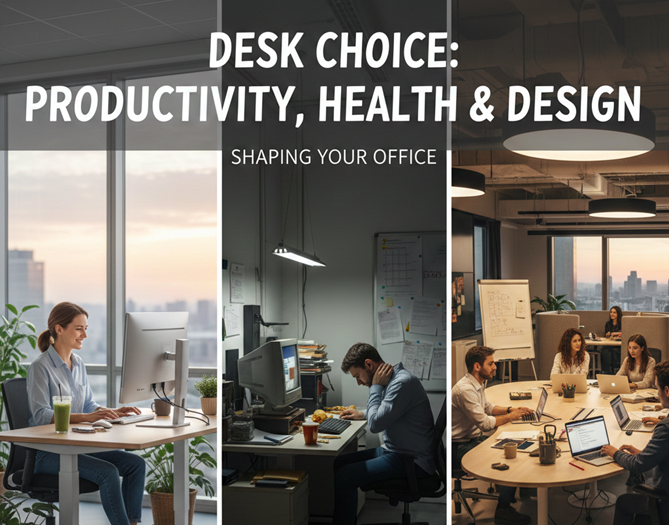
Why Your Desk Is More Than Just Furniture
Most people underestimate how much their desk affects their performance. A poorly chosen desk can lead to:
- Neck and back strain
- Reduced circulation
- Wrist and shoulder pain
- Lower concentration
- Faster fatigue
On the other hand, a well-designed desk supports natural posture, efficient movement, and comfortable viewing angles. This is especially important now that many people spend 6-10 hours per day working at a desk.
According to the Occupational Safety and Health Administration (OSHA), ergonomically optimized workstations significantly reduce musculoskeletal disorders and workplace injuries, leading to better productivity and fewer sick days.
A desk is not just a piece of furniture. It is the foundation of your daily work environment.
Pro tip: Using a standing desk is a great way to improve mobility when working long hours!
Why Choosing the Right Desk Type Matters
Many people buy desks based on looks or price alone. But the true cost of a poorly chosen desk shows up later as discomfort, lost productivity, and even injury.
Understanding the different types of desks allows businesses and individuals to match furniture to real-world use cases (whether that’s heads-down work, collaborative projects, or executive management).
The right desk supports the way you work, not the other way around.
How Desk Design Impacts Work Styles
Different jobs require different working postures and layouts. A graphic designer works differently than a customer service agent. A CEO works differently than a software developer. This is where desk design becomes strategic.
Here are some ways desk type influences how people work:
1. Focus and Deep Work
Smaller, more enclosed desks (like cubicles or individual workstations) reduce visual and auditory distractions, helping people focus on tasks that require concentration.
2. Collaboration
Large shared desks, benching systems, and conference tables promote teamwork and spontaneous interaction, ideal for creative or project-based teams.
3. Movement and Energy
Sit-stand desks and adjustable workstations allow people to change posture throughout the day, improving blood flow and reducing stiffness.For teams standardizing on sit-stand workstations, prioritize quiet motors, wide height ranges, and stable frames that support multi‑monitor workflows. To compare options, explore premium electric standing desk solutions featuring triple‑motor L‑shaped models, sleek glass tops with memory keypads, value‑priced single‑motor desks, and compact desk converters that fit small spaces
4. Workflow Efficiency
Desks with built-in storage, cable management, or multiple work surfaces support multitasking and reduce clutter, improving efficiency.
Desk Ergonomics: What Actually Matters?
When evaluating desk quality, ergonomics should be at the top of the list. Here are the core ergonomic principles every desk should support:
Proper Height
A desk should allow elbows to rest at a 90-degree angle while typing. This reduces shoulder tension and wrist strain.
Leg Clearance
There should be enough room for knees, feet, and movement underneath the desk. Cramped leg space restricts circulation.
Monitor Positioning
A good desk allows monitors to be positioned so the top of the screen is at or slightly below eye level.
Surface Depth
You should be able to sit at a comfortable distance from your screen (about an arm’s length away) without the desk feeling cramped.
These factors matter far more than aesthetic design and they vary based on body size, job role, and workspace layout.
Sustainability and Desk Materials
Sustainability has become a growing factor in furniture selection. Businesses increasingly look for desks made from:
- Recycled steel
- FSC-certified wood
- Low-VOC laminates
- Modular components for long-term use
Modular desks can be reconfigured instead of replaced, reducing waste and saving money over time.
The U.S. Green Building Council (USGBC) promotes sustainable office furnishings as part of LEED-certified workplace design, reinforcing the importance of environmentally responsible desk choices.
You can learn more about sustainable office design standards at usgbc.org, which outlines how furniture impacts indoor environmental quality and workplace sustainability.
Desks and the Future of Work
As work becomes more flexible, desks are evolving too.
We are seeing a rise in:
- Height-adjustable desks
- Mobile desks on casters
- Hot-desking systems
- Hybrid home-office workstations
- Tech-integrated smart desks
These trends reflect how modern workers move between home, office, and coworking spaces. The desk is no longer fixed, it adapts to the user.
Conclusion
The desk is the most used piece of furniture in any workspace, yet it is often the least understood. From ergonomics to layout to technology integration, desk choice directly impacts health, efficiency, and workplace satisfaction.
As offices continue to evolve, so will desk design. Those who invest in the right workstation solutions today will benefit from healthier teams, better productivity, and more adaptable workspaces tomorrow.