
 English
 Arabic
 Chinese (Simplified)
 Dutch
Dutch French
 German
 Italian
 Portuguese
 Russian
 Spanish
Key Takeaways
- Hybrid homeschooling combines home flexibility with the support and community of a co-op program, especially valuable for Christian families.
- A Christian homeschool co-op provides academic structure, faith integration, and peer fellowship while parents remain primary educators.
- Co-op students may be eligible for town sports and participate in daily chapel, further enriching their educational experience.
- Evaluating curriculum alignment, flexibility, spiritual emphasis, and support are essential steps for parents when choosing a program.
Table of Contents
- Hybrid Homeschooling vs. Solo Homeschooling: Why Consider a Co-Op?
- How to Evaluate a Christian Homeschool Co-Op
- The Value of a Structured Christian Curriculum
- Homeschool Enrollment and Town Sports Opportunities
- Peer Community and Chapel: Spiritual Growth in Action
- Next Steps for North Shore Families
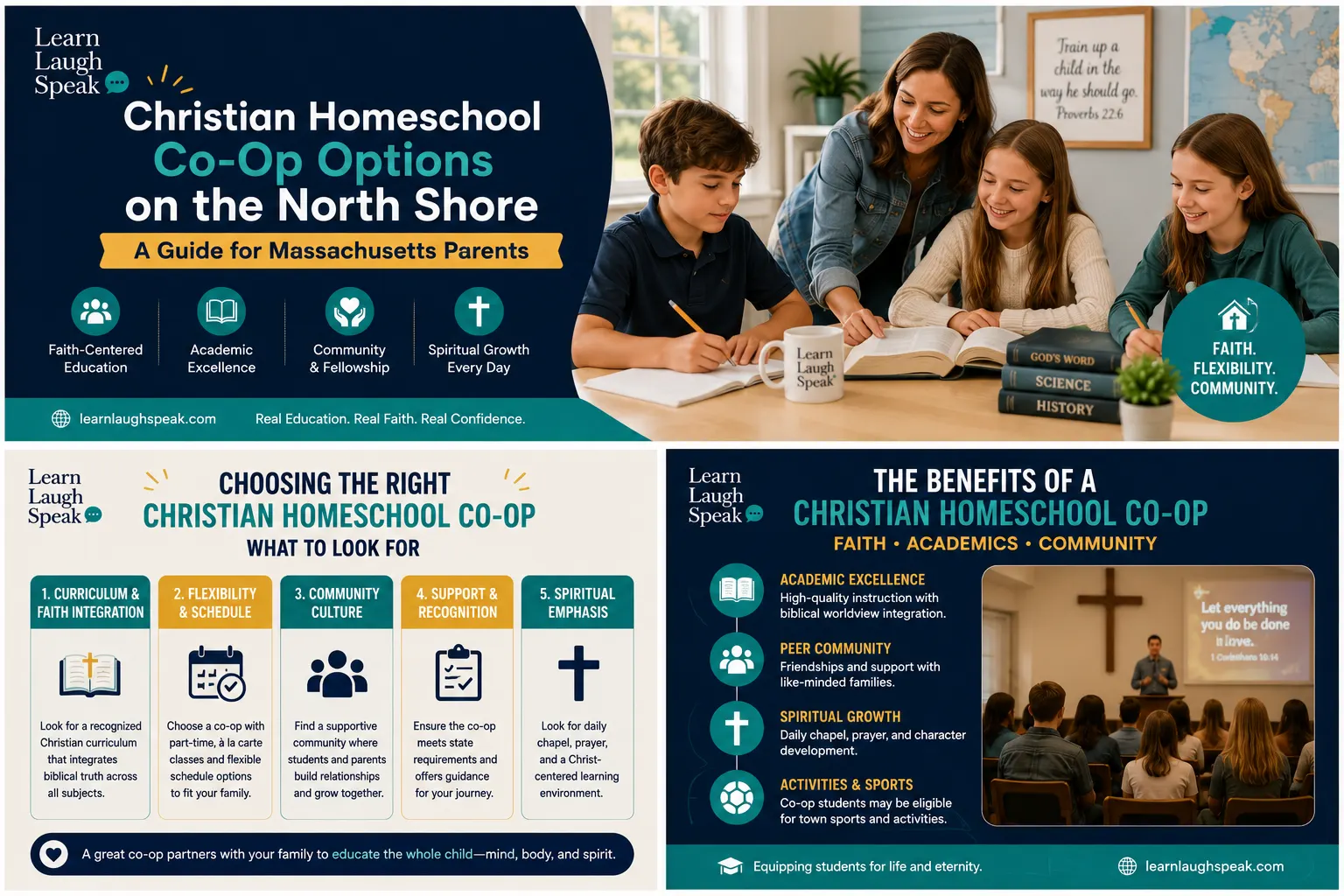
Hybrid Homeschooling vs. Solo Homeschooling: Why Consider a Co-Op?
Homeschooling in Massachusetts offers parents an extraordinary opportunity to shape both the academic and spiritual development of their children. For many families, the flexibility to set the pace, choose materials, and build faith right into the curriculum is what makes the homeschool path so appealing. However, independent homeschooling can also come with real challenges like isolation, limited access to extracurriculars, and the worry of missing out on a supportive peer community.
This is where the hybrid model, often centered around a homeschool co-op Massachusetts, becomes a valuable option. Co-op programs blend the best of both worlds, allowing families to continue guiding their children’s education while benefiting from professional instruction, group learning, and a Christ-centered environment. Parents can select which classes or days their children attend, integrating structure and community support without sacrificing flexibility at home.
The Christian co-op model also alleviates the pressure for parents to be experts in every subject or facilitators of every extracurricular. By partnering with like-minded educators and families, children receive robust instruction in areas like science labs, foreign language, or arts, while still learning in a community where faith is at the center.
Families searching for faith-based hybrid experiences on the North Shore specifically benefit from co-ops designed to nurture both academic and spiritual growth, while welcoming each parent as an active participant in their child’s learning journey.
For parents researching broader educational options, check out this practical guide on how to choose a Christian school Massachusetts to compare criteria when considering traditional schools, private academies, and co-op programs.
How to Evaluate a Christian Homeschool Co-Op
Choosing the right Christian homeschool co-op is a significant decision in your child’s educational journey. Here are important points to consider as you evaluate options:
- Curriculum & Biblical Integration: Does the co-op use a recognized, faith-based academic program that aligns with your family’s educational philosophy and doctrinal beliefs? Look for consistent biblical worldview integration across subjects.
- Schedule & Flexibility: Are part-time and à la carte class options available? Flexibility to select classes or customize days is key for many hybrid families.
- Community Culture: What is the atmosphere among students, teachers, and parents? Are there dedicated opportunities for parents to volunteer or participate in the co-op’s activities?
- Support & Recognition: Confirm the co-op’s official status with local education authorities, and whether it provides guidance for college prep, transcripts, or compliance with Massachusetts homeschool requirements.
The Value of a Structured Christian Curriculum
One of the most important aspects of a successful co-op is the academic framework. Many well-established Christian co-op programs on the North Shore, such as the offering at Great Rock Christian Academy, feature respected curricula like Abeka, which is known for its academic rigor and biblical integration. This consistency supports parents by ensuring high educational standards and allowing seamless transitions between home-based and on-campus learning.
Structured curriculum also provides valuable accountability and assessment tools. Students gain exposure to standardized testing, receive constructive teacher feedback, and have the opportunity to develop classroom skills in a Christ-centered setting. For parents seeking a balance between self-designed learning and guidance from experienced educators, this structure is a significant benefit.
Families can read more about effective Christian education approaches in major publications like Focus on the Family: Homeschooling Resources.
Homeschool Enrollment and Town Sports Opportunities at Great Rock Christian Academy
Massachusetts homeschoolers and co-op students often want to participate in local sports or extracurricular activities. Through flexible enrollment pathways, many co-op students can become eligible for town-based athletic programs. This is generally determined by local school districts and state athletic associations, so families should check specific requirements in their municipality. Having district recognition or being part of a registered school, like Great Rock Christian Academy, often simplifies this process for families seeking well-rounded enrichment options.
The hybrid homeschool pathway encourages physical activity, teamwork, and community integration without requiring families to give up the model that best suits their core values and day-to-day life.
Peer Community and Chapel: Spiritual Growth in Action
Beyond academics, one of the most meaningful benefits of a Christian co-op is the opportunity for students to develop close friendships and grow spiritually in daily chapel and prayer. Programs like those at Great Rock Christian Academy include regular chapel services that foster a culture of worship, character development, and service. Here, students experience fellowship with peers who share their values, creating memories and relationships that support their faith journey.
Parents can trust that their children are immersed in an encouraging, Christ-centered environment that supports both educational and spiritual milestones, helping them find their voice, build resilience, and practice real-world discipleship alongside academic achievement.
Next Steps for North Shore Families
Christian homeschool co-ops in Massachusetts provide families with the flexibility to design a unique educational journey centered around faith, intellectual growth, and community engagement. Hybrid approaches enrich home education, giving access to professional teaching, engaging extracurriculars, and spiritual formation through chapel and peer mentorship. For North Shore Boston families in particular, the right co-op program can become the heart of their homeschooling experience, connecting home values with broader academic and social opportunities.
Explore detailed options by visiting established co-op programs in the region, connecting with local homeschool support groups, and reviewing application and visitation opportunities at Christian academies. Families are encouraged to start their exploration with the homeschool co-op Massachusetts resource page for more information on faith-based hybrid learning paths tailored for the North Shore community.