
 English
 Arabic
 Chinese (Simplified)
 Dutch
Dutch French
 German
 Italian
 Portuguese
 Russian
 Spanish
AI and Students using many different models in classrooms to speed up work flows and learning.
But is it helping?
Walk into almost any classroom, office, or study environment in 2026 and you’ll notice something immediately.
Students are producing better work than ever before.
Cleaner writing.
Stronger structure.
More polished ideas.
But if you stay a little longer — long enough to see how that work was created — the picture becomes less clear.
Because behind that improved output, something else is happening.
Not every student producing better work is becoming better.
And that’s where the conversation around AI and Students really begins.
Not Replacing, But Transforming: How AI Is Actually Reshaping Work
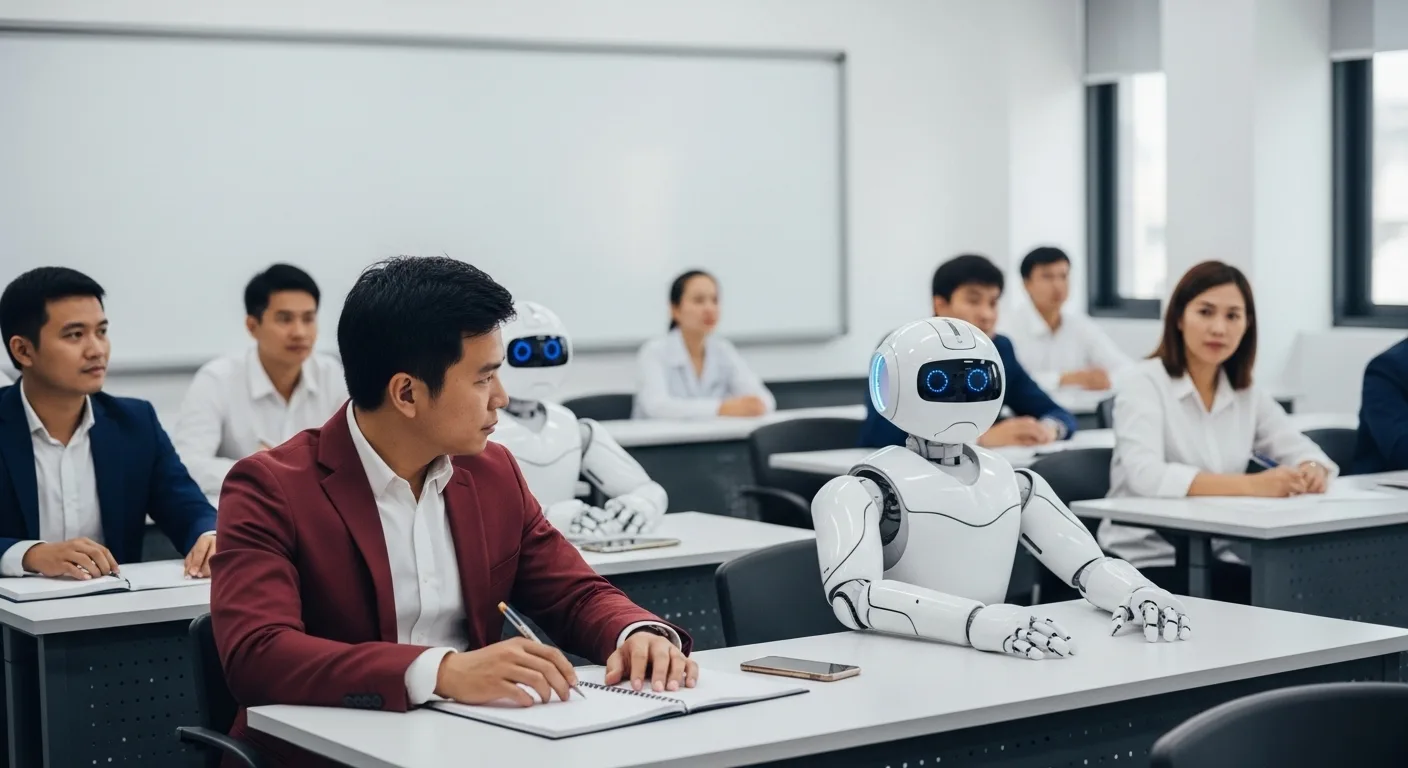
AI and Students: The Change you Do Not See
At a glance, everything looks like progress.
Assignments are completed faster.
Mistakes are reduced.
Quality appears higher.
But this isn’t just a change in results.
It’s a change in process.
Students are no longer always:
Building ideas slowly
Testing language
Correcting themselves
Instead, many are:
Generating
Editing
Submitting
And while that process is efficient, it removes something that used to sit at the center of learning — effort.
How to Use AI to Write Better Essays as an English Learner
When the Work Improves Faster Than the Student
This is the point where things become difficult to measure.
Because results can be misleading.
A student might submit a well-written essay, structured clearly and using advanced vocabulary.
But if you ask them to explain it — without tools — the gap becomes visible.
They hesitate.
They simplify.
They lose precision.
Not because they didn’t see the language.
But because they didn’t build it.
This disconnect is one of the most important realities shaping AI and Students today.
These Workers Say AI Is Now a Baseline Skill. Here’s How It’s Helping Them Get Ahead.
The Quiet Removal of Friction
Learning has always involved a certain amount of resistance.
Searching for the right word.
Rewriting sentences.
Fixing mistakes repeatedly.
That friction isn’t a flaw.
It’s part of how skills are formed.
When AI removes that friction completely, it also removes:
Trial and error
Language decision-making
Memory reinforcement
The result is smoother — but shallower.
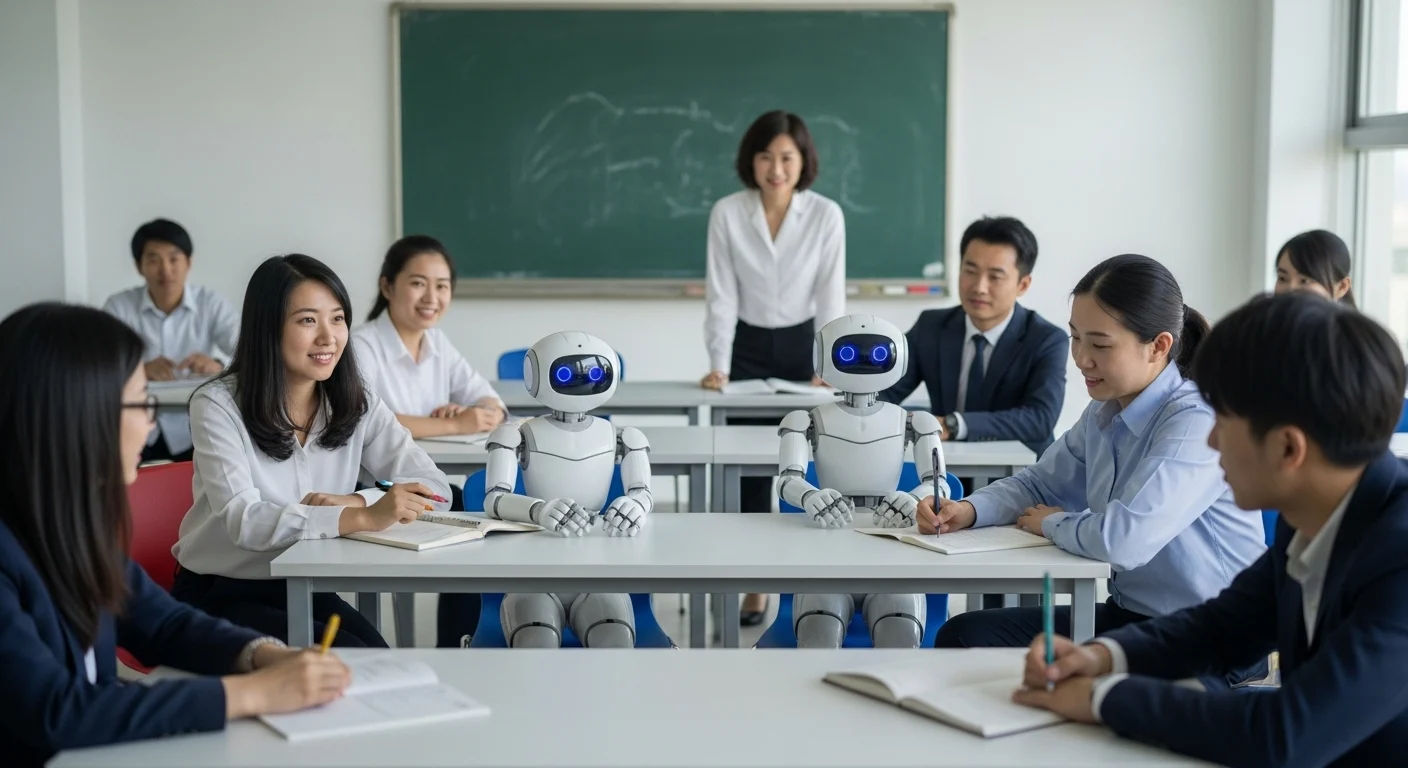
A Subtle Change in How Students Think
There’s another shift that’s less obvious.
Students are becoming better at managing output — not necessarily creating it.
They know how to:
- Ask for structure
- Refine responses
- Improve clarity
But not always how to:
- Start from nothing
- Build ideas independently
- Express thoughts without assistance
That distinction is small, but it becomes significant over time.
Why Students Using AI for Essays Are Not Improving Their English
Two Students, Same Tool — Very Different Outcomes
Spend enough time observing how people work, and a pattern appears.
Some students still begin with their own thinking.
They write first.
Struggle a little.
Then refine.
Others begin with the tool.
They generate first.
Adjust slightly.
Move on.
Both may submit similar work.
But only one is developing the underlying skill.
This is why discussions around AI and Students often feel divided — because both experiences are real.
AI and Students: The Difference
The gap doesn’t appear in written assignments.
It appears in moments without support.
Conversations.
Presentations.
Unexpected questions.
Situations where there’s no time to edit.
No time to generate.
Only time to respond.
That’s where built skill matters.
The Misunderstanding That Slows Progress
Many students believe that seeing correct English is enough to learn it.
But recognition is not the same as production.
You can recognize a well-written sentence immediately.
That doesn’t mean you can create one under pressure.
This misunderstanding is becoming more common — and it’s directly linked to how AI and Students interact with content.
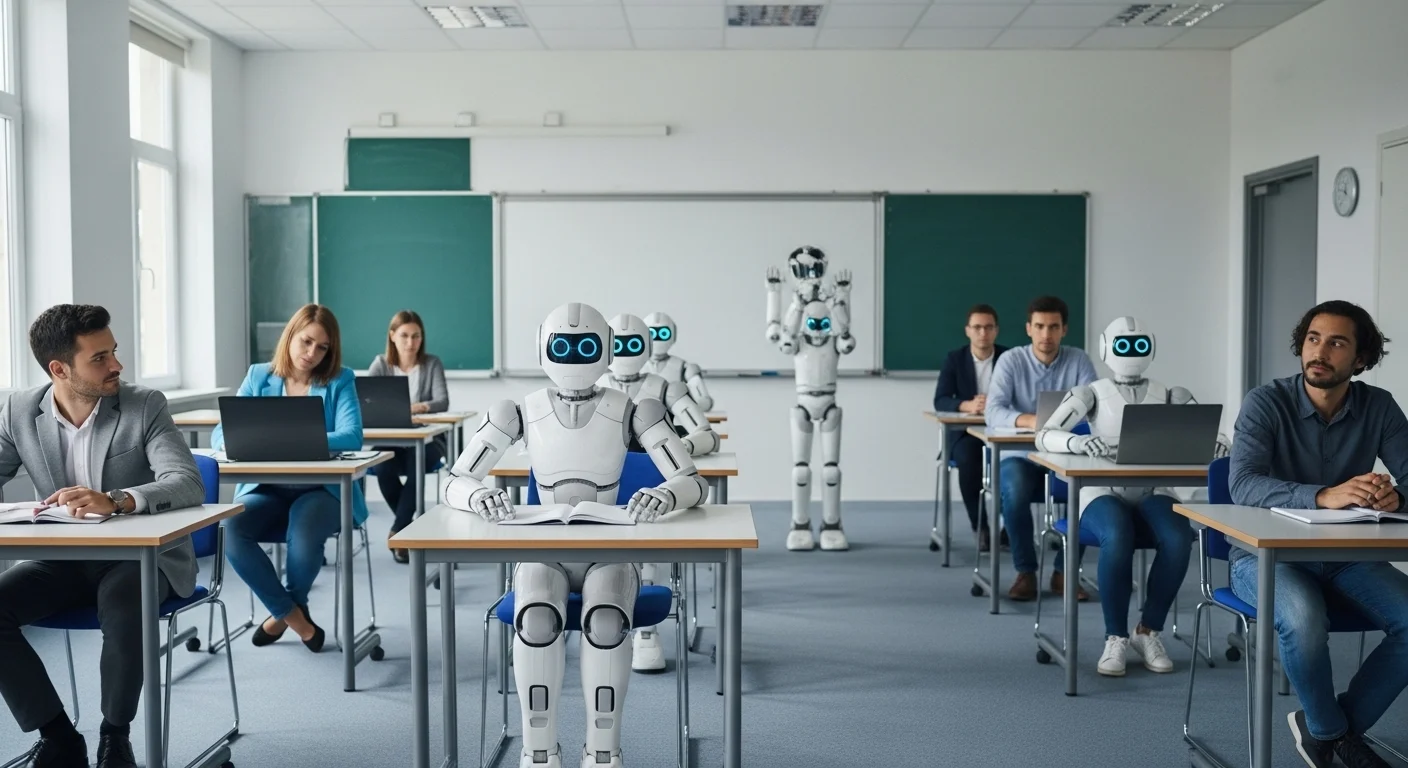
Why It Feels Like You’re Improving
AI gives immediate results.
And immediate results feel like progress.
You see:
Better phrasing
Clearer structure
Fewer mistakes
So it feels like improvement.
But real improvement takes longer.
Because it requires repetition, not just exposure.
Without repetition, language stays external.
You understand it — but don’t use it.
Where AI Actually Becomes Powerful
There is a group of students who are improving faster than ever.
But they use AI differently.
They don’t skip the process.
They support it.
They:
- Start with their own work
- Use AI to check patterns
- Rewrite
- Repeat
For them, AI reduces wasted time — not necessary effort.
That’s an important distinction.
The Risk Isn’t Dependence — AI and Students
The concern isn’t that students use AI.
It’s that they substitute it for thinking.
When that happens, the role shifts:
From creator → to editor
From builder → to reviewer
And once that shift becomes a habit, it’s difficult to reverse.
What This Means for Learning in 2026
The conversation around AI and Students isn’t about whether the technology is good or bad.
It’s about how learning itself is changing.
We’re moving toward a model where output is easy – thanks in part to AI development services becoming more accessible than ever.
Tools that were once only available to large organisations are now in the hands of everyday students.
But accessibility doesn’t automatically mean progress.
Because while the tools have changed, the fundamentals of learning haven’t changed.
Stay on Track with AI and Students
The easiest way to think about this is:
If you didn’t struggle at least a little, you probably didn’t learn much.
That doesn’t mean learning should be difficult.
It means it should be active.
Final Reflection on AI and Students
AI is not slowing students down.
But the way it’s being used sometimes is.
The future of AI and Students will not be defined by access to tools.
It will be defined by how those tools are used.
Some students will accelerate their progress by staying engaged in the process.
Others will move faster in appearance — but slower in ability.
Because in the end, learning still depends on one thing:
Participation.
And no tool, no matter how advanced, can replace that.
Still unsure on how AI and students can use AI to progress rather than go backwards? Send us a email!
2 thoughts on “AI and Students in 2026: Helping or Hindering Real Learning?”
Pingback: Virtual Office Cost: How Much Does a Virtual Office Cost in 2026? - Learn Laugh Speak
Pingback: AI Agent Hosting Platform Explained: How It Works in 2026 - Learn Laugh Speak