
 English
 Arabic
 Chinese (Simplified)
 Dutch
Dutch French
 German
 Italian
 Portuguese
 Russian
 Spanish
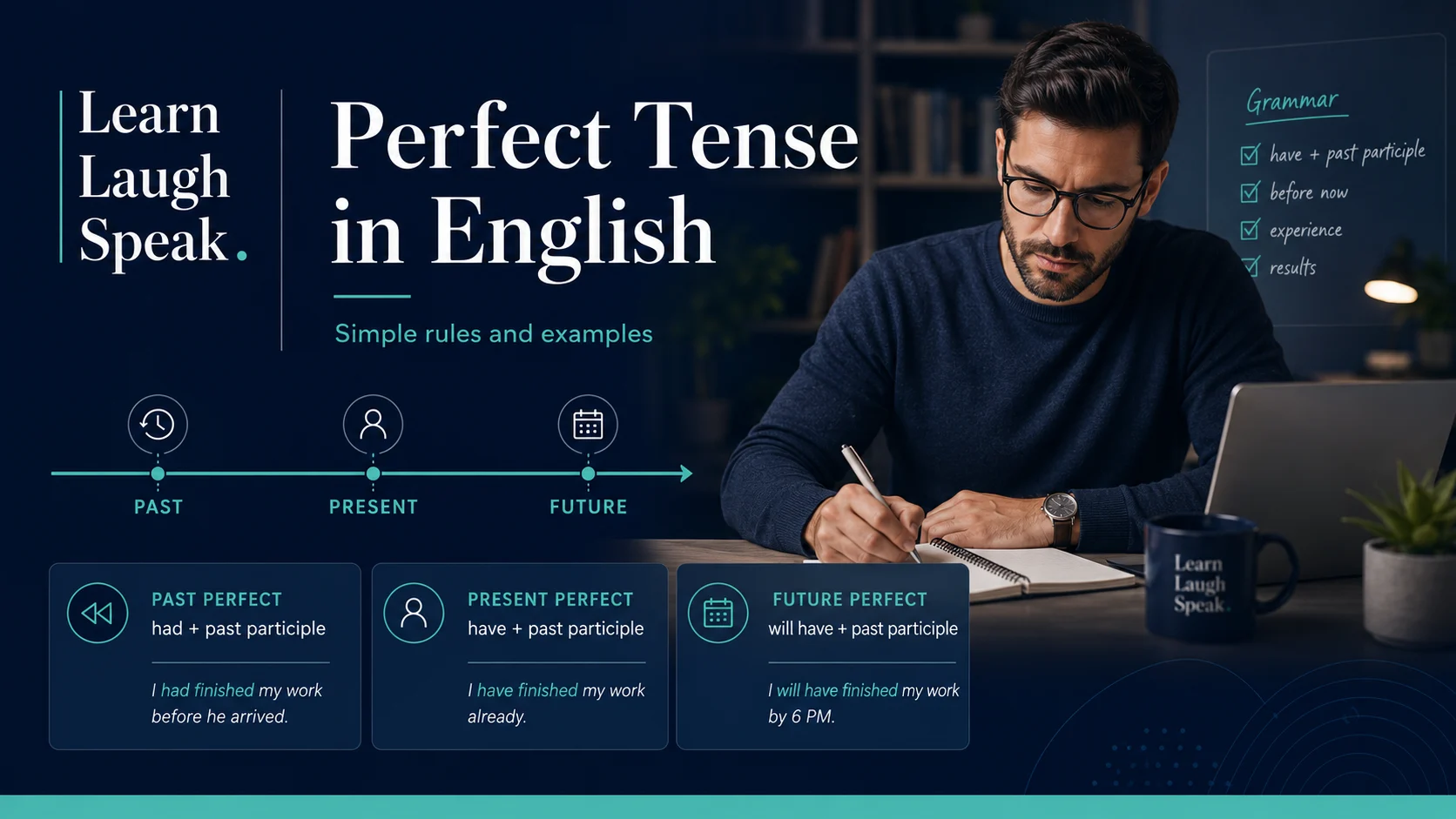
There are three main perfect tenses in English: the present perfect, past perfect, and future perfect.
Each one helps us talk about actions connected to another time.
The perfect tense can feel confusing at first because it connects different moments together. Sometimes it connects the past to the present. Sometimes it shows that one past action happened before another past action. Sometimes it explains that something will be completed before a future time.
In this article, we will explain each perfect tense simply, give clear examples, and show common mistakes English learners should avoid.
Another question to be answered is when looking for a job should your resume be in past or present tense?
What Is Perfect Tense in English?
The perfect tense is used to show that an action is completed or connected to another point in time.
The structure usually uses:
have / has / had / will have + past participle
For example:
“I have finished my homework.”
“She had left before I arrived.”
“By 6 PM, we will have completed the report.”
The main idea is that the action is not only about when it happened. It is also about how that action connects to another time or situation.
Quick Guide to the Three Perfect Tenses
| Tense | Structure | Main Use | Example |
|---|---|---|---|
| Present perfect | have/has + past participle | Past action connected to now | “I have finished my homework.” |
| Past perfect | had + past participle | One past action before another past action | “I had finished before she arrived.” |
| Future perfect | will have + past participle | Action completed before a future time | “I will have finished by 5 PM.” |
This table gives you the basic difference between the three perfect tenses.
Now let’s look at each one in more detail.
What Is Past Perfect Tense?
The past perfect tense is used to describe an action that happened before another action in the past.
The structure is:
had + past participle
For example:
“I had finished my homework before I went to bed.”
This sentence has two past actions:
First: I finished my homework.
Second: I went to bed.
The past perfect helps us show which action happened first.
Our resource on grammar and what you need is also here
Past Perfect Tense Examples
Here are some simple examples of the past perfect tense:
“I had studied for the test, but I still didn’t pass.”
“She had already gone to bed by the time he came home.”
“We hadn’t seen each other in years, but we picked up right where we left off.”
“He had left the office before the meeting started.”
“They had completed the project before the deadline.”
In each example, one action happened before another past moment.
When Do We Use Past Perfect Tense?
We use past perfect tense when we want to make the order of past events clear.
For example:
“I had finished my homework before I went to bed.”
This means the homework was completed first. Then I went to bed.
Another example:
“She had already gone to bed by the time he came home.”
This means she went to bed first. Then he came home.
We can also use past perfect tense in hypothetical situations.
For example:
“If I had studied for the test, I would have passed.”
This means the person did not study enough, and the result was that they did not pass.
Past perfect is useful because it helps the listener understand the timeline clearly.
What Is Present Perfect Tense?
The present perfect tense is used to describe an action that happened in the past but is still connected to the present.
The structure is:
have / has + past participle
For example:
“I have finished my homework.”
This means the homework is finished now.
The action happened before now, but the result matters in the present.
Present Perfect Tense Examples
Here are some examples of present perfect tense:
“I have lost my phone.”
This means the phone is lost now.
“She has been married for five years.”
This means the marriage started in the past and continues now.
“We have gone to this restaurant three times this week.”
This means the visits happened during a time period that is still connected to now.
“He has completed the report.”
This means the report is complete now.
“They have already sent the email.”
This means the email has been sent, and that information is important now.
When Do We Use Present Perfect Tense?
We use present perfect tense in several common situations.
1. To talk about past actions with present results
“I have lost my keys.”
The action happened in the past, but the result is important now because I still do not have my keys.
2. To talk about life experiences
“I have visited London.”
This means the experience happened at some point in my life. The exact time is not important.
3. To talk about actions that started in the past and continue now
“She has worked here for three years.”
This means she started working here three years ago and still works here now.
4. To talk about recent actions
“I have just finished the meeting.”
This means the meeting ended recently.
Present perfect is one of the most useful English tenses because it helps you connect past actions to the present situation.
What Is Future Perfect Tense?
The future perfect tense is used to describe an action that will be completed before a specific point in the future.
The structure is:
will have + past participle
For example:
“I will have finished my homework by the time you get home.”
This means the homework will be completed before you arrive.
The future perfect tense is useful when you want to explain that something will already be done before a future time or event.
Future Perfect Tense Examples
Here are some examples of future perfect tense:
“By tomorrow, I will have finished the report.”
“She will have been married for six years by next year.”
“We will have completed the project before the deadline.”
“He will have studied for the test by Friday.”
“They will have left the office by the time we arrive.”
In each sentence, the action will be completed before a future point.
When Do We Use Future Perfect Tense?
We use future perfect tense when we want to talk about something that will be finished before a future time.
For example:
“By 5 PM, I will have finished the presentation.”
This means the presentation will be completed before 5 PM.
Another example:
“By next year, she will have worked here for ten years.”
This means that when next year arrives, her total time working there will be ten years.
Future perfect tense is often used with time expressions like:
by tomorrow
by next week
by the end of the day
by the time you arrive
before the deadline
by next year
These time expressions help show the future point that the action will be completed before.
Perfect Tense Examples Compared
Sometimes it is easier to understand the perfect tense by comparing the same idea in different tenses.
| Tense | Example | Meaning |
|---|---|---|
| Present perfect | “I have finished the task.” | The task is complete now. |
| Past perfect | “I had finished the task before the meeting.” | The task was complete before another past event. |
| Future perfect | “I will have finished the task by 5 PM.” | The task will be complete before a future time. |
Each sentence talks about a completed action, but the time connection is different.
That is the key to understanding perfect tense in English.
Common Perfect Tense Mistakes
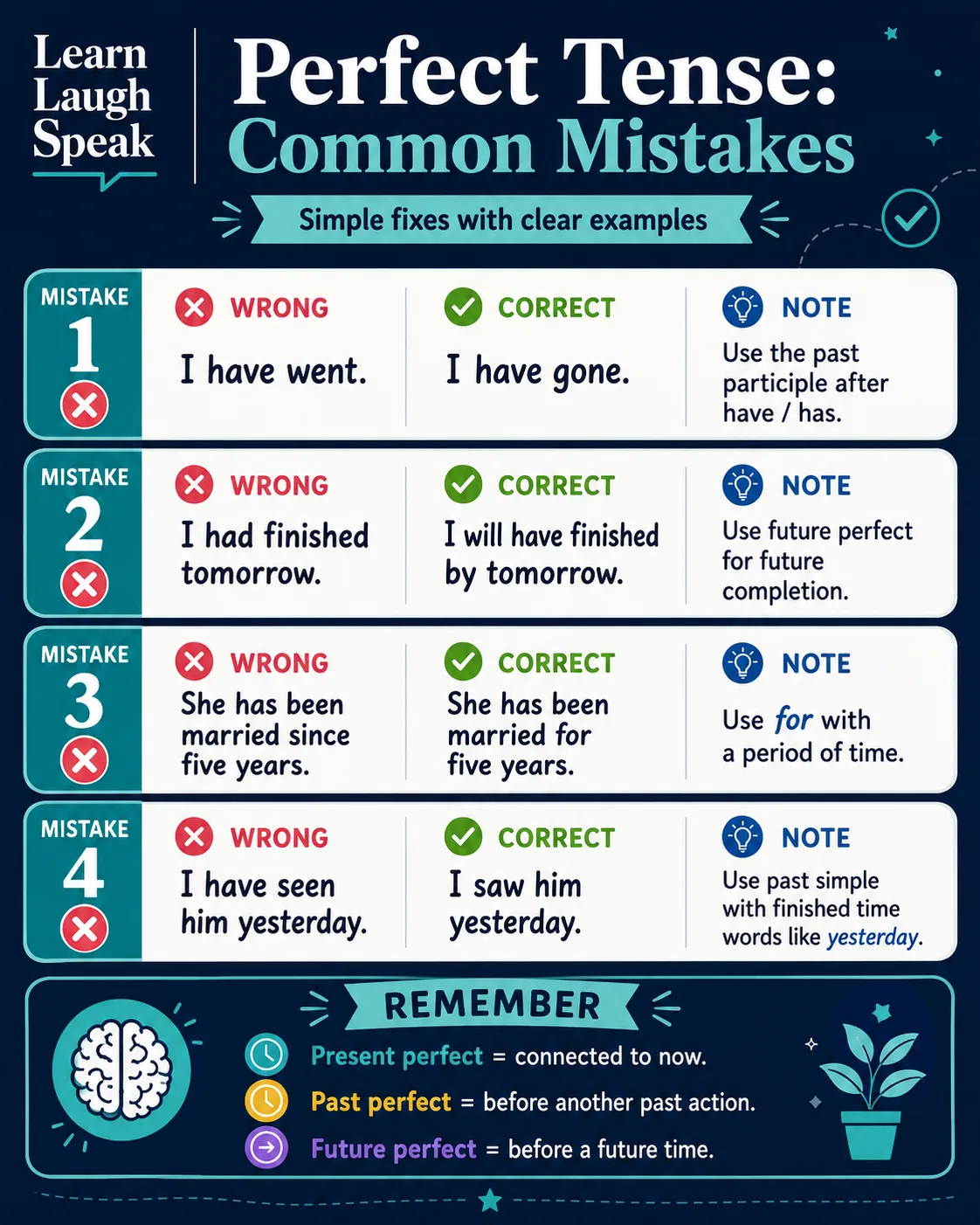
Many English learners make mistakes with perfect tenses because the structure changes depending on the time.
Here are some common mistakes and better examples.
| Mistake | Correct Sentence | Why |
|---|---|---|
| “I have went.” | “I have gone.” | After have/has, use the past participle. |
| “I had finished tomorrow.” | “I will have finished by tomorrow.” | Use future perfect for future completion. |
| “She has been married since five years.” | “She has been married for five years.” | Use “for” with a period of time. |
| “I have seen him yesterday.” | “I saw him yesterday.” | Use past simple with finished time words like yesterday. |
| “He will has finished.” | “He will have finished.” | Future perfect uses “will have.” |
These mistakes are common, but they are easy to fix once you understand the structure.
Simple Rules to Remember
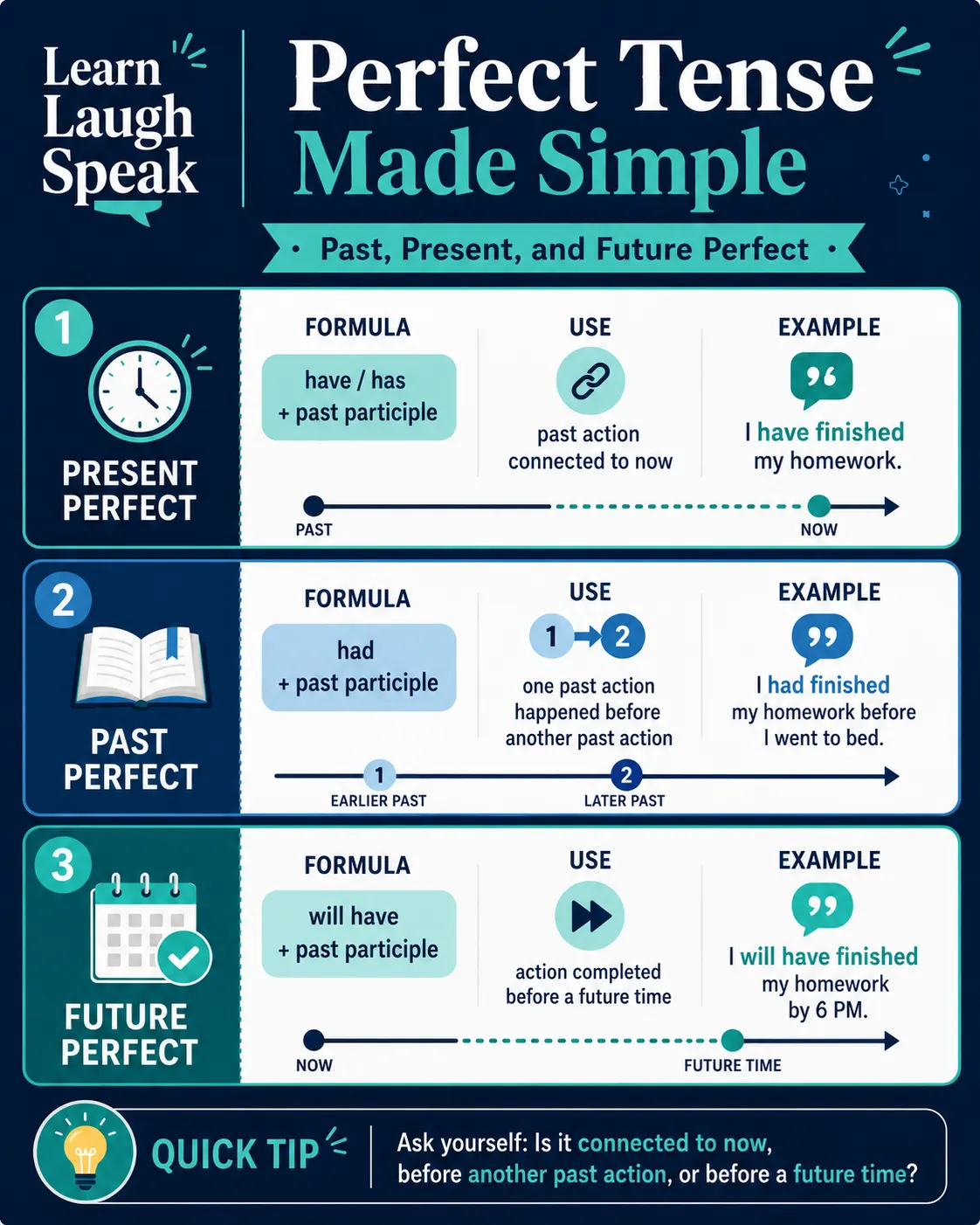
Here are three simple rules to help you use perfect tense correctly.
Use present perfect when the past action connects to now.
Example:
“I have finished my work.”
Use past perfect when one past action happened before another past action.
Example:
“I had finished my work before the meeting started.”
Use future perfect when an action will be completed before a future time.
Example:
“I will have finished my work by 6 PM.”
The more you practise these patterns, the easier they become.
How to Practise Perfect Tense
To practise the perfect tense, start with simple sentences.
Write one sentence for each tense using the same verb.
For example, with the verb “finish”:
“I have finished the report.”
“I had finished the report before the call.”
“I will have finished the report by Friday.”
Then try another verb:
“I have eaten lunch.”
“I had eaten lunch before the meeting.”
“I will have eaten lunch by the time you arrive.”
This type of practice helps you understand the structure without feeling overwhelmed.
You can also practise by writing about your real life.
For example:
“I have learned many new English words this month.”
“I had studied English before I started this job.”
“By next year, I will have improved my English level.”
These examples are practical because they connect grammar to real communication.
Final Thoughts on Perfect Tense in English
The perfect tense helps you explain time more clearly in English.
The present perfect connects the past to now.
The past perfect shows that one past action happened before another past action.
The future perfect shows that something will be completed before a future time.
At first, these tenses may feel difficult, but they become easier when you focus on the time connection.
Ask yourself:
Is the action connected to now?
Did one past action happen before another?
Will the action be completed before a future time?
If you can answer those questions, you can choose the correct perfect tense more confidently.
Practise English Grammar With Learn Laugh Speak
Learn Laugh Speak helps English learners improve grammar, speaking, listening, reading, and writing with lessons matched to their exact level.
Instead of guessing what to study next, students complete a full level assessment and begin learning from the right point.
This helps learners practise grammar like perfect tense in real examples, with corrections and structured lessons that support progress.
If you want to improve your English fluency and feel more confident using grammar in real conversations, Learn Laugh Speak can help you practise step by step.

One thought on “How to Use Perfect Tense: Explained Simply With Examples”
Pingback: Email Phrases in English: 67 Business Expressions for Work - Learn Laugh Speak