
 English
 Arabic
 Chinese (Simplified)
 Dutch
Dutch French
 German
 Italian
 Portuguese
 Russian
 Spanish
Pickleball has its own language.
Walk onto a court for the first time and you might hear players talking about the kitchen, dinks, third-shot drops, volleys, side-outs and Ernes. If English is not your first language, some of these expressions can sound especially confusing.
This guide explains pickleball terms in simple English so you can understand players, coaches, commentators and other fans.
You will learn the vocabulary used for the court, serving, scoring, shots, strategy and common pickleball slang. We have also included examples to show you how the words are actually used.
If you are learning English through sport, you can also read our Volleyball Terms guide and Tennis Vocabulary guide after this article.
Watch and Learn Sports English
VIDEO PLACEMENT: Insert the same Learn Laugh Speak sports-commentary video used in the Volleyball Terms article here.
Watching sport with English commentary is a useful way to remember new vocabulary because you connect the language with an action.
When watching pickleball, listen for pickleball terms such as serve, return, dink, volley, rally, kitchen, baseline and third-shot drop.
You do not need to understand every sentence the commentator says. Start by recognizing the important action words.
For more practice with this type of English, read our English phrases for watching sports online guide.
Quick Answer: What Are Pickleball Terms?
Pickleball terms are the words and phrases players use to describe the court, equipment, shots, scoring, rules and strategies of pickleball.
Some of the most important words for beginners are:
serve, return, rally, dink, volley, kitchen, paddle, baseline, fault, side-out and third-shot drop.
For example:
“The serve landed deep.”
“She hit a dink into the kitchen.”
“They moved up to the kitchen line.”
“He finished the rally with an overhead.”
Learning these pickleball terms makes it much easier to play the sport, understand instructions and follow a match in English.
The rules referenced throughout this guide are based on the current USA Pickleball Official Rulebook and USA Pickleball’s current rules guidance.
Basic Pickleball Terms
Let’s begin with the pickleball terms that every new player should understand.
1. Pickleball
A paddle sport played over a net. It can be played as singles with one player on each side or doubles with two players on each side.
2. Paddle
The equipment held by the player to hit the ball.
Unlike tennis, pickleball players use a solid paddle rather than a stringed racket.
3. Pickleball
The lightweight perforated ball used in the game. It has holes in it and travels differently from a tennis ball.
4. Rally
The period of play from the serve until a fault or other action ends the rally.
Example: “That was a long rally.”
5. Serve
The shot that begins a rally.
The ball is served diagonally into the opponent’s correct service court.
6. Return
The shot used by the receiving player to send the serve back.
Example: “She hit a deep return.”
7. Server
The player serving the ball.
8. Receiver
The player receiving the serve.
9. Singles
Pickleball played with one player on each side of the court.
10. Doubles
Pickleball played with two players on each side.
Doubles is a very common way to play pickleball and requires communication and teamwork.
These first pickleball terms give you the basic vocabulary you need to start following a game.
Pickleball Court Terms
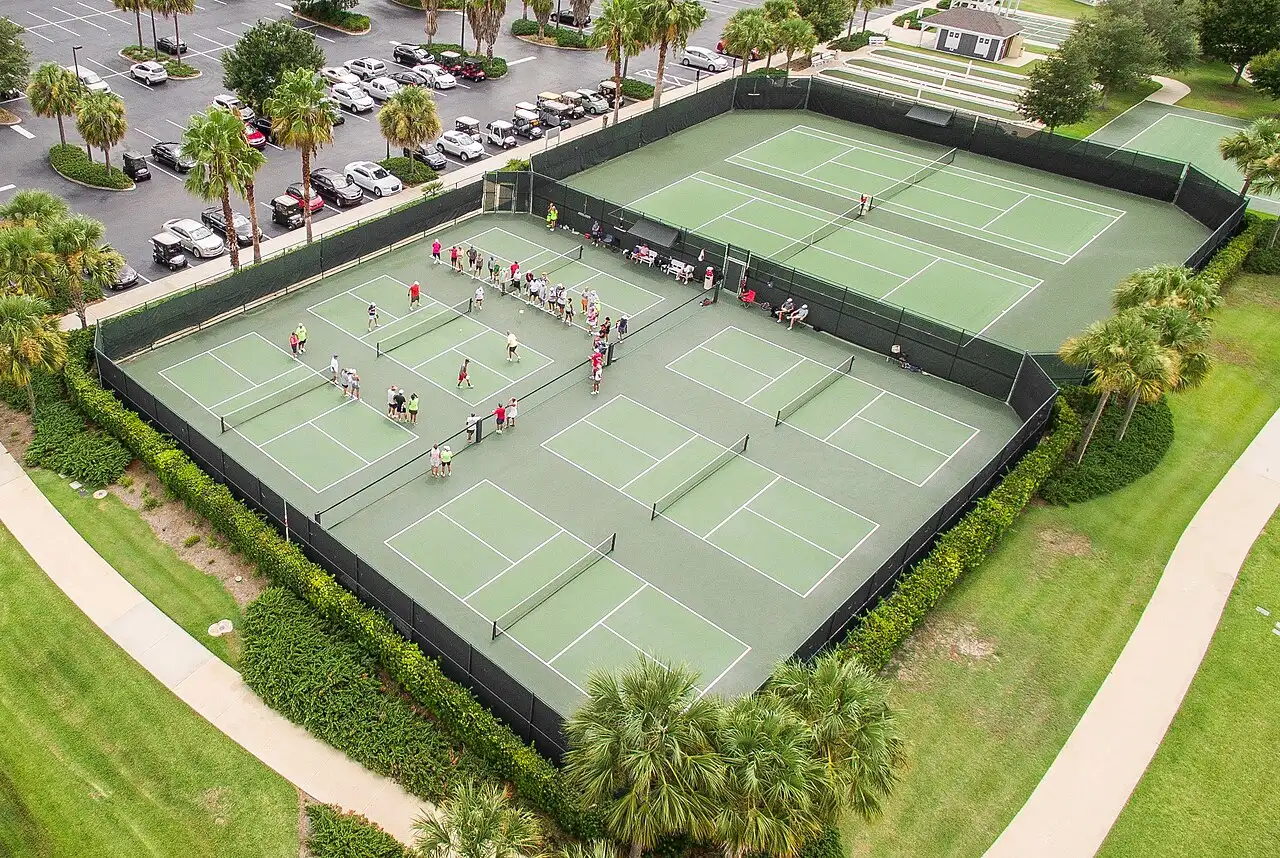
The court contains several areas with specific names. Understanding these pickleball terms is particularly important because court position is a major part of pickleball strategy.
11. Court
The complete marked playing area.
12. Baseline
The line at the back of each side of the court.
Players serve from behind the baseline.
13. Sideline
The boundary line running along the side of the court.
14. Centerline
The line dividing the right and left service courts.
15. Service Court
The area where a legal serve must land.
16. Non-Volley Zone
The area extending seven feet from the net on each side.
Players commonly call this area the kitchen.
17. Kitchen
The informal and extremely common name for the non-volley zone.
A player cannot volley while touching the kitchen or its line. Momentum after a volley also matters: if it carries the player into the non-volley zone, that can result in a fault.
Importantly, you can stand in the kitchen. The restriction concerns volleying the ball from the non-volley zone. USA Pickleball explains this distinction in its current guidance on the most important pickleball rules.
18. Kitchen Line
The boundary of the non-volley zone.
You will frequently hear players say:
“Get to the kitchen line.”
This means move forward into a strong position near the non-volley zone boundary.
19. Net
The barrier dividing the two sides of the court.
20. Right/Evend Court
The right-hand service area when a player is facing the net. In traditional side-out scoring, a player’s score helps determine the correct serving position.
Court vocabulary contains some of the most distinctive pickleball terms, especially kitchen and non-volley zone.
Pickleball Serving Terms
Every rally begins with a serve, so serving vocabulary is essential for beginners.
21. Volley Serve
A serve where the player strikes the ball before it bounces.
Current rules place specific requirements on the motion and point of contact for a legal volley serve, so players competing formally should check the latest official rulebook rather than relying on old videos or summaries.
22. Drop Serve
A serve where the player releases the ball and strikes it after the ball bounces.
23. Service Sequence
The order in which players serve during a game.
24. Serving Side
The player or team currently serving.
25. Crosscourt Serve
A serve hit diagonally into the opponent’s correct service court.
26. Deep Serve
A serve that lands close to the opponent’s baseline.
Example: “Try to keep your serve deep.”
27. Short Serve
A serve that lands relatively close to the front of the legal service area.
28. Service Fault
A rule violation during the serve that ends the serving opportunity or rally according to the applicable scoring format.
The official USA Pickleball rules summary is useful when you need to check current serving, line and fault rules.
Serving pickleball terms are worth learning early because serving instructions are among the first things a new player will hear on court.
Pickleball Terms for Shots
Now we reach the vocabulary that makes pickleball especially interesting.
Many of these pickleball terms describe shots that are unique to pickleball or particularly important to its strategy.
29. Dink
A soft shot hit after the ball bounces, usually intended to land in the opponent’s non-volley zone.
Example: “She played a soft crosscourt dink.”
A good dink is difficult to attack aggressively because the ball stays low.
USA Pickleball describes a dink as a soft shot intended to arc over the net and land in the opposing non-volley zone. You can see its beginner explanations in its Pickleball Basic Terms guide.
30. Crosscourt Dink
A dink hit diagonally across the court.
31. Volley
Hitting the ball before it bounces.
Example: “He stepped forward and hit a volley.”
32. Groundstroke
A shot hit after the ball has bounced.
33. Forehand
A shot played on the player’s dominant-hand side with the palm generally facing toward the direction of the stroke.
34. Backhand
A stroke played from the opposite side of the body from a typical forehand.
35. Drive
A fast, powerful shot hit with a relatively direct trajectory.
Example: “She drove the ball down the middle.”
36. Drop Shot
A softer shot intended to land in the opponent’s front court, often in or near the kitchen.
37. Third-Shot Drop
A soft shot commonly played on the serving team’s third contact of the rally, designed to land in the opponents’ non-volley zone.
This is one of the most important strategic pickleball terms to understand.
Why?
The serving team must allow the return to bounce because of the two-bounce rule. This often leaves them farther back. A good third-shot drop can give them time to move toward the kitchen line.
38. Third-Shot Drive
Instead of playing a soft third-shot drop, the player hits the third shot aggressively.
39. Lob
A high shot designed to travel over opponents who are positioned close to the net.
40. Overhead
A powerful shot hit above the player’s head, often in response to a high ball.
41. Smash
A forceful overhead attacking shot intended to finish or dominate the rally.
42. Slice
A shot played with backspin or underspin.
43. Topspin
Forward rotation placed on the ball, helping it dip after crossing the net.
44. Passing Shot
A shot directed past an opponent who is positioned near the net.
45. Reset
A controlled shot used to neutralize an opponent’s attack and slow the rally down.
Instead of trying to hit harder, the player uses control to make the next ball more difficult to attack.
Learning these shot-related pickleball terms will help you understand coaching videos and match commentary much faster.
Pickleball Rules and Scoring Terms
Pickleball scoring can initially feel unusual, especially in doubles.
These pickleball terms explain the language used when keeping score and discussing rules.
46. Point
A unit of scoring.
Under traditional side-out scoring, only the serving player or team scores points. USA Pickleball notes that most games using this format are played to 11 and must be won by two points.
47. Side-Out
When the right to serve passes from one team to the other.
Example: “They lost the rally, so it’s a side-out.”
48. First Server
In doubles, the first partner to serve during the team’s service turn.
49. Second Server
The second partner who serves after the first server loses the rally, subject to the special first-service sequence at the beginning of a game.
50. Two-Bounce Rule
A fundamental pickleball rule.
After the serve, the receiving team must allow the ball to bounce before returning it. The serving team must then allow that return to bounce before hitting its next shot.
After those two required bounces, players may volley or play the ball after a bounce.
USA Pickleball identifies this as one of the defining rules of the game.
51. Fault
An action that stops play because a rule has been broken.
Common examples include hitting the ball out, hitting into the net, allowing the ball to bounce twice, or illegally volleying from the non-volley zone.
52. Double Bounce
When the ball bounces twice before a player legally returns it.
Do not confuse this with the two-bounce rule. They mean different things.
53. Out
A ball that lands outside the legal court boundaries.
54. In
A ball that legally lands inside the court.
Under current USA Pickleball rules, a ball touching a line is generally considered in, with an important exception involving the non-volley-zone line on a serve.
55. Replay
When a rally is played again because the rules require or permit it in a particular situation.
Understanding these scoring and rule-related pickleball terms will make it much easier to follow what players and referees are discussing.
Pickleball Strategy Terms
Once you understand the basic shots, you will begin hearing more tactical language.
These pickleball terms describe how experienced players create space, defend and attack.
56. Transition Zone
The area between the baseline and non-volley-zone line.
Players sometimes informally call this no man’s land.
It can be a difficult place to defend because balls may arrive around your feet.
57. Ready Position
A balanced position that allows a player to react quickly to the next shot.
58. Approach
Moving forward toward the kitchen line after playing a suitable shot.
59. Attackable Ball
A ball high enough or easy enough to attack aggressively.
60. Put-Away
A strong attacking shot intended to finish the rally.
Example: “The ball sat up high and she hit the put-away.”
61. Speed-Up
Changing a slow exchange into a faster attacking exchange, often during a dink rally.
62. Counterattack
Responding aggressively to an opponent’s attacking shot.
63. Reset
Taking pace off a difficult attacking ball and returning it softly enough to regain control.
64. Stack
A positioning strategy used particularly in doubles to help players maintain preferred sides or roles.
65. Poach
When one doubles player moves across to intercept a ball that might normally be played by their partner.
66. Middle
The area between two doubles players.
You may hear:
“Cover the middle.”
or
“Hit it down the middle.”
These strategic pickleball terms become much more important as players progress beyond beginner level.
Pickleball Slang and Informal Terms
Like most popular sports, pickleball has developed its own informal language.
Some of these pickleball terms sound strange until you understand the context.
67. Erne
An advanced attacking move where a player positions or jumps outside the sideline near the non-volley zone and volleys the ball close to the net while avoiding an illegal non-volley-zone contact.
68. ATP
Short for around the post.
This is a shot hit around the outside of the net post rather than over the net.
69. Banger
An informal name for a player who prefers powerful drives and aggressive shots.
70. Dinker
An informal description of a player who relies heavily on controlled dink shots.
71. Pickled
An informal expression sometimes used when a player or team loses a game without scoring.
72. Golden Pickle
An informal expression for an especially dominant 11–0 game in which the losing side never gets the opportunity to serve beyond the opening sequence, though usage can vary among players.
73. Shake and Bake
An informal doubles strategy where one partner drives the ball aggressively and the other looks to attack the opponent’s weak response.
74. Body Bag
Informal slang for hitting the ball directly into an opponent’s body during play.
This expression is casual and can sound aggressive, so it is more likely to appear in player slang or social media than formal coaching language.
75. No Man’s Land
An informal name for the transition area between the baseline and kitchen line.
These slang pickleball terms are particularly useful if you watch matches, YouTube coaching videos or conversations between experienced players.
Common Pickleball Phrases You Will Hear on Court
Knowing individual words is only part of understanding pickleball English.
Players also communicate using short phrases.
“Yours!” means your partner should play the ball.
“Mine!” means you intend to play it.
“Out!” means a player believes the ball will land outside the court.
“Bounce it!” tells a teammate to allow the ball to bounce instead of volleying it.
“Watch the line.” tells a player to protect an area close to the sideline.
“Middle!” warns that the ball is coming between the two players.
“Move up!” tells a partner to advance toward the kitchen line.
“Stay back!” tells a partner not to move forward yet.
“Nice dink.” compliments a controlled soft shot.
“Good get!” means someone successfully reached and returned a difficult ball.
These expressions show why learning pickleball terms in complete situations is more useful than simply memorizing definitions.
Pickleball Vocabulary for English Learners
Pickleball is especially useful for English learners because many of its most important words are also common English verbs.
Consider:
serve
“She served the ball.”
return
“He returned the serve.”
drop
“She played a drop shot.”
drive
“He drove the ball down the middle.”
reset
“She reset the point with a soft shot.”
The easiest way to learn pickleball terms is to connect each word with an action you can see.
Instead of memorizing:
dink = soft shot
practice saying:
“She hit a crosscourt dink into the kitchen.”
Instead of memorizing:
volley = hit before bounce
say:
“He moved forward and volleyed the ball.”
Instead of memorizing:
fault = mistake
say:
“She stepped into the kitchen after the volley, so it was a fault.”
Complete sentences help you remember both the vocabulary and the grammar.
Pickleball vs Tennis Vocabulary
Pickleball and tennis share several words.
Both sports use:
serve, return, rally, volley, forehand, backhand, baseline, sideline, lob and fault.
However, the meaning or importance of some vocabulary changes between the sports.
The kitchen, dink, third-shot drop and two-bounce rule, for example, are central parts of pickleball language.
Tennis has its own specialized vocabulary, including deuce, break point, love, tiebreak and double fault.
If you already understand the pickleball terms in this guide, comparing them with our Tennis Vocabulary guide is a useful way to expand your sports English.
You can also explore our Basketball Vocabulary guide, Baseball Vocabulary guide and Golf Vocabulary guide to continue learning English through sport.
How to Practice Pickleball Terms
Try learning the language while watching actual play.
Watch one short pickleball rally and describe what happens:
“The player served deep.”
“The receiver hit a return.”
“The serving team waited for the ball to bounce.”
“They moved toward the kitchen.”
“The players exchanged several dinks.”
“One player hit a speed-up.”
“The opponent counterattacked.”
“The rally finished with a put-away.”
You have just used several important pickleball terms naturally in context.
Then watch another rally and try again without looking at this article.
This is much more effective than trying to memorize 75 disconnected definitions.
FAQs About Pickleball Terms
What are the most important pickleball terms for beginners?
The most important pickleball terms for beginners include serve, return, rally, kitchen, non-volley zone, dink, volley, groundstroke, fault, side-out, two-bounce rule and third-shot drop.
Start with these before learning advanced strategy or slang.
Why is it called the kitchen in pickleball?
The kitchen is the common nickname for the non-volley zone. The important thing for a beginner is understanding the rule rather than the origin of the nickname: you cannot legally volley while touching the non-volley zone or its line, and momentum after the volley can also cause a fault.
What is a dink in pickleball?
A dink is a controlled, soft shot hit after a bounce and intended to land in the opponent’s non-volley zone.
It is one of the most important pickleball terms because dinking is central to controlled play near the net.
What does ATP mean in pickleball?
ATP means around the post. It describes a shot that travels around the outside of the net post rather than crossing over the net.
What is an Erne in pickleball?
An Erne is an advanced attacking play made near the net from outside the sideline/non-volley-zone area. It allows the player to contact the ball very close to the net while remaining within the applicable non-volley-zone rules.
What is the two-bounce rule?
After the serve, the receiving side must let the ball bounce before returning it. The serving side must then let that return bounce before playing its next shot.
After these two required bounces, players may volley or play the ball after a bounce.
What is a third-shot drop?
A third-shot drop is a soft third shot commonly used by the serving team to send the ball into the opponents’ kitchen.
The objective is usually to prevent an easy attack and give the serving team an opportunity to move forward.
It is one of the strategic pickleball terms beginners will hear frequently as they improve.
What is the difference between a volley and a groundstroke?
A volley is played before the ball bounces.
A groundstroke is played after the ball bounces.
What does side-out mean in pickleball?
A side-out means the right to serve moves to the opposing side after the required service sequence ends.
Is the kitchen a place you cannot enter?
No.
This is a common beginner misunderstanding.
A player can enter the non-volley zone. The restriction concerns volleying while touching the non-volley zone or its line, including certain momentum situations after a volley. USA Pickleball’s current rules guidance specifically explains this distinction.
Where can I check the official pickleball rules?
Rules can change, so players who need an exact ruling should check the current USA Pickleball Official Rulebook rather than relying on an old blog post or video.
Final Thoughts on Pickleball Terms
You do not need to memorize every word before playing your first game.
Begin with the pickleball terms you will hear constantly:
serve, return, rally, kitchen, dink, volley, fault, baseline, side-out and two-bounce rule.
Then learn the important shots:
drive, drop, third-shot drop, lob, overhead and reset.
Finally, start adding strategy and slang such as:
speed-up, stack, poach, Erne and ATP.
The goal is not simply to remember definitions.
Watch the game and connect each word with the action. Listen to players communicating. Try describing a rally in English. Then use the new vocabulary the next time you play or talk about the sport.
Once you can do that, these pickleball terms are no longer words you are studying.
They become English you can actually use.
One thought on “Pickleball Terms: 75 Words Every Player Should Know”
Pingback: Cricket Terms: 100 Cricket Words and Phrases Explained