
 English
 Arabic
 Chinese (Simplified)
 Dutch
Dutch French
 German
 Italian
 Portuguese
 Russian
 Spanish
Learning by doing is becoming one of the most important shifts in modern education because students no longer need to only remember information — they need to use it.
That sounds simple.
But it changes almost everything.
For years, education was built around listening, reading, memorizing, and testing.
Students were expected to absorb information first and apply it later.
Sometimes much later.
The problem is that learning does not always survive that gap.
A student may understand something in class, pass the test, and still struggle when they need to use the knowledge in real life.
That is why more schools, platforms, and adult learning systems are moving toward practical learning.
Not because knowledge does not matter.
It does.
But knowledge becomes stronger when it is used.
But what is “learning by doing” check out this Indeed article that breaks down the benefits.
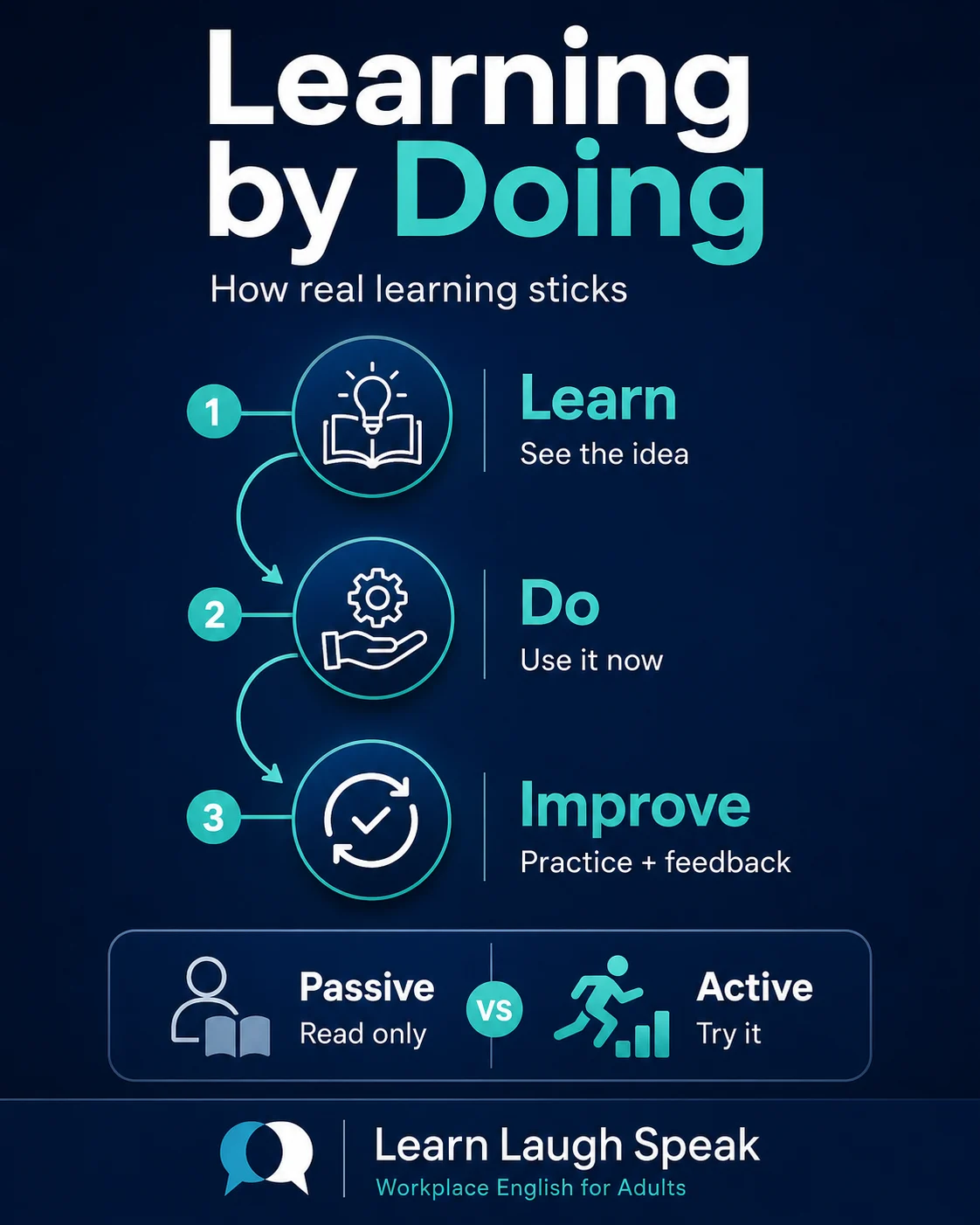
Why Learning by Doing Matters Now
The world has changed the value of information.
Facts are easy to find.
Answers are searchable.
Tools can explain almost anything.
So education has to move beyond the question:
“Can you remember this?”
A better question is:
“Can you use this when it matters?”
That is where learning by doing becomes powerful.
It connects knowledge to action.
Instead of students only receiving information, they practise, test, adjust, make mistakes, and improve.
That process is closer to how real skills are built.
Hence why skills based learning is evolving and changing the way we learn in 2026.
What Learning by Doing Actually Means
Learning by doing does not mean removing theory.
It means theory does not stay separate from use.
A student still needs explanation.
They still need structure.
They still need guidance.
But they also need to apply what they learn as soon as possible.
That might mean:
using a new word in a sentence
solving a problem instead of only watching one
explaining an idea in their own words
getting feedback after trying
repeating the skill in a slightly different situation
The key is movement.
The learner is not just receiving.
They are participating.
However, is learning speed hindered by this style of learning or enhanced?
Why Learning by Doing Works Better Than Passive Study
Passive study can feel productive.
Reading feels like learning.
Watching videos feels useful.
Listening to explanations feels comfortable.
And those things can help.
But they often create familiarity, not ability.
A student may recognize the answer when they see it, but still struggle to produce it alone.
That difference matters.
A major review published in PNAS found that active learning increased student performance in science, engineering, and mathematics, with average exam scores improving by about 6%; the same review reported that students in traditional lecture settings were 1.5 times more likely to fail than students in active learning environments.
That does not mean every lesson has to become an activity.
But it does show something important:
Students learn more when they are actively involved.
The Difference Between Knowing and Using
There is a quiet gap in education that many students feel but cannot always explain.
They know something.
But they cannot use it.
This happens in almost every subject.
A student can know a formula but not know when to apply it.
A learner can memorize vocabulary but forget it in conversation.
A professional can complete training but hesitate when the real situation appears.
That is not always a failure of the student.
Often, it is a failure of the learning design.
If students only learn in controlled conditions, they may struggle outside those conditions.
Learning by doing helps close that gap because it forces knowledge to become usable.
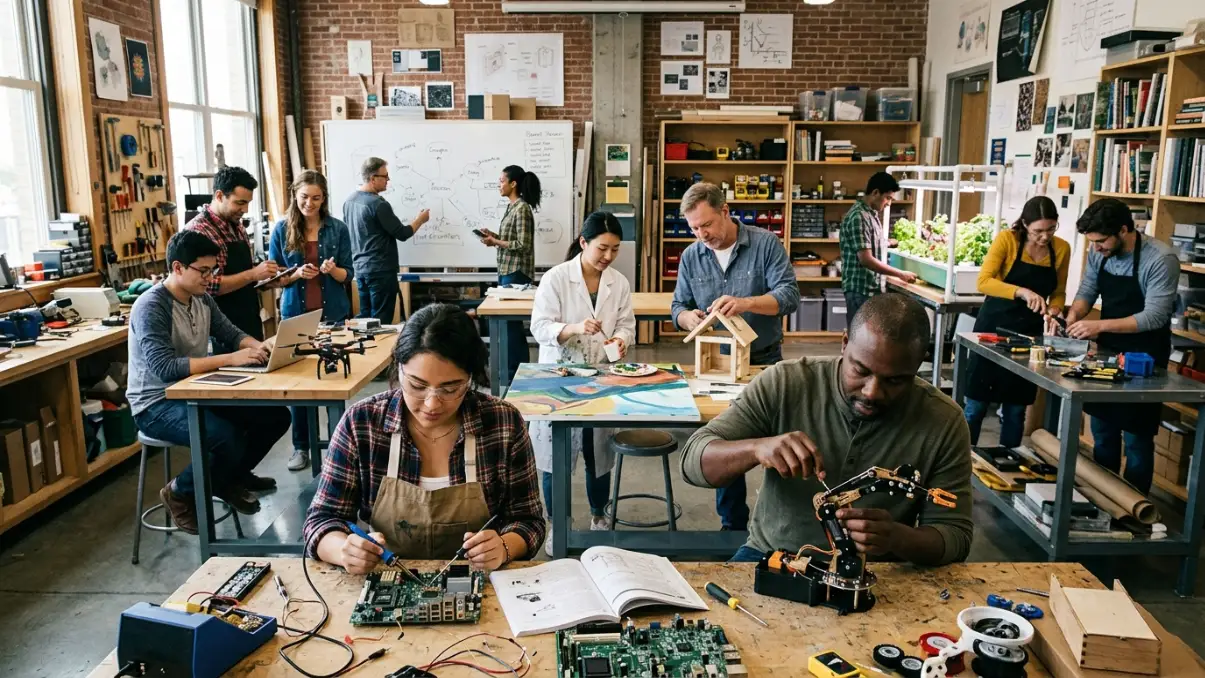
A Simple Look at the Shift
| Old Learning Habit | Better Learning Habit |
|---|---|
| Listen first, apply later | Learn and apply quickly |
| Memorize the answer | Use the idea |
| Wait for the test | Practise during learning |
| Avoid mistakes | Learn from mistakes |
| Complete the lesson | Build the skill |
This is the difference between finishing content and actually improving.
One measures completion.
The other measures ability.
Why Learning by Doing Helps Students Remember More
Students often forget because they do not use what they learn soon enough.
The lesson makes sense.
The example is clear.
The student understands.
But then nothing happens.
No recall.
No practice.
No real application.
A few days later, the learning feels weaker.
Research on retrieval practice shows that recalling information from memory strengthens learning and makes future recall more likely. Washington University’s Center for Teaching and Learning explains that retrieval practice strengthens the memory connections that help students remember later.
This supports the same idea behind learning by doing.
When students actively use knowledge, they are not just reviewing it.
They are strengthening it.
Why Mistakes Are Part of Real Learning
A lot of students are trained to avoid mistakes.
Mistakes feel bad.
They feel like failure.
They feel like proof that something has not been learned.
But mistakes are often where the most useful learning happens.
A mistake shows exactly where the gap is.
It tells the teacher, platform, or student:
this needs more practice
this was misunderstood
this has not transferred into skill yet
In passive learning, mistakes can stay hidden.
In active learning, they appear faster.
That is useful.
Because once a mistake is visible, it can be corrected.
Learning by Doing and Adult Students
Adult students often benefit from this approach even more.
Adults usually do not learn just to collect information.
They learn because they need something.
They want to improve at work.
They want to communicate better.
They want to solve a problem.
They want progress they can feel.
That makes practical learning especially important.
If the lesson is too theoretical, adults lose motivation quickly.
Not because they are lazy.
Because they are busy.
They need learning that connects to real use.
The OECD’s Future of Education and Skills project focuses on helping learners develop knowledge, skills, attitudes, values, and competencies needed to thrive and shape their future, which reflects the wider movement away from passive content delivery and toward usable capability.
Why Learning by Doing Fits Modern Education
Modern education is moving toward skills.
Not instead of knowledge.
But beyond knowledge.
Students need to think, adapt, communicate, and apply information in situations that are not always predictable.
That is difficult to build through memorization alone.
Learning through the actions of doing fits this new direction because it gives students a place to practise before they are expected to perform.
It turns lessons into action.
And action is where confidence starts to grow.
How Learning by Doing Looks in Language Learning
Language learning makes this easy to understand.
A student can study English grammar for years and still struggle to speak.
Why?
Because knowing a rule is not the same as using it quickly.
For example:
A student may understand the past tense in a lesson.
But in conversation, they need to choose the tense instantly.
That requires practice.
Not just memory.
A learner may memorize professional phrases.
But if they never use them in realistic situations, the phrases stay weak.
That is why English learning needs more than explanations.
It needs active use.
Students need to read, listen, write, speak, test, make mistakes, correct those mistakes, and try again.
That is how knowledge becomes skill.
The Learning Loop That Works
A stronger learning system usually follows a loop like this:
| Step | What Happens |
|---|---|
| Learn | The student understands the idea |
| Try | The student uses it |
| Mistake | The gap becomes visible |
| Feedback | The student sees what to fix |
| Repeat | The skill becomes stronger |
| Apply | The student uses it in real life |
This loop is simple.
But it is powerful.
Because the student is not only receiving information.
They are building ability.
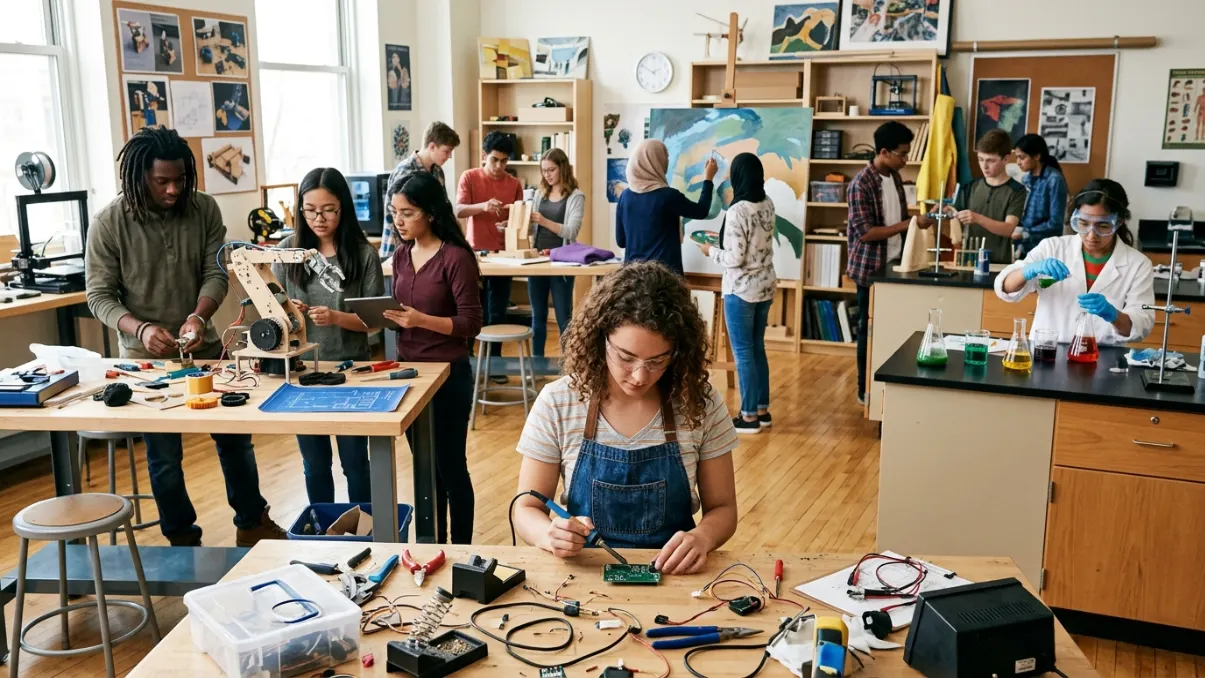
Where Traditional Learning Falls Short
Traditional learning often stops too early.
It gives students the information.
Then it assumes learning has happened.
But real learning needs a second stage.
Application.
Without that stage, students may leave with understanding but not skill.
This is why students can say:
“I understood it in class, but I forgot later.”
Or:
“I know the answer when I see it, but I can’t use it.”
That gap is exactly what learning by doing is designed to reduce.
Why Feedback Makes Learning by Doing Stronger
Practice alone is not enough.
Students also need feedback.
If a learner practises the wrong thing repeatedly, they can strengthen the wrong habit.
That is why feedback matters.
Good feedback tells the student:
what went wrong
why it happened
what to do next
when to practise it again
This is where modern learning platforms can be especially useful.
They can track mistakes, identify patterns, and guide the learner toward the next useful step.
That is much stronger than giving every student the same lesson and hoping it works.
How Learn Laugh Speak Uses Learning by Doing
At Learn Laugh Speak, this idea is built into how students learn.
Students do not simply move through random lessons.
They begin with a level assessment so they start at the right point.
From there, the application tracks progress, mistakes, and gaps as the student works.
That means each student follows a learning journey based on what they actually need.
If a student already has prior experience, they can move faster through areas they already understand.
If another student struggles with a specific skill, they get more practice where it matters.
This is important because students do not all need the same path.
They need the right path.
That is the value of this style of learning when it is combined with personalization.
Students learn, practise, make mistakes, receive guidance, and continue building usable English.
Not just English they recognize.
English they can actually use.

Why This Matters for the Future of Education
Education is not moving away from knowledge.
It is moving toward better use of knowledge.
That is the real shift.
Students still need facts.
They still need structure.
They still need foundations.
But they also need the chance to apply what they know.
The future of education will likely reward systems that can combine:
clear instruction
active practice
personalized feedback
real-world application
flexible progress
That is not just better for students.
It is more honest.
Because real life does not ask people to remember information in perfect conditions.
It asks them to use what they know when it matters.
Final Thought
This is not a trend.
It is a response to a real problem in education.
Students forget when learning stays passive.
They improve when learning becomes active.
They grow when knowledge turns into practice.
Memorization still has a place.
But it cannot be the final goal.
The goal is not only to know more.
The goal is to use what you know better.
And that is why learning by doing is changing modern education.
2 thoughts on “Why Learning by Doing Is Changing Modern Education in 2026”
Pingback: Why Real World Learning Is Becoming the Future of Education
Pingback: Why Flexible Learning for Adults Makes Education More Effective - Learn Laugh Speak