
 English
 Arabic
 Chinese (Simplified)
 Dutch
Dutch French
 German
 Italian
 Portuguese
 Russian
 Spanish
It is a bold statement but traditional learning no longer works in adults and also in younger students.
There was a time when learning followed a predictable path.
You showed up.
You followed the structure.
You progressed with everyone else.
And for a long time, that model wasn’t questioned.
Not because it was perfect — but because there wasn’t a clear alternative.
Now there is.
And that’s why more people are starting to notice something uncomfortable:
What used to work… doesn’t work the same way anymore.
Learning new skills as an adult can be difficult especially for work, try these 6 skills!
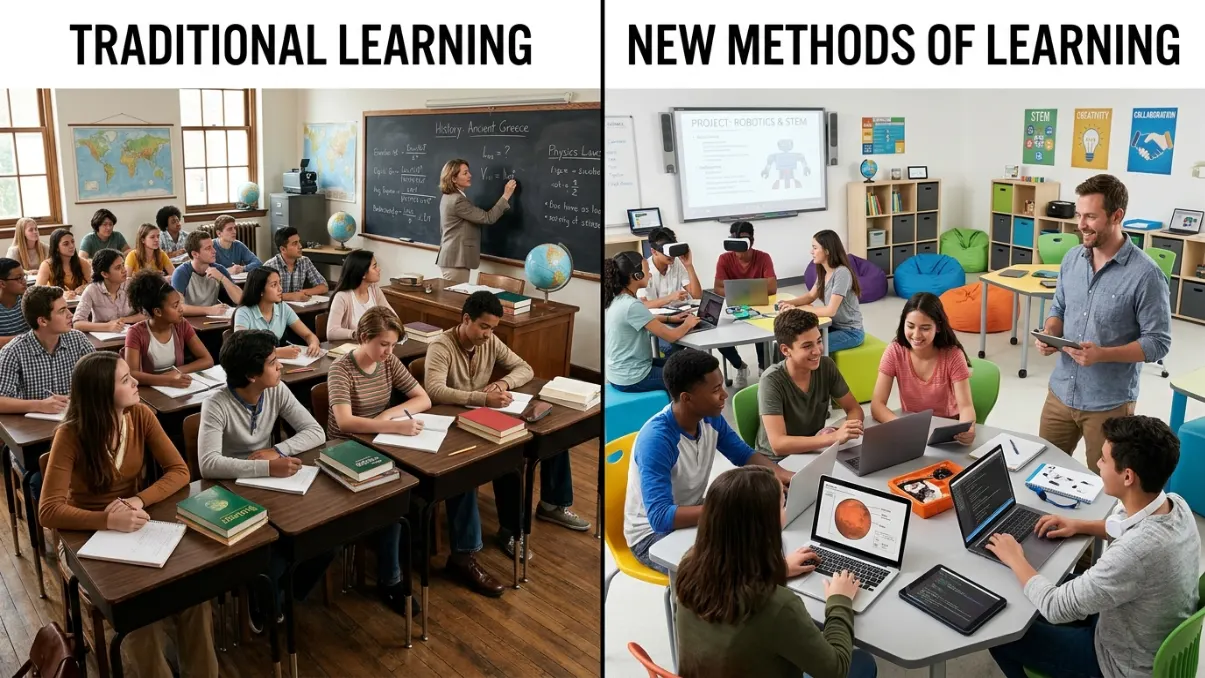
🔹 Why Traditional Learning No Longer Works (Simple Answer)
Traditional learning no longer works as effectively because it’s built around standardization, while modern learners need adaptability, speed, and relevance.
The Assumption That Everything Was Built On
Traditional systems were designed around a simple idea:
If you give everyone the same information, in the same order, at the same pace — they will learn.
That sounds logical.
But in practice, it creates a mismatch.
Because learning is not uniform.
It’s uneven.
Context-driven.
Highly individual.
And that’s where the cracks begin to show.
What Traditional Learning Assumes vs What Actually Happens
| Traditional Assumption | What Actually Happens |
|---|---|
| Everyone learns the same way | People learn differently |
| Fixed pace works for all | Speed varies widely |
| Theory builds understanding | Application builds retention |
| Progress is linear | Progress is inconsistent |
This gap is subtle at first.
But over time, it compounds.
Why Traditional Learning No Longer Works in Real Life Situations
One of the biggest issues isn’t knowledge.
It’s timing.
In traditional systems, you often learn something long before you need it.
Which creates a disconnect:
You learn it → forget parts of it → relearn it later
That loop feels inefficient — because it is.
Modern learners are starting to expect something different:
👉 learning that aligns with real needs, in real time
Ps – Try this if you are wondering how to say you are concerned professionally about your learning methods at work!
The Hidden Cost of “One Pace for Everyone”
This is where most people lose momentum.
If the pace is too slow:
You disengage.
If the pace is too fast:
You feel behind.
In both cases, the outcome is similar:
Reduced confidence
Lower retention
Less motivation
And this is one of the key reasons traditional learning no longer works for many adults.
🔹 What Happens to Motivation Over Time
| Learning Experience | Motivation Outcome |
|---|---|
| Relevant + immediate | High |
| Delayed + theoretical | Low |
| Personalized | Sustained |
| Standardized | Drops over time |
Motivation isn’t just about discipline.
It’s strongly tied to relevance.
What Research Shows About How People Learn Today
Educational research — including insights referenced by OECD — shows that:
👉 learners perform better when learning is adaptive, applied, and personalized
Rather than:
passive
fixed
standardized
This aligns with what many people already feel intuitively.
Learning why working in todays world is hard! Try these tips!
Why Traditional Learning No Longer Works in a Digital Environment
Access has changed everything.
You no longer need to wait to learn something.
You can:
search it
watch it
apply it
within minutes.
So expectations shift.
If learning feels slow or disconnected, people don’t wait.
They move on.
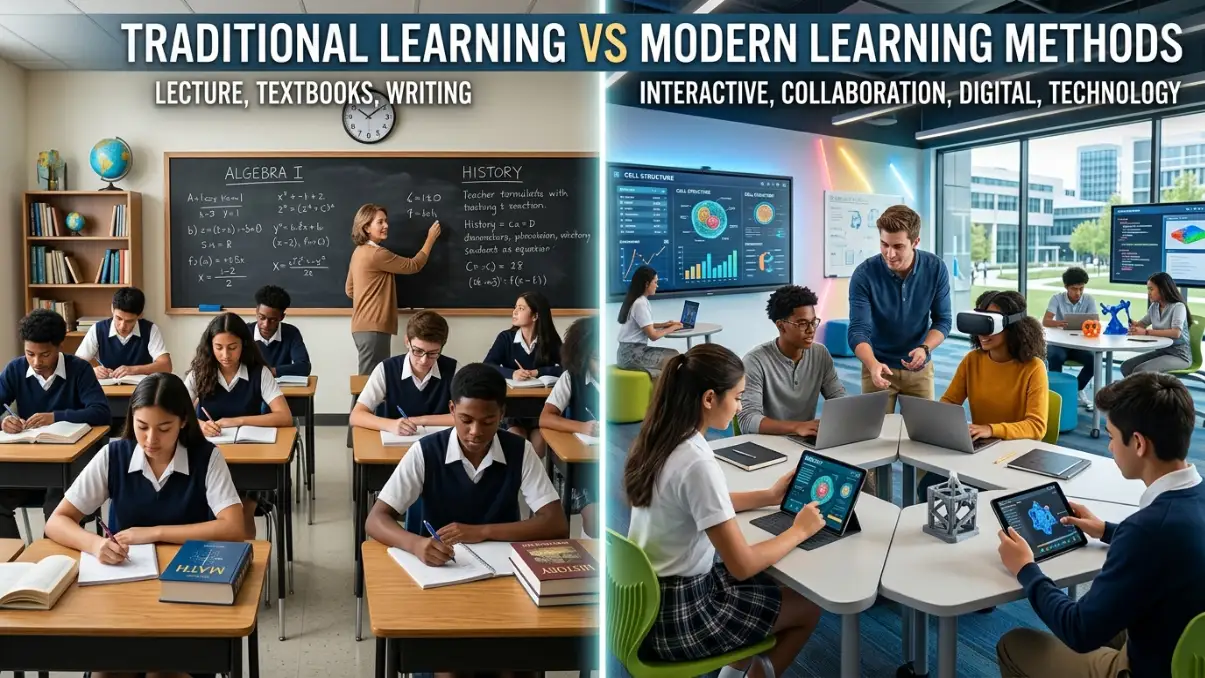
🔹 How Expectations Have Changed
| Then | Now |
|---|---|
| Wait to learn | Learn instantly |
| Follow curriculum | Choose content |
| Learn first, apply later | Learn and apply immediately |
| One source | Multiple sources |
This shift is fundamental — not temporary.
What’s Replacing Traditional Learning (And Why It Works Better)
There isn’t one replacement.
It’s a combination of approaches that reflect how people actually learn.
1. Personalized Learning Paths
Instead of:
everyone learning the same thing
It becomes:
learning based on your level, needs, and goals
This reduces wasted time.
2. Just-in-Time Learning
Instead of:
learning everything in advance
You learn:
what you need — when you need it
This improves retention immediately.
3. Application-First Learning
Instead of:
theory → practice
It becomes:
problem → solution → application
Which feels more natural — and more useful.
4. Feedback Loops
Modern learning includes:
instant feedback
adjustment
refinement
This accelerates progress significantly.
🔹 Traditional vs Modern Learning (Clear Comparison)
| Traditional Learning | Modern Learning |
|---|---|
| Structured schedule | Flexible timing |
| Same for everyone | Personalized |
| Theory heavy | Application focused |
| Delayed results | Immediate results |
| Passive | Active |
This is why many learners feel like they improve faster outside traditional systems.
Why This Shift Feels Easier (But Is Actually More Effective)
It’s not that modern learning is “easier.”
It’s that it removes unnecessary friction.
You’re not:
waiting
guessing
or repeating irrelevant material
You’re focusing on what matters.
That creates:
faster progress
better retention
higher engagement
Where Traditional Learning Still Has Value
It’s important to be realistic.
Traditional learning isn’t useless.
It still works well for:
foundations
structured disciplines
early-stage learning
But it struggles when:
speed matters
context matters
adaptability matters
🔹 Why Adults Feel This Shift More Strongly
Adults don’t learn the same way as students.
They:
need relevance
have less time
focus on application
Which is why traditional learning no longer works as well for them.
Kids learning faster than adults or is this a myth? We break it down!
The Real Shift (That Most People Miss)
It’s not just about tools.
It’s about control.
Learning is moving from:
system-controlled
to:
learner-controlled
That’s a fundamental change.
🔹 What This Means for You
Instead of asking:
“What should I study next?”
You start asking:
“What do I need right now?”
That one shift changes how effective your learning becomes.
Final Thought on Why Traditional Learning No Longer Works
Traditional learning didn’t suddenly stop working.
It just stopped matching how people actually learn today.
And when that happens, people don’t force the system.
They look for something better.
More flexible.
More relevant.
More immediate.
Because learning isn’t about completing a structure anymore.
It’s about making progress that actually matters.
Traditional learning no longer works however still has a place in blended learning!

One thought on “Why Traditional Learning No Longer Works the Way It Used To”
Pingback: You Are Not Your Company — But Your Company Is Absolutely You - Learn Laugh Speak