
 English
 Arabic
 Chinese (Simplified)
 Dutch
Dutch French
 German
 Italian
 Portuguese
 Russian
 Spanish
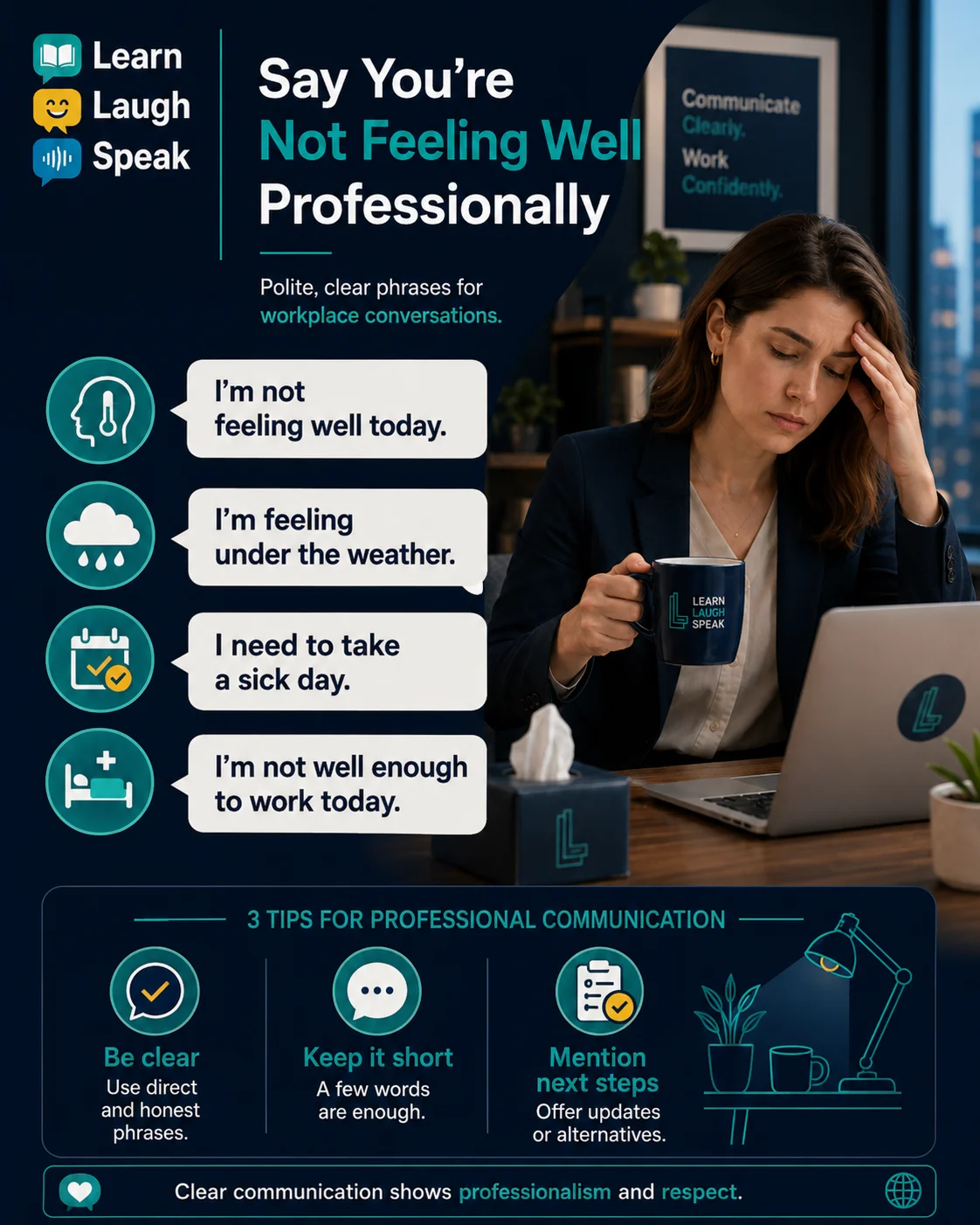
To say you are not feeling well professionally, use clear and polite phrases like “I’m not feeling well today,” “I’m feeling under the weather,” “I need to take a sick day,” or “I’m not well enough to work today.” Keep your message short, respectful, and clear about what you need.
Learning how to say you are not feeling well in English is important for work, emails, messages, meetings, and professional situations. You do not need to explain every detail about your health. You only need to communicate clearly, politely, and responsibly.
This guide gives you practical phrases, email examples, workplace messages, and tips for speaking to co-workers, managers, and supervisors when you are sick or not feeling your best.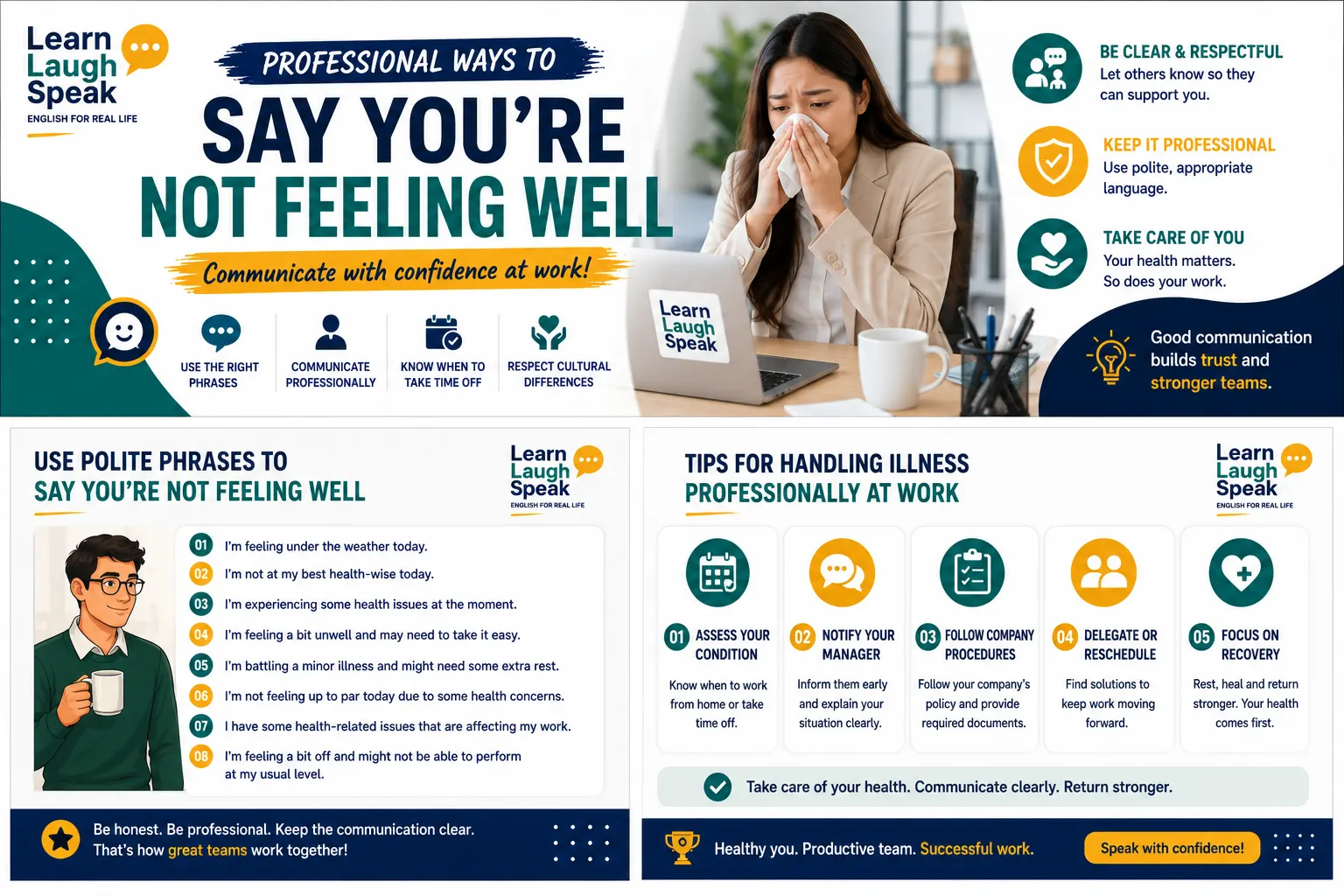
Why It Matters to Say You Are Not Feeling Well Professionally
In a workplace, people need to know if you are not well enough to work, attend a meeting, reply quickly, or complete a task on time.
When you say you are not feeling well clearly, it helps your team understand the situation and plan properly.
Professional communication about illness helps you:
- set realistic expectations
- avoid misunderstandings
- protect your health
- show responsibility
- help your team plan around your absence
- ask for support if needed
- keep communication respectful and private
For example, instead of saying:
“I feel bad.”
You can say:
“I’m not feeling well today and may need to rest.”
The second sentence sounds clearer and more professional.
Simple Phrases to Say You Are Not Feeling Well
Here are useful phrases you can use when you are sick, tired, or unable to work at your normal level.
| Situation | Professional phrase |
|---|---|
| You feel generally unwell | “I’m not feeling well today.” |
| You feel slightly sick | “I’m feeling a bit under the weather.” |
| You cannot work | “I’m not well enough to work today.” |
| You need rest | “I need to take the day to rest and recover.” |
| You may work slower | “I’m not at my best today, so I may need a little more time.” |
| You need to cancel | “I’m sorry, but I’m not feeling well and need to reschedule.” |
| You need support | “I’m not feeling well today. Could someone help cover this task?” |
| You need to leave early | “I’m not feeling well and may need to leave early.” |
These phrases are polite, clear, and suitable for most professional situations.
Professional Ways to Say You Are Not Feeling Well at Work
When you say you are not feeling well at work, you should keep the message simple. You do not need to share personal medical details unless it is necessary.
Useful workplace phrases include:
- “I’m not feeling well today and may need to take it easy.”
- “I’m feeling under the weather and may not be able to work at my usual pace.”
- “I’m dealing with a minor illness today.”
- “I’m not well enough to attend the meeting.”
- “I need to rest today and recover properly.”
- “I’m experiencing some health issues and may need extra time.”
- “I’m sorry, but I need to take a sick day today.”
- “I’ll update you when I’m feeling better.”
Example:
“Hi Mark, I’m not feeling well today and may need to take a sick day. I’ll keep you updated and send anything urgent before I log off.”
This sounds professional because it explains the situation and mentions urgent work.
How to Say You Are Not Feeling Well to Your Manager
When speaking to your manager or supervisor, be clear about your ability to work. If you need time off, say that directly. If you can work but need flexibility, explain that too.
If you need a sick day
“Hi [Name], I’m not feeling well today and need to take a sick day to rest and recover. I’ll keep you updated and will check in when I’m feeling better.”
If you can work but need flexibility
“Hi [Name], I’m not feeling well today, but I’ll try to manage the most urgent tasks. I may need a little extra time for anything that is not urgent.”
If you need to leave early
“Hi [Name], I’m not feeling well and I think I need to leave early today. I’ll make sure any urgent tasks are handed over before I go.”
If you need to reschedule a meeting
“Hi [Name], I’m sorry, but I’m not feeling well today. Could we reschedule our meeting for another day?”
These examples are direct without oversharing.
How to Say You Are Not Feeling Well to Co-Workers
You may also need to tell colleagues if your health affects teamwork, meetings, deadlines, or shared tasks.
Useful phrases include:
- “I’m not feeling well today, so I may be slower to respond.”
- “I’m going to rest today, but I’ll follow up when I’m back.”
- “I’m feeling under the weather, so I won’t be able to join the call.”
- “Could you please cover this part while I’m out?”
- “I’ll send you the notes when I’m feeling better.”
- “Thanks for understanding. I appreciate your help.”
Example:
“Hi team, I’m not feeling well today and won’t be able to join the meeting. Please send me any important notes, and I’ll follow up when I’m back.”
This is polite and useful for team communication.
Email Examples to Say You Are Not Feeling Well
Emails should be short, clear, and professional. You do not need to include too many personal details.
Email example: taking a sick day
Subject: Sick Day
Hi [Name],
I’m not feeling well today and need to take a sick day to rest and recover.
I’ll keep you updated and will follow up on any pending tasks when I’m back.
Thank you for your understanding.
Best regards,
[Your Name]
Email example: working with reduced availability
Subject: Reduced Availability Today
Hi [Name],
I’m not feeling well today, but I’ll do my best to handle the urgent tasks.
I may be slower to respond than usual. Please let me know if anything needs immediate attention.
Best,
[Your Name]
Email example: rescheduling a meeting
Subject: Request to Reschedule
Hi [Name],
I’m sorry, but I’m not feeling well today and won’t be able to attend our meeting.
Could we please reschedule for another suitable time?
Thank you for understanding.
Best regards,
[Your Name]
Message Examples to Say You Are Not Feeling Well
For WhatsApp, Slack, Teams, or quick work messages, your message can be shorter but still professional.
| Situation | Message |
| Sick day | “Hi [Name], I’m not feeling well today and need to take a sick day. I’ll keep you updated.” |
| Late reply | “I’m feeling under the weather today, so I may be slower to respond.” |
| Missed meeting | “Sorry, I’m not feeling well and won’t be able to join the meeting today.” |
| Need help | “I’m not feeling well today. Could you please help cover this task?” |
| Leaving early | “I’m not feeling well and need to leave early today. I’ll hand over anything urgent first.” |
| Rescheduling | “I’m sorry, but I’m not feeling well. Can we reschedule?” |
These short messages are useful because they are clear and respectful.
How to Say You Are Not Feeling Well Without Oversharing
In professional English, you do not need to explain every symptom. It is usually enough to say you are unwell and explain what action you need to take.
You can say:
“I’m not feeling well today.”
You do not need to say:
“I have stomach pain, a headache, and I was sick all night.”
Only share medical details if they are necessary, required by your workplace, or relevant to safety.
A good professional message includes:
- Your condition in simple words
- What you need
- Any update about work
- Appreciation
Example:
“I’m not feeling well today and need to take the day to recover. I’ll follow up on pending tasks tomorrow. Thank you for understanding.”
What Not to Say and What to Say Instead
Some phrases can sound too casual, unclear, or unprofessional. Here are better options.
| What not to say | What to say instead |
| “I feel bad.” | “I’m not feeling well today.” |
| “I’m dying.” | “I’m feeling very unwell today.” |
| “I can’t work.” | “I’m not well enough to work today.” |
| “I’m sick, bye.” | “I’m not feeling well and need to take a sick day.” |
| “I don’t want to come in.” | “I’m unwell and unable to come in today.” |
| “I’ll maybe work later.” | “I’ll update you if I’m able to work later.” |
| “Something is wrong with me.” | “I’m experiencing some health issues today.” |
| “I’m too sick for this.” | “I’m not well enough to attend this meeting.” |
These changes help your English sound more calm, clear, and professional.
When You Need to Take Time Off Work
If you are too unwell to work, it is better to communicate early. This gives your manager and team time to adjust.
Steps to follow:
- Check how you feel. Decide if you can work, work partly, or need the full day off.
- Tell your manager as early as possible. Do not wait until the last minute if you can avoid it.
- Follow company policy. Some workplaces require a sick leave form or doctor’s note.
- Mention urgent tasks. Let your team know if anything needs attention.
- Rest and recover. Do not keep working if you need proper rest.
- Update when needed. Let your manager know when you expect to return.
Example:
“Hi [Name], I’m not feeling well and need to take today off. I’ve already sent the urgent file to Ana, and I’ll update you tomorrow about my return.”
This shows responsibility while protecting your health.
How to Say You Are Not Feeling Well in a Meeting
Sometimes you are already in a meeting and start feeling unwell. In this case, stay polite and direct.
Useful phrases:
- “I’m sorry, but I’m not feeling well. I may need to leave the meeting early.”
- “I’m feeling unwell and may need to step away.”
- “Could I follow up on this later? I’m not feeling well at the moment.”
- “I’m sorry, but I need to excuse myself.”
- “I’ll review the notes after the meeting.”
Example:
“I’m sorry, but I’m not feeling well and need to step away. Please send me the meeting notes, and I’ll follow up when I’m able.”
This is professional and respectful.
Cultural Differences When You Say You Are Not Feeling Well
In some workplaces and cultures, people speak openly about health. In others, people prefer to keep health matters private. If you work in an international or multicultural environment, it is important to be respectful.
A safe professional approach is:
- keep the message brief
- avoid unnecessary details
- focus on work impact
- show appreciation
- follow company procedures
For example:
“I’m not feeling well today and need to take sick leave. I’ll follow the company procedure and update you when I’m able to return.”
This works in many professional environments because it is clear and respectful.
Common Mistakes When You Say You Are Not Feeling Well
English learners sometimes worry about sounding rude or unclear when they need to talk about illness. Here are common mistakes to avoid.
1. Being too vague
Unclear: “I feel strange.”
Better: “I’m not feeling well today.”
2. Sharing too many personal details
Too much: “I have a lot of symptoms and I couldn’t sleep and…”
Better: “I’m feeling unwell and need to rest today.”
3. Waiting too long to tell your manager
If you need time off, tell your manager as early as possible.
4. Sounding too casual
Too casual: “I’m sick, can’t come.”
Better: “I’m not feeling well and won’t be able to come in today.”
5. Not explaining work impact
If your absence affects a task, mention what needs attention.
Better: “The report draft is saved in the shared folder if anyone needs it today.”
Learn Professional English with Learn Laugh Speak
Learn Laugh Speak helps adult English learners build practical English for work, daily life, customer service, hospitality, meetings, emails, and professional conversations.
Knowing how to say you are not feeling well is part of real workplace English. These situations happen in normal life, and learners need language that sounds polite, natural, and clear.
With Learn Laugh Speak, students practise English step by step at the right level, from beginner to advanced. The goal is to help learners communicate with confidence in real situations, even when the conversation feels difficult.

FAQs About How to Say You Are Not Feeling Well
How do you professionally say you are not feeling well?
You can say “I’m not feeling well today and need to take a sick day,” or “I’m feeling under the weather and may need to rest.” Keep the message short and clear.
What is a polite way to say I am sick?
A polite way to say it is “I’m not feeling well today” or “I’m feeling unwell and need to rest.”
How do I tell my manager I am not feeling well?
You can say: “Hi [Name], I’m not feeling well today and need to take a sick day. I’ll keep you updated and follow up when I’m feeling better.”
How do I say I am not feeling well in an email?
Write a short email with your situation and next step. For example: “I’m not feeling well today and need to take sick leave. I’ll follow up on pending tasks when I’m back.”
Is “under the weather” professional?
Yes, “under the weather” is acceptable in many workplaces. It sounds polite and natural, but in formal situations, “I’m not feeling well” is clearer.
Should I explain my symptoms at work?
Usually, no. You do not need to share personal medical details unless your workplace requires it or it affects safety. Keep your message simple and professional.
Final Thoughts on How to Say You Are Not Feeling Well
Learning how to say you are not feeling well in English helps you communicate professionally when you are sick, tired, or unable to work at your usual level.
Use clear phrases like:
“I’m not feeling well today.”
“I need to take a sick day.”
“I’m feeling under the weather.”
“I’m not well enough to attend the meeting.”
Keep your message short, polite, and honest. You do not need to overshare. The goal is to protect your health while communicating clearly and respectfully at work.
3 thoughts on “Professional Ways to Say You Are Not Feeling Well in English”
Pingback: Ways to Say Maybe Next Time Without Sounding Rude
Pingback: Friendly Ways to Say I’m Too Tired When Saying No
Pingback: How Can I Decline a Meeting Professionally in English?