
 English
 Arabic
 Chinese (Simplified)
 Dutch
Dutch French
 German
 Italian
 Portuguese
 Russian
 Spanish
Choosing a private school in Las Vegas is one of those decisions that feels overwhelming the moment you start researching it. Las Vegas alone has more than 80 private schools serving nearly 17,000 students, ranging from small faith-based elementary campuses to nationally recognized college-prep institutions. With that much variety, the question isn’t really which school is objectively “the best.” It’s which school actually fits your child, your family’s priorities, and your budget.
Here’s a practical breakdown of how to think through that decision, along with an honest look at some of the most talked about options in the valley.
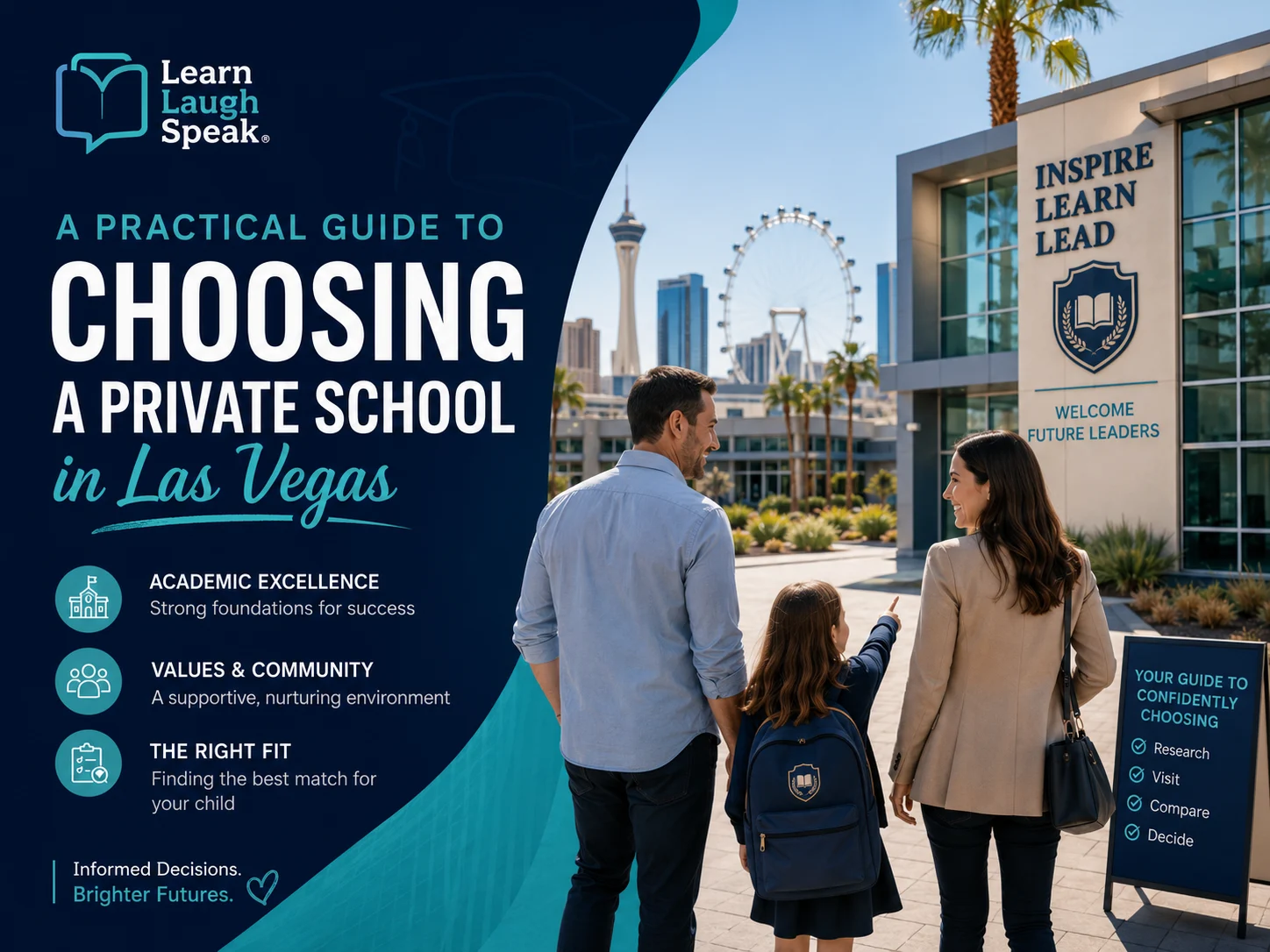
Start With What You’re Actually Looking For
Before comparing individual schools, it helps to get clear on what’s actually driving the decision. Families choose private school for very different reasons, and those reasons should shape the whole search:
- Smaller class sizes and more individualized attention than a large public school can offer
- A specific religious or values-based education
- Access to a particular academic track, whether that’s rigorous college prep, STEM focus, or the arts
- Stronger athletics or extracurricular programs
- A different pace or teaching style than what’s available at the local public school
None of these reasons are more valid than the others, but they point toward very different schools. A family looking for elite college prep and a family looking for a values-centered, community-oriented elementary campus are going to end up considering completely different lists.
Understand the Types of Private Schools Available
Las Vegas private schools generally fall into a few broad categories, and it’s worth understanding the differences before you start touring campuses.
Religious and faith-based schools make up roughly half of all private schools in the Las Vegas area, most commonly Christian and Jewish institutions. These schools typically combine academics with religious instruction and values education, and many maintain high acceptance rates, making them accessible to a wide range of families.
Independent, non-sectarian schools operate without a religious affiliation and tend to be more selective, often built around a specific academic philosophy or college-preparatory mission. These schools are frequently the most competitive to get into and carry some of the highest tuition in the valley.
Specialized and alternative model schools focus on a particular teaching approach, such as experiential or project-based learning, smaller learner-centered classrooms, or programs designed for students with specific learning needs.
What to Actually Compare Once You Have a Shortlist
Once you’ve narrowed down a handful of schools that match your priorities, the comparison should go well beyond a school’s reputation or ranking. A few things worth digging into for every school on your list:
- Student-to-teacher ratio. Some of the top private schools in the valley maintain ratios as low as nine to one, which can make a meaningful difference in how much individual attention a child receives.
- Tuition and total cost. Average private school tuition in the Las Vegas area runs a bit above $11,000 a year, but that number varies enormously by school and grade level. Some of the most prestigious college-prep schools charge well into the mid-$20,000s to mid-$30,000s at the upper grade levels, so it’s worth getting exact numbers rather than relying on averages.
- Acceptance rate and admissions process. Some schools accept the vast majority of applicants, while the most selective independent schools have a more rigorous admissions process. Understanding where a school falls on that spectrum helps set realistic expectations early.
- Financial aid availability. Several of the top schools in the valley offer meaningful financial aid, which can make a school that looks out of reach on paper considerably more accessible.
- Extracurriculars and athletics. If sports or specific extracurricular programs matter to your family, compare the actual number and depth of programs offered, not just whether a school checks the box.
- Staff screening and safety practices. It’s entirely reasonable to ask a school directly how it screens employees, handles background checks, and manages campus security. A good school will answer these questions directly rather than treating them as an imposition.
Don’t Overlook Location and Daily Logistics
It’s easy to get caught up comparing academic rankings and forget to think through the daily reality of getting your child to and from school. Families in areas like Summerlin often have an advantage here, since the community has developed one of the strongest concentrations of private school options anywhere in the valley, with several well-regarded schools within a short drive of each other. If you’re relocating or considering a move, it’s worth researching which neighborhoods put you within a reasonable distance of the schools on your shortlist, since a long daily commute can wear on both parents and kids over time regardless of how strong a school’s academics are.
Trust the Visit, Not Just the Website
No amount of research replaces an actual campus visit. Rankings, reviews, and tuition charts can narrow your list, but the feel of a school, how teachers interact with students, how the administration answers your questions, and whether your child seems to light up or shut down while walking the halls, tells you things no website ever will. Ask to sit in on a class if the school allows it, talk to current parents if you can, and pay attention to how thoroughly the admissions staff answers difficult questions rather than deflecting them.
Making the Final Decision
At the end of the process, choosing a private school comes down to matching your family’s specific priorities, whether that’s academic rigor, religious values, class size, athletics, or a particular teaching philosophy, against the realistic options available to you in terms of cost, admissions likelihood, and location. There isn’t a single correct answer, and the “best” school on any ranking list may not be the best school for your particular child. Taking the time to define what actually matters to your family before you start touring campuses is the single most useful step in making sure the school you choose is one your family will still be happy with years down the road.