
 English
 Arabic
 Chinese (Simplified)
 Dutch
Dutch French
 German
 Italian
 Portuguese
 Russian
 Spanish
Delivery drivers often face unexpected costs such as car repairs, fuel problems, insurance payments, medical bills, or a sudden drop in orders. Emergency funding options can help in urgent situations, but drivers should compare costs, repayment terms, eligibility, and risks before accepting any offer.
Delivery work can be flexible, but it can also be unpredictable. One week may be busy, and the next week may be slow. A flat tire, engine problem, late payment, or family emergency can quickly create stress, especially when your vehicle is also your source of income.
For delivery drivers who speak English as a second language, the situation can feel even harder. You may need to read financial terms, explain your situation, ask questions, or compare options in English before making a decision.
This guide explains what delivery drivers should know about emergency funding options, what to check before applying, and how better English communication can help you make safer choices.

Why Delivery Drivers May Need Emergency Funding
Delivery drivers depend on movement. If your vehicle stops, your income can stop too. That makes emergency costs more serious than they might be for someone in a regular office job.
Common emergency costs for delivery drivers include:
- car repairs
- tire replacement
- fuel costs
- insurance payments
- phone replacement
- medical expenses
- family emergencies
- delayed app payments
- lower-than-expected weekly earnings
- vehicle registration or inspection costs
These problems are not always big at first. But if they stop you from working, they can affect your income very quickly.
For example, a driver may only need one repair to keep working. But if they cannot pay for the repair, they may lose several days of income. This is why emergency planning matters.
Emergency Funding Is Not All the Same
Not every emergency funding option works the same way. Some options are low-cost and flexible. Others may be fast but expensive. Some may help you solve a short-term problem, while others may create a bigger financial problem later.
Before choosing any option, ask yourself:
- How much do I really need?
- How fast do I need it?
- What will it cost me?
- When do I need to repay it?
- What happens if I cannot repay on time?
- Is this option safe and legitimate?
- Do I understand the full terms?
If the answer is unclear, slow down before accepting.
Fast money can be helpful in a real emergency, but only if the repayment terms are realistic.
Options Delivery Drivers May Consider
The best option depends on your location, income, credit history, vehicle situation, and urgency. This article is not personal financial advice, but these are common places delivery drivers may look first.
1. Emergency Savings
The safest option is usually your own emergency savings. Even a small emergency fund can make a difference when you need fuel, a tire repair, or a phone replacement.
If you do not have emergency savings yet, start small. You do not need to save a large amount immediately.
A simple goal could be:
Save a small amount from each delivery shift.
For example:
“I will save part of my earnings every Friday for vehicle emergencies.”
This helps you prepare for future problems without depending only on borrowing.
2. Family or Community Support
Some drivers may be able to ask family, friends, or trusted community groups for short-term help. This can be less expensive than borrowing from a lender, but it still needs clear communication.
Be specific about:
- how much you need
- why you need it
- when you can repay it
- whether it is a loan or a gift
A clear English phrase could be:
“I need help covering a car repair so I can continue working. I can repay you in two payments over the next month.”
Clear communication helps avoid confusion and protects the relationship.
3. Payment Extensions
If the emergency is connected to a bill, ask whether the company offers a payment extension or payment plan.
This can apply to:
- insurance
- phone bills
- car payments
- utilities
- rent
- repair shops
- medical bills
Useful phrase:
“I’m a delivery driver, and I’m dealing with an unexpected expense. Do you offer a payment plan or extension?”
Sometimes asking early is better than waiting until the payment is already late.
4. Small Personal Loans
Some drivers may consider a small personal loan from a bank, credit union, or online lender. These can vary widely in cost and terms, so it is important to compare before accepting.
Check:
- interest rate
- fees
- repayment schedule
- late payment rules
- total repayment amount
- whether early repayment is allowed
- whether the lender is licensed or reputable
Do not only look at the monthly payment. Look at the total cost.
A useful question is:
“What is the total amount I will repay, including all fees and interest?”
5. Cash Advance or Gig Worker Funding Options
Some companies offer cash advances or funding products for independent workers, gig workers, or delivery drivers. These may be marketed as fast and simple.
Before using them, read the terms carefully.
Ask:
- Is this a loan or an advance?
- What fees apply?
- Is repayment automatic?
- Will repayment come from future earnings?
- What happens during a slow week?
- Can I cancel or repay early?
- Is there a penalty?
Delivery drivers should be careful with any option that takes repayment automatically from future income if the terms are unclear.
6. Local Nonprofit or Government Assistance
Depending on where you live, there may be nonprofit, community, or local government programs that help with emergency expenses.
These may support:
- food
- rent
- utilities
- medical needs
- transport
- job-related emergencies
- low-income worker support
These programs may take longer than fast lending options, but they can sometimes be safer or lower cost.
If English is not your first language, look for organisations that offer multilingual support or ask someone you trust to help you understand the forms.
7. Repair Shop Payment Plans
If your emergency is vehicle-related, ask the repair shop directly about payment options.
Some shops may offer:
- partial payment
- payment plans
- financing partners
- discounts
- delayed payment
- priority repairs
Useful phrase:
“My vehicle is used for delivery work. Do you offer payment plans for repairs?”
Another useful phrase:
“Can you give me a written estimate before starting the repair?”
A written estimate helps you understand the cost before agreeing.
Delivery drivers who need help comparing options can review resources for financial assistance for delivery drivers before deciding what type of emergency support may fit their situation.
English Helps Delivery Drivers Understand Financial Terms
Learning English is not only useful for customer messages or delivery instructions. It can also help drivers understand important financial information.
Emergency funding often includes words such as:
- interest
- fee
- repayment
- due date
- late charge
- total cost
- automatic payment
- eligibility
- application
- approval
- income verification
- terms and conditions
If you do not understand these words, it is easier to agree to something without fully knowing the cost.
For delivery drivers learning English, financial vocabulary is a practical skill. It helps you read offers, ask better questions, and protect your income.
Useful English Phrases for Emergency Funding
Here are practical phrases delivery drivers can use when asking about emergency funding or payment options.
Asking for information
“Can you explain the repayment terms?”
“What fees are included?”
“Is there a late payment fee?”
“What is the total amount I will repay?”
“Can I see the terms in writing?”
Explaining your situation
“I am a delivery driver, and my vehicle needs an urgent repair.”
“My income depends on my car, so I need to fix it quickly.”
“I had an unexpected expense this week.”
“I want to understand my options before I decide.”
Asking about safer options
“Do you offer a payment plan?”
“Is there a lower-cost option?”
“Can I pay this in two parts?”
“Can I repay early without a penalty?”
Checking before signing
“Can I take time to review this before agreeing?”
“Can you explain this part in simpler words?”
“What happens if I miss a payment?”
These phrases help you stay calm, clear, and professional.
Warning Signs to Watch For
Delivery drivers should be careful with any funding option that feels rushed, confusing, or too good to be true.
Be careful if someone:
- pressures you to decide immediately
- refuses to explain the full cost
- will not provide written terms
- asks for payment before giving help
- promises guaranteed approval with no details
- hides fees
- asks for personal information in an unsafe way
- contacts you through suspicious messages
- says you should not compare other options
A safe provider should be willing to explain the terms clearly.
If you do not understand the agreement, do not sign it yet.
Questions to Ask Before Accepting Emergency Funding
Before accepting emergency money, ask these questions.
| Question | Why it matters |
|---|---|
| How much am I borrowing? | You need to know the exact amount |
| What is the total repayment amount? | The total cost may be higher than expected |
| What fees are included? | Some fees are not obvious at first |
| When is repayment due? | You need to know if the schedule fits your income |
| What happens if I pay late? | Late fees can make the problem worse |
| Is repayment automatic? | This affects your future earnings or bank balance |
| Can I repay early? | Some options charge penalties |
| Is this company legitimate? | You need to avoid scams |
| Can I get the terms in writing? | Written terms protect you from confusion |
If the provider cannot answer these questions clearly, that is a warning sign.
How to Reduce Future Emergency Stress
Emergency funding may help in the moment, but long-term stability comes from planning.
Delivery drivers can reduce future stress by:
- saving a small amount each week
- tracking fuel and repair costs
- keeping vehicle maintenance records
- checking tire pressure regularly
- planning for insurance payments
- setting aside money for taxes if self-employed
- keeping a backup phone charger
- comparing repair quotes
- learning basic financial English vocabulary
- avoiding high-cost options when possible
The goal is not to be perfect. The goal is to reduce the chance that one emergency stops your work completely.
A Simple Emergency Plan for Delivery Drivers
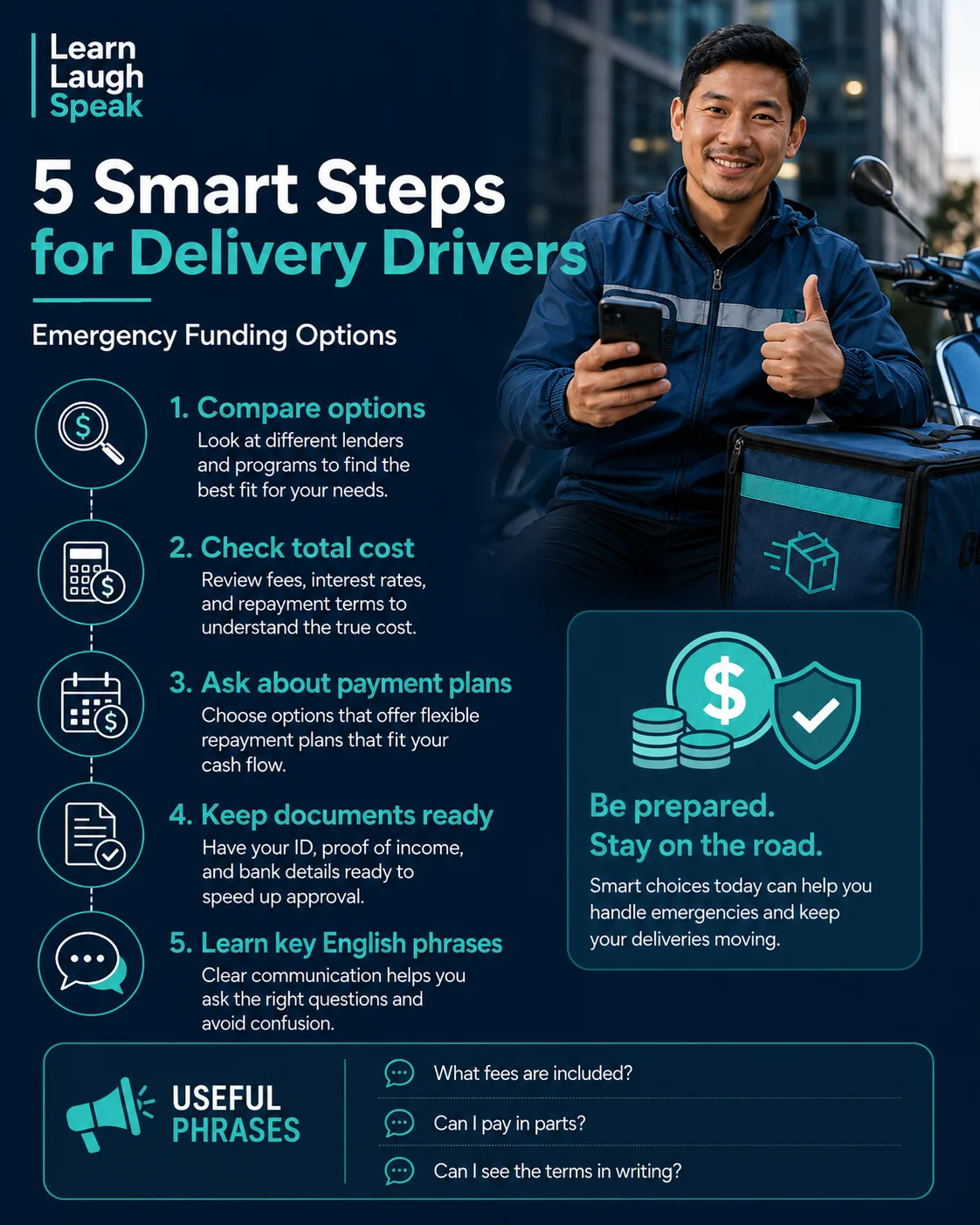
Here is a practical plan you can start with.
Step 1: Know your urgent costs
Write down your most important work costs:
- fuel
- phone
- insurance
- vehicle maintenance
- app-related costs
- parking or tolls
- emergency repairs
Step 2: Save a small emergency amount
Even a small fund can help with fuel, a tire issue, or a basic repair.
Step 3: Keep important documents ready
Keep copies of:
- driver’s license
- insurance
- vehicle registration
- income records
- repair estimates
- bank information
- tax documents if needed
Step 4: Learn key English phrases
Practise the phrases in this article so you can ask clear questions before accepting financial help.
Step 5: Compare before deciding
If possible, compare at least two options before choosing one.
Final Thoughts
Delivery drivers often work under pressure. When an emergency happens, it can feel like you need money immediately. But even in urgent situations, it is important to pause, ask questions, and understand the full cost.
Emergency funding options can help, but not all options are equal. Some may be useful. Others may be expensive or risky.
For delivery drivers learning English, better communication can make a real difference. If you can ask about fees, repayment, terms, and payment plans clearly, you are more likely to make a safer decision.
Learn the words, ask the questions, and protect your income before you agree to anything.