
 English
 Arabic
 Chinese (Simplified)
 Dutch
Dutch French
 German
 Italian
 Portuguese
 Russian
 Spanish
Welding technology has evolved rapidly over the past decade, giving manufacturers, fabricators, and metalworking professionals access to tools that are faster, cleaner, and more precise than ever before. As production demands continue to increase, businesses are looking for welding solutions that can improve efficiency without sacrificing quality.
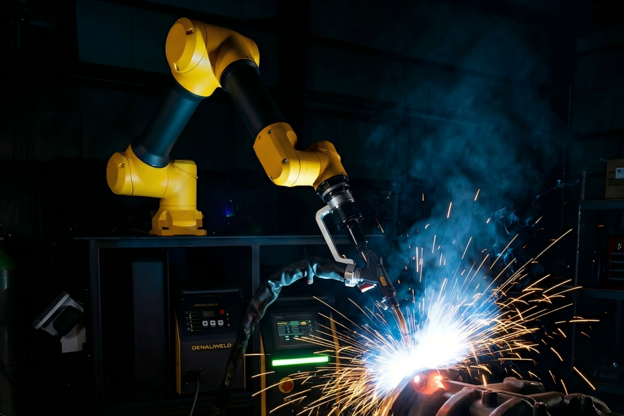
One technology that has gained significant attention is modern laser welding equipment, including the 3kW laser welding systems used in many industrial settings today. Known for their ability to create strong, accurate welds with minimal heat distortion, these systems are increasingly being adopted across industries ranging from automotive manufacturing to metal fabrication. Understanding how powerful a 3kW laser welder really is requires comparing it with other commonly used welding technologies and examining where it performs best.
Understanding the Power of a 3kW Laser Welder
A 3kW laser welder uses a concentrated laser beam to melt and join metals with exceptional precision. The “3kW” rating refers to the laser’s output power, which directly influences penetration depth, welding speed, and material compatibility.
Compared to lower-powered systems, a 3kW unit offers several advantages:
- Faster welding speeds
- Greater penetration capability
- Ability to process thicker materials
- Improved productivity for industrial applications
- Reduced heat-affected zones
The concentrated energy delivery allows welders to achieve high-quality results while minimizing thermal deformation. This makes laser welding particularly valuable for projects that require tight tolerances and aesthetically clean weld seams.
Typical Material Thickness Capabilities
While actual performance depends on material type and joint design, a 3kW laser welder can typically handle:
| Material | Approximate Thickness |
| Stainless Steel | Up to 8 mm |
| Carbon Steel | Up to 8 mm |
| Aluminum | Up to 6 mm |
| Brass | Up to 5 mm |
| Copper | Up to 4 mm |
These capabilities make the technology suitable for a wide range of industrial manufacturing environments.
How Laser Welding Differs from Traditional Welding Methods
To understand the true power of a 3kW laser welder, it helps to compare its performance characteristics with other established welding processes.
Precision and Weld Quality
Traditional welding methods often generate larger heat-affected zones due to the broader distribution of heat. This can lead to:
- Material distortion
- Post-processing requirements
- Increased risk of defects
Laser welding focuses energy into an extremely small spot size, producing cleaner welds with minimal spatter. The result is greater consistency and reduced finishing work.
Speed and Productivity
Speed is one of the most significant advantages of laser welding.
According to industry research, laser welding can achieve travel speeds several times faster than conventional arc welding methods, depending on the material and application. Faster processing means:
- Higher production output
- Reduced labor costs
- Improved operational efficiency
- Faster project completion times
This advantage becomes especially important in high-volume manufacturing environments.
Heat Input and Material Distortion
A major challenge in metal fabrication is controlling heat.
Traditional welding methods often introduce substantial heat into the workpiece, which can cause:
- Warping
- Shrinkage
- Residual stress
Laser welding delivers highly concentrated energy exactly where it is needed. This precision significantly reduces thermal impact on surrounding materials and helps maintain dimensional accuracy.
Comparing a 3kW Laser Welder with Common Welding Technologies
3kW Laser Welder vs MIG Welding
MIG welding remains one of the most widely used welding methods because of its versatility and ease of operation.
| Feature | 3kW Laser Welder | MIG Welding |
| Speed | Very High | Moderate |
| Precision | Excellent | Good |
| Heat Distortion | Minimal | Moderate |
| Post-Processing | Low | Moderate |
| Automation Compatibility | Excellent | Good |
MIG welding performs well in many applications, but laser welding often provides superior results when precision and productivity are critical.
3kW Laser Welder vs TIG Welding
TIG welding is valued for producing high-quality welds, particularly on thin materials.
| Feature | 3kW Laser Welder | TIG Welding |
| Welding Speed | Very High | Slow |
| Weld Appearance | Excellent | Excellent |
| Operator Skill Required | Moderate | High |
| Productivity | High | Moderate |
| Heat Input | Low | Moderate |
While TIG welding delivers exceptional quality, laser welding can often achieve similar results at significantly higher speeds.
3kW Laser Welder vs Stick Welding
Stick welding is commonly used for construction and outdoor applications because of its simplicity and portability.
| Feature | 3kW Laser Welder | Stick Welding |
| Precision | Excellent | Moderate |
| Weld Cleanliness | Excellent | Lower |
| Automation Potential | High | Limited |
| Production Efficiency | High | Moderate |
| Material Distortion | Low | Higher |
For industrial manufacturing settings focused on consistency and efficiency, laser welding offers considerable advantages.
Applications Where a 3kW Laser Welder Excels
The strength of a 3kW laser welder becomes particularly apparent in industries that demand accuracy, repeatability, and efficiency.
Automotive Manufacturing
Automotive components require precise welds with minimal distortion. Laser welding helps manufacturers produce lightweight components while maintaining structural integrity.
Metal Fabrication
Fabrication shops benefit from faster processing speeds and reduced finishing requirements. Complex assemblies can often be completed more efficiently using laser technology.
Aerospace Components
Many aerospace applications require tight tolerances and flawless weld quality. Laser welding supports these requirements through precise heat control and consistent performance.
Electronics and Precision Equipment
Small components and delicate assemblies benefit from laser welding’s ability to create strong joints without damaging surrounding materials.
Factors That Influence Welding Performance
Although a 3kW laser welder is powerful, performance depends on several factors:
Material Type
Different metals absorb laser energy differently. Stainless steel generally responds well to laser welding, while highly reflective metals may require specialized settings.
Joint Design
Proper joint preparation is essential for achieving optimal penetration and weld quality.
Operator Training
Modern laser systems are increasingly user-friendly, but training remains important to maximize performance and safety.
Maintenance and Equipment Quality
Regular maintenance helps ensure consistent beam quality, accuracy, and long-term reliability.
Choosing the Right Laser Welding Solution
When evaluating laser welding equipment, it is important to consider factors beyond power alone.
Key considerations include:
- Material requirements
- Production volume
- Automation needs
- Ease of operation
- Service and support availability
Manufacturers seeking advanced laser welding solutions often look for systems that combine power, reliability, and user-friendly operation. Companies such as Denaliweld provide laser welding equipment designed to support modern fabrication environments while helping businesses improve productivity and weld quality.
Conclusion
A 3kW laser welder represents a significant advancement in welding technology. Its combination of speed, precision, and low heat input allows manufacturers and fabricators to achieve high-quality welds while reducing distortion and improving productivity. Compared with traditional welding methods, laser welding offers clear advantages in many industrial applications.
As manufacturing continues to evolve, businesses that invest in efficient and accurate welding technologies position themselves to meet increasing quality standards and production demands. Understanding the strengths of a 3kW laser welder can help you make informed decisions about the best welding solution for your operational goals.