
 English
 Arabic
 Chinese (Simplified)
 Dutch
Dutch French
 German
 Italian
 Portuguese
 Russian
 Spanish
Learning How to End an Email Professionally is an important workplace English skill.
The closing of an email leaves the final impression.
A strong email ending can make you sound:
- professional
- respectful
- confident
- organized
- polite
The problem is that many English learners use the same closing every time.
For example:
Thanks.
Bye.
Regards.
These are not always wrong.
But depending on the situation, they may sound:
- too casual
- too cold
- too short
- repetitive
The good news is that professional English gives you many natural ways to end emails professionally.
Pro tip – Do not use big words or words you have doubt about – keep it simple!
Why Professional Email Closings Matter
The end of your email helps:
- create a positive impression
- sound more professional
- improve workplace communication
- strengthen client relationships
- show appreciation and respect
Even short email closings affect tone.
A small phrase can completely change how your message feels.
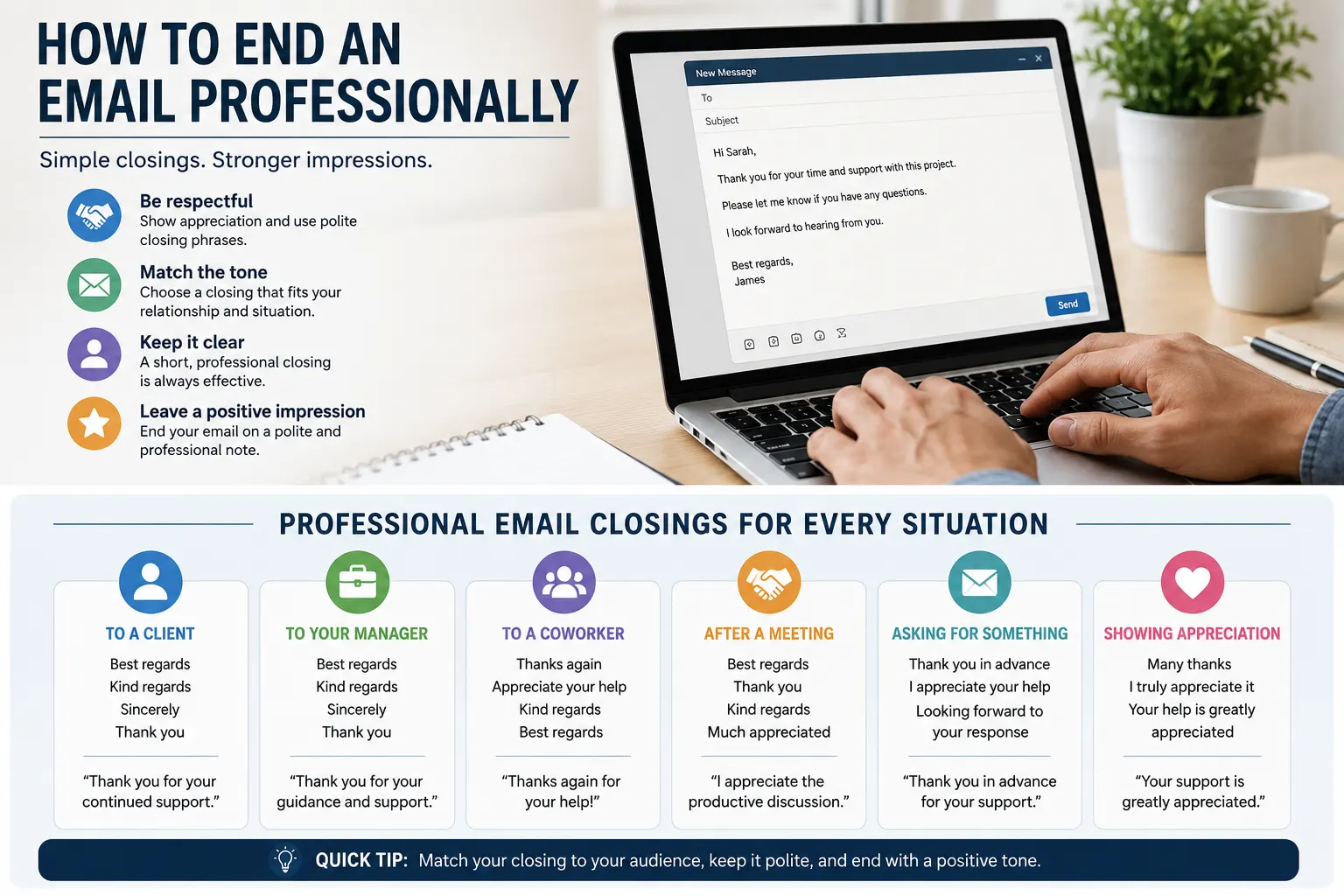
1. How to End an Email Professionally to a Client
Client emails should sound polished and respectful.
Professional closing phrases
- “Thank you for your time.”
- “Please let me know if you have any questions.”
- “I look forward to hearing from you.”
- “Thank you for your continued support.”
- “We appreciate the opportunity to work with you.”
✅ Example:
“Thank you for your time and support. Please let me know if you have any further questions.”
Professional sign-offs
- Best regards
- Kind regards
- Sincerely
- Warm regards
2. How to End an Email Professionally to Your Manager
Emails to managers should sound respectful and clear.
Professional closing phrases
- “Thank you for your guidance.”
- “I appreciate your feedback.”
- “Please let me know if you’d like any updates.”
- “I’ll keep you informed on the progress.”
- “Thank you for your support.”
✅ Example:
“Thank you for your feedback. I’ll make the updates and send the revised version this afternoon.”
3. How to End an Email Professionally to a Coworker
Coworker emails can sound slightly more relaxed while still staying professional.
Professional closing phrases
“Thanks again for your help.”
“I appreciate your support.”
“Let me know if you need anything else.”
“Thanks for your quick response.”
“Looking forward to working together on this.”
✅ Example:
“Thanks again for your help with the presentation. Let me know if you need anything from my side.”
4. How to End an Email Professionally After a Meeting
Meeting follow-up emails should confirm communication clearly.
Professional closing phrases
- “Thank you everyone for your time today.”
- “I appreciate the productive discussion.”
- “Please find the next steps below.”
- “I’ll follow up with the updated information.”
- “Looking forward to the next meeting.”
✅ Example:
“Thank you everyone for your time today. I appreciate the productive discussion and will follow up with the updated timeline shortly.”
5. How to End an Email Professionally When Asking for Something
When requesting information, approval, or support, your closing should sound polite.
Professional closing phrases
- “Thank you in advance.”
- “I appreciate your assistance.”
- “Please let me know your thoughts.”
- “I look forward to your response.”
- “Any guidance would be appreciated.”
✅ Example:
“Please let me know your thoughts when you have a moment. Thank you in advance for your support.”
6. How to End an Email Professionally While Showing Appreciation
Showing appreciation helps your email sound warmer and more professional.
Professional closing phrases
- “I truly appreciate your help.”
- “Your support is greatly appreciated.”
- “Thank you again for your assistance.”
- “I appreciate your time and effort.”
- “Many thanks for your help.”
✅ Example:
“Your support during this project has been greatly appreciated. Thank you again for all your help.”
7. How to End an Email Professionally in Customer Service
Customer service emails should sound calm, polite, and supportive.
Professional closing phrases
- “Thank you for your patience.”
- “We appreciate your understanding.”
- “Please contact us if you need further assistance.”
- “Thank you for bringing this to our attention.”
- “We’re happy to help.”
✅ Example:
“Thank you for your patience while we reviewed the issue. Please contact us if you need any further assistance.”
8. How to End an Email Professionally Without Sounding Too Formal
Some professional emails do not need extremely formal language.
You can still sound professional while sounding natural.
Natural professional closings
- “Thanks again.”
- “All the best.”
- “Have a great day.”
- “Looking forward to hearing from you.”
- “Take care.”
✅ Example:
“Thanks again for your help. Looking forward to hearing from you soon.”
9. How to End an Email Professionally in Short Emails
Not every email needs a long closing.
Sometimes short and clear works best.
Short professional closings
- “Thank you.”
- “Best regards.”
- “Kind regards.”
- “Many thanks.”
- “Appreciate your help.”
✅ Example:
“Thank you. Please let me know if you need anything else.”
10. Professional Email Closings to Avoid
Some email endings sound too casual for workplace English.
| Avoid Using | Better Alternative |
|---|---|
| Bye | Best regards |
| Cheers | Kind regards |
| Sent from my phone | Thank you for your time |
| Thx | Thank you |
| Later | Sincerely |
Small changes help your emails sound more polished and professional.
Best Professional Email Sign-Offs
These are some of the safest and most common professional email endings:
- Best regards
- Kind regards
- Regards
- Sincerely
- Warm regards
- Thank you
- Many thanks
These work well in most workplace situations.
Tips for Ending Emails Professionally
- match the tone of the situation
- keep the closing clear and polite
- avoid overly casual language
- show appreciation when appropriate
- do not overcomplicate the ending
- keep professional emails concise
- choose sign-offs carefully
Professional email communication sounds strongest when it feels natural and respectful.
Benefits of Learning How to End an Email Professionally
When you learn How to End an Email Professionally, you can:
- sound more confident in workplace English
- improve professional relationships
- communicate more clearly
- leave stronger final impressions
- improve client communication
- write more polished business emails
Professional email skills are valuable in almost every workplace.
Improve Workplace English with Learn Laugh Speak
At Learn Laugh Speak, adults learn practical English for real workplace communication.
That includes:
- professional emails
- meetings
- presentations
- workplace phrases
- customer service
- business communication
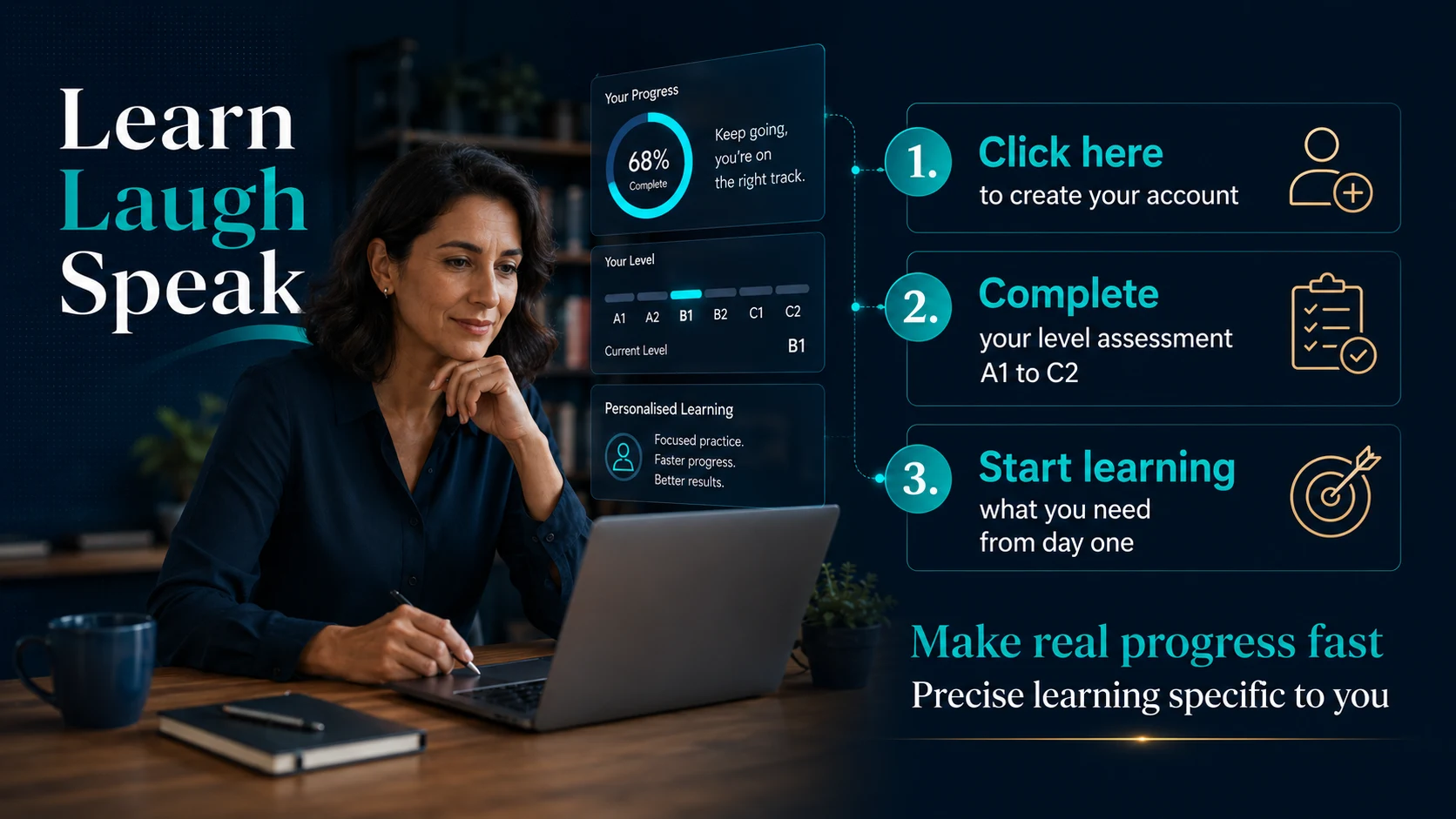
Every student starts with a level assessment from A1 to C2.
From there, learners follow a personalized path based on their level, goals, and progress.
Learn Laugh Speak helps adults build real confidence using English at work.
Final Thought
Learning How to End an Email Professionally helps you communicate more clearly and confidently at work.
Simple professional phrases like:
- “Thank you for your time.”
- “I appreciate your support.”
- “Please let me know if you have any questions.”
- “Looking forward to hearing from you.”
can make your emails sound more professional and respectful.
Because in workplace English, the final impression matters just as much as the first one.