
 English
 Arabic
 Chinese (Simplified)
 Dutch
Dutch French
 German
 Italian
 Portuguese
 Russian
 Spanish
A friend of mine decided at 34 that he wanted to play piano. He’d never touched one. Two years later he was performing at small local venues. In the same two years, I tried to learn Italian and quit three times. We’re roughly the same age, both reasonably smart, both motivated. The difference wasn’t talent. It was that he had stumbled onto how the brain actually learns, and I was doing everything the brain hates.
This is the frustrating part of adult skill-building: most of us were taught to learn in ways that don’t match how the underlying biology works. Once you understand what’s really happening in your head when you try to pick up something new, the pace can change dramatically.
Skills live in your nervous system, not your memory
The first thing to clear up: learning a skill isn’t like memorizing a phone number. When you study a new language, pick up a sport, or try to code for the first time, you’re not really stockpiling information. You’re physically rewiring the pathways between neurons. The technical term is myelination. Repeated practice causes your brain to wrap the neurons involved in that skill with a fatty insulation called myelin, which makes those signals fire faster and cleaner over time.
This is why skills feel clumsy for weeks and then suddenly click. You’re not “getting smarter” about it. Your wiring is literally getting more efficient.
The practical implication is that information alone won’t build a skill. Watching a hundred tutorials on guitar won’t make your hands work. Only the reps will. You have to put your nervous system under actual load for the wiring to strengthen.
Short, frequent sessions beat long ones, almost always
There’s a well-replicated body of research on something called distributed practice. Put simply, thirty minutes a day for six days will outperform three hours in a single weekend session. Nearly every time.
The reason is that most of the consolidation, the actual stitching of the skill into long-term memory, happens between practice sessions. During sleep especially, but also during the quiet hours in between. Your brain replays what you did and locks it in. Skip the recovery window and you’re basically pouring water into a bucket with no bottom.
This is why trying to cram a new skill into a single weekend workshop rarely sticks. The information goes in, but without the spacing, the wiring doesn’t set.
Desirable difficulty is the whole game
Here’s a counterintuitive finding: the sessions that feel the best (smooth, easy, effortless) are usually the ones where you’re learning the least. The sessions that feel hard, awkward, and a little frustrating are where the actual growth is happening.
Researchers call this “desirable difficulty.” Your brain only rewires itself when the task is at the edge of what you can currently do. Too easy and nothing changes. Too hard and you just flail and give up. The sweet spot is right in between, where you’re getting maybe 70% to 85% of attempts right and the rest are near-misses.
The implication is important: if your practice never feels uncomfortable, you’re probably wasting your time. The discomfort is the signal that the learning is actually happening.
Feedback loops are where most adults lose the plot
Kids learn new things faster than adults mostly for one reason, and it isn’t neuroplasticity. It’s that kids are constantly in environments with tight feedback loops. Coaches, teachers, peers, someone correcting the grip on their racket or the shape of their letters in real time.
Adults tend to learn alone. They watch YouTube, they buy a book, they practice in isolation. The problem is that without someone pointing out what you’re doing wrong, you often don’t know you’re doing anything wrong. You just bake in the bad habits, strengthen the wrong neural patterns, and then have to spend months unlearning them later.
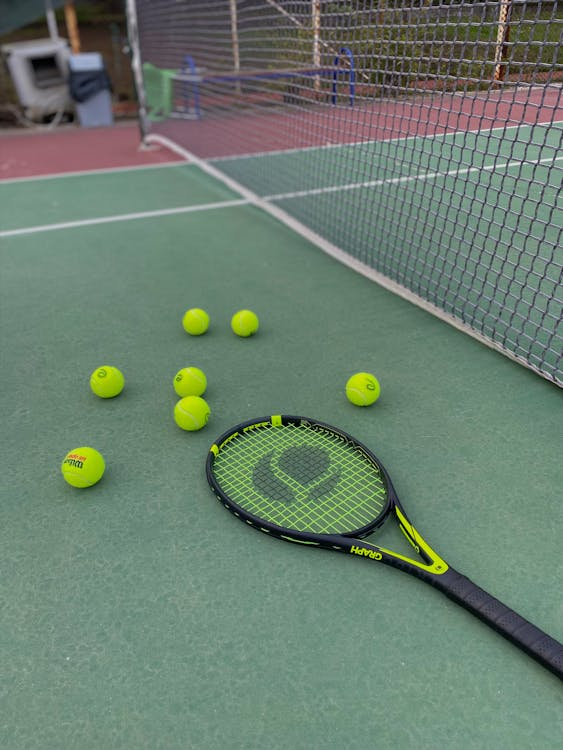
This is why, for skills where technique actually matters, the fastest route is almost always a qualified coach from the start. Take tennis, for example. The people who learn fastest aren’t the ones grinding out hours on the ball machine alone. They’re the ones taking private tennis lessons for beginners early on, getting their grip, footwork, and swing path corrected before they become habits. The cost of a few months of coaching is nothing compared to the cost of a decade spent with a broken backhand.
Interleaving and the myth of “mastering one thing at a time”
Common advice: “Just focus on one thing until you’ve mastered it.” Neuroscience says that’s often exactly wrong.
When researchers compare “blocked practice” (doing one drill over and over) against “interleaved practice” (mixing several related skills in the same session), interleaving almost always wins for long-term retention. It feels worse while you’re doing it. Your performance dips during the session. But you retain more, you transfer the skills better to new situations, and you become more adaptable.
Serious learners across fields use this without always naming it. A musician cycles between scales, sight-reading, and repertoire in the same hour. A language learner mixes listening, speaking, and reading instead of doing one exclusively. The variety is the point, not a distraction from it.
Why certain skills progress faster than others
Physical skills that involve repetitive, clear-feedback motion tend to build faster than abstract ones, because the feedback is immediate and honest. You either hit the target or you don’t. The nervous system knows right away whether to reinforce what it just did or adjust.
Archery is a great example of this. Every shot gives you instant, specific feedback: the arrow lands where it lands, and there’s no lying to yourself about it. That’s why many people find they progress surprisingly quickly with something like beginner-friendly archery lessons, often faster than they expected. The brain loves clean feedback, and archery delivers it on every single rep.
Contrast that with something like “writing better,” where feedback is delayed, subjective, and often contradictory. Progress is still possible, but it takes longer precisely because the signal is noisier.
If you’re picking up a new skill from scratch, it can be worth starting with something that has fast, clear feedback. The early wins train your brain to enjoy the process, which is what keeps you showing up.
Sleep is a performance enhancer hiding in plain sight
This part is almost embarrassingly underrated. The research here is extensive and consistent: when you sleep after learning something, your performance on that skill the next day is measurably better than if you practiced and then stayed awake the same number of hours.
This is because sleep, particularly deep sleep and REM, is when the brain runs the consolidation process. It replays the practice, filters out the useless parts, and cements the wiring. No sleep, no consolidation. Simple as that.
If you’re serious about learning something, protecting your sleep is not an optional lifestyle choice. It’s part of the practice.
Why Character Education Matters More Than Ever in Today’s Classrooms
Putting it together
If you wanted to sketch out the fastest way to learn almost any new skill based on what we know, it would look something like this. Practice in short daily sessions rather than long weekend ones. Push yourself just past comfortable, often enough to feel a little stupid. Get an actual coach early so you don’t build in bad habits. Mix related skills within the same session instead of drilling one thing. Pick something with clear feedback if you want quick momentum. And guard your sleep like it’s the training itself.
None of this is exotic. It’s just that almost nobody does it, which is why most adults’ attempts to learn new things stall out around week six.
The people who get noticeably faster, at anything, have usually just stopped fighting the biology.