
 English
 Arabic
 Chinese (Simplified)
 Dutch
Dutch French
 German
 Italian
 Portuguese
 Russian
 Spanish
Purchasing an emerald is far different than purchasing a diamond or any other type of gemstone. It has history, it has confusion, and right now it has a whole brand new conversation that never existed ten years ago — natural vs lab-grown, especially when it comes to lab-created emerald rings.
And most have no clue where to even begin.
Let’s fix that.
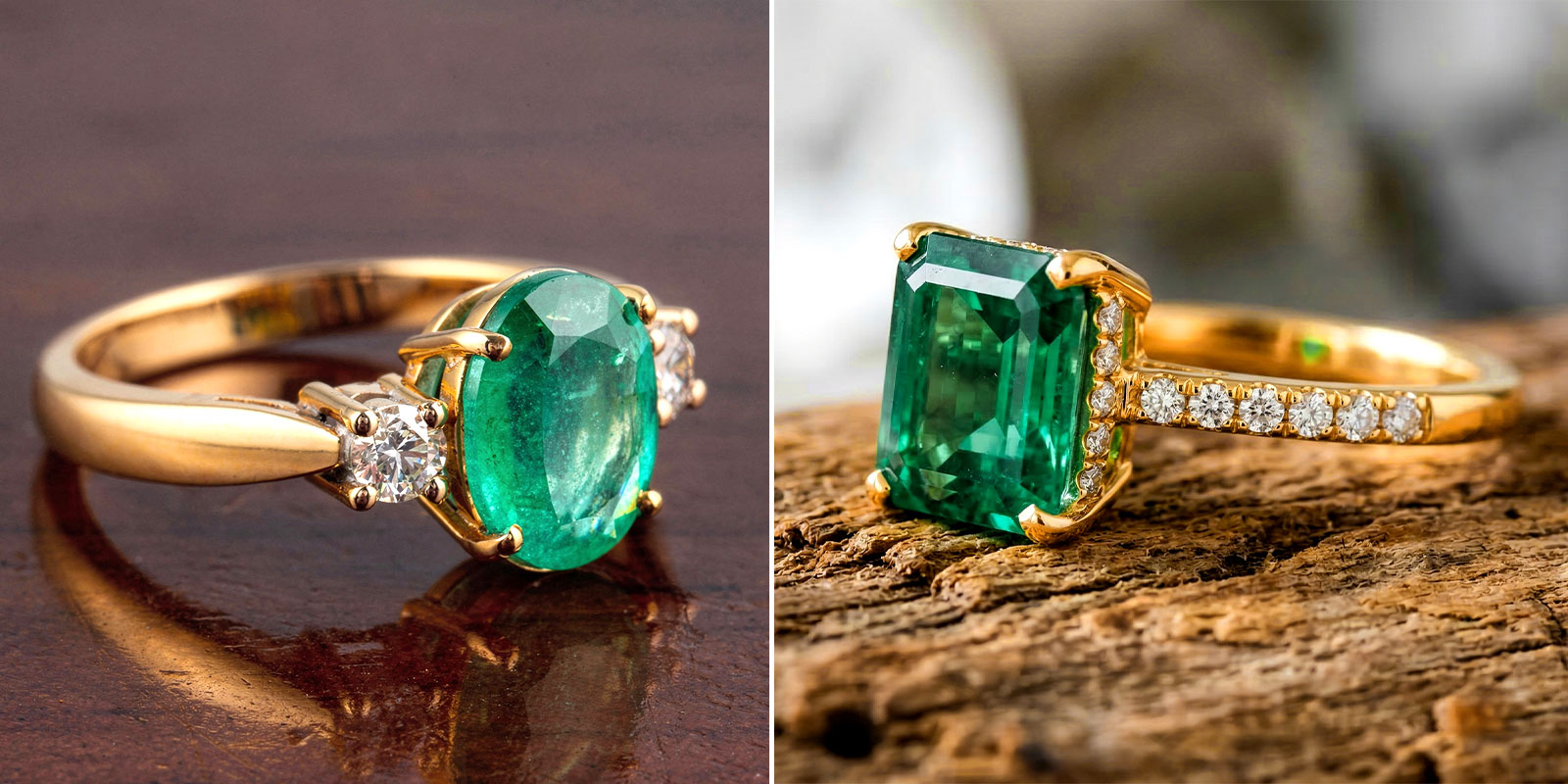
Both Are Real. No More Using Lab-Grown Like a Dirty Word
We’ll be blunt here because the confusion about this is legitimately infuriating.
Lab-grown emeralds are not imitations. They are not glass. They are NOT remakes with a new title, complete with poor copycats. The atomic structure of a lab-created emerald is identical to that of emeralds mined in Colombia. Same hardness. Same refractive index. Chromium and vanadium are the colour-causing elements.
The only thing different is the origin. One took millions of years underground. The other took a few months in a controlled lab environment. That’s the whole difference. Nothing else.
What You’ll Actually See When You Look at Them
Natural emeralds are rarely clean stones. They carry inclusions — internal fractures, cloudiness, tiny growth marks. The industry gave it a romantic name, “jardin,” but don’t let that fool you. It just means the stone has visible flaws. And not just some stones — most of them. A natural emerald with exceptional clarity is genuinely rare and priced accordingly.
Lab-grown stones come out cleaner. Unlike the chaos of what occurred millennia earlier, the process is a controlled one. The haze they are noticing is very natural when people are searching for natural emerald rings for women and do not feel satisfied with the look. It’s not a bad batch. That’s the way Mother Nature is with natural emeralds.
In terms of looks, lab-grown usually has the edge. Especially in mid-range budgets.
The Difference in Costs is Not Small but Huge
Good to great color with medium clarity, Emeralds can go between $1500-$6000 per carat. Or a lot more, depending on the source and stamp of approval. What about Colombian stones with a premium certificate? Even higher.
But you definitely won’t find lab-grown emerald rings anywhere near that number. You end up with a far superior stone — bigger, cleaner, better colour saturation — and pay a fraction of what a natural counterpart would have cost. That’s not a small gap. That matters, especially for many buyers who would end up with either a smaller or lower-quality diamond than desired.
Using an Emerald as an Engagement Ring
People do it. It’s beautiful. But go in with open eyes.
The Mohs scale scores emeralds between 7.5 and 8. Softer than a diamond — that’s a lot to think about for daily wear.
Protective settings — like bezels or halo designs — help a lot. Avoid ultrasonic cleaners.
Be careful around hard surfaces. This maintenance applies to both natural and lab-grown equally, so origin doesn’t change the care side of things at all.
Some buyers who want green but worry about durability explore a lab-grown diamond ring with a colored accent instead. Completely valid route. But for someone committed to the emerald look for their engagement ring, both natural and lab-grown hold up fine with reasonable care.
Resale Value — Be Honest With Yourself Here
Top-tier certified natural emeralds from notable origins can hold value reasonably well. Emphasis on top-tier. The average natural emerald someone buys at a mid-range jewelry store? Not a great resale asset.
Lab-grown will depreciate more over time as production increases. That’s just the reality of where the market is heading.
But honestly — if you’re buying an emerald because you love emeralds, resale value is the wrong thing to optimize for. Buy what you love. Wear it. Enjoy it.
So Which One Do You Actually Pick?
Go natural if the origin genuinely means something to you. If knowing the stone has a geological story, came from a specific mine, carries that rarity — and that matters emotionally — then pay for it. That’s a real reason.
Go lab-grown if you want the best stone your budget can get. Better clarity, lower cost, same material. For most buyers shopping today, this is the more practical and honestly smarter choice.
Neither answer is wrong. It depends entirely on what you value.
Quick Reminder Before You Buy Anything
Never buy a diamond without a grading certificate. Be it natural or man-made, always get it certified. Also, check for treatments. Most natural emeralds are oiled to improve their appearance, which is standard practice — but it must be disclosed. If a seller can’t tell you whether the stone has been treated, walk away.
Conclusion
The best emerald, after all, is the one that belongs in your life — your budget, your values, and what you want to feel when you look down on your hand.
A few years ago, lab-grown diamond rings would have priced some people out of genuine, beautiful emerald jewelry, but now you have access to it. That’s not a compromise. That’s a win.
Some customers actually value the found secret and adventurous story on natural emeralds, carried into the depths of secrecy and an adventure. Those two things can be true at the same time.
No need to pick a side — just pick you. At least now you know what you’re picking between.