
 English
 Arabic
 Chinese (Simplified)
 Dutch
Dutch French
 German
 Italian
 Portuguese
 Russian
 Spanish
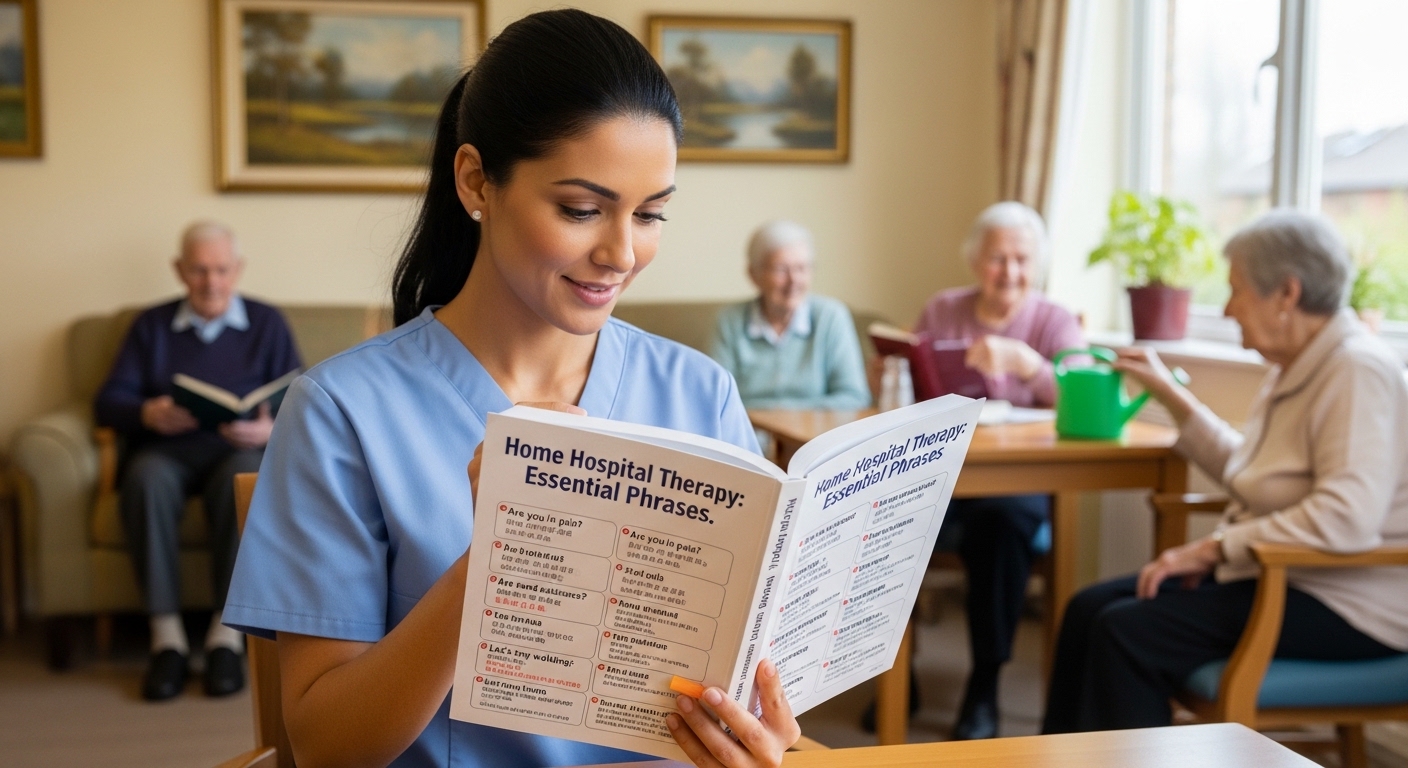
On better days, it can feel simple to care for an older adult. But the smallest moments can be the biggest risks with language barriers. Communication Is Key. An oversight in conveying information can create ambiguity. A delayed reply can , in fact, increase tension. These simple multilingual phrases can undergird safe home care.
This means that you don’t need to be perfectly fluent. You need clear, repeatable phrases. Moreover, you need calm routines that are routine for everyone. This guide covers all the key phrases and how best to use them.

Why language matters for elder safety
Older adults may feel anxious when they cannot explain their needs. Meanwhile, caregivers may guess instead of confirming. That guesswork can increase falls, delays, and frustration. Additionally, stress can worsen communication even more.
Clear phrases help because they reduce steps. They also reduce emotion in urgent moments. As a result, everyone can act faster.
Common safety moments where phrases matter
Most of the safety occurrences take place during day-to-day activities. But routines still require communication. So if language support is built around the most common risks,
This is when you use phrases like:
- Getting in and out of bed
- Walking to the bathroom
- Asking about pain or dizziness
- Calling for help quickly
- Confirming medication timing
- Explaining equipment use
Also, when we are stressed, there is a tendency to only be able to put together short phrases. Long explanations often fail. The better solution is to keep the language direct and consistent.
Set up a “Safety Phrase System” at home.
You can create a simple system in one afternoon. Additionally, it can work even with mixed languages. The goal is consistency, not perfection. Therefore, choose the same phrases every time.
Step 1: Pick one “home language” and one “backup language”
Some families use English plus another language. Others use two non-English languages. Meanwhile, some caregivers rotate between shifts. Therefore, write phrases in both languages where possible.
Start with these basics:
- “Yes / No”
- “Stop”
- “Wait”
- “Help”
- “I understand.”
- “Show me”
Step 2: Print phrase cards in large font
Large print reduces strain. On top of that, it aids in dim light. Place cards where the most care happens.
Good locations include:
- Bedside table
- Bathroom door
- Kitchen cabinet
- Walker or wheelchair pouch
Step 3: Use a “confirm-back” habit
Confirm-back means the elder repeats the key message. Or the caregiver repeats the elder’s request. As a result, fewer mistakes happen.
Use simple confirm lines:
- “I heard you say ___.”
- “Yes, we will do ___ now.”
- “Please say it again, slowly.”
Essential phrases for urgent situations
Urgent phrases should be short and strong. However, they should stay respectful. Therefore, focus on action words and clear directions.
Help and emergency phrases
Practice these phrases daily. Meanwhile, keep them visible near the bed. Additionally, teach visiting family members the same lines.
Use a list like this:
- “Are you hurt?”
- “Where does it hurt?”
- “Do not move.”
- “Hold my hand.”
- “Sit down now.”
- “I am calling for help.”
Fall risk phrases that prevent rushing
Many falls happen during quick transfers. Therefore, the words “slow” and “wait” matter a lot. Moreover, tone matters too.
Try phrases like:
- “Move slowly.”
- “One step at a time.”
- “Turn toward me.”
- “Hold the rail.”
- “Feet flat, then stand.”
Essential phrases for daily care routines
Daily routines feel repetitive. However, repetition builds safety. As a result, language routines become automatic too. Additionally, elders often feel more dignity with clear choices.
Bathroom safety phrases
Bathroom trips often include urgency. Meanwhile, slippery floors increase risk. Therefore, use clear cues before movement.
Helpful phrases include:
- “Do you need the bathroom?”
- “Let’s go together.”
- “Wait for me.”
- “Hold the grab bar.”
- “Sit first, then stand.”
Meal and hydration support phrases
Language gaps make eating and drinking stressful. However, calm phrasing helps cooperation. Moreover, choices can lower resistance.
Use phrases like:
- “Small bites, please.”
- “Sip water now.”
- “Hot or cold?”
- “Do you want more?”
- “Tell me if you feel dizzy.”
Comfort, consent, and dignity phrases
Safety improves when trust stays strong. Therefore, comfort phrases are not “extra.” They are part of risk reduction. Meanwhile, consent phrases protect dignity.
Use these often:
- “Is this okay?”
- “May I help you?”
- “Do you want a break?”
- “You are safe with me.”
- “Thank you for telling me.”
Additionally, use the elder’s preferred name. That small detail can reduce agitation. In other words, respect can de-escalate faster than logic.
Equipment communication phrases for safer mobility
Home care often includes devices. However, devices only help when used correctly. Therefore, clear and consistent language is especially important when discussing equipment within aged care Sydney services.
If a family is researching a Hospital bed for sale, clear equipment phrases can still matter. Moreover, the same phrases help with walkers and rails.
Use equipment-focused phrases like these:
- “Raise the head.”
- “Lower the bed.”
- “Lock the wheels.”
- “Do not lean.”
- “Push up with your arms.”
- “Wait until it stops.”
Quick phrases for nighttime safety
Nighttime adds darkness and fatigue. Therefore, keep phrases shorter at night. Additionally, reduce choices during urgent needs.
Try these phrases:
- “Light on.”
- “Stay in bed.”
- “Call me first.”
- “I am here.”
Moreover, keep a bell or button within reach. That simple change may help reduce risky wandering.
How to personalize phrases for your languages
Translation apps can help. However, direct translation sometimes sounds harsh. Therefore, test phrases with a native speaker. Meanwhile, keep the intent the same.
Here is a simple method:
- Write the phrase in plain English
- Translate it into the home language
- Ask a native speaker for a kinder version
- Practice it with the elder’s feedback
Additionally, record audio on a phone. Then play it during practice. As a result, pronunciation improves quickly.
Tips for caregivers who are new to the family’s language
Trust can be built even with limited words. Moreover, consistency beats vocabulary size. So, here’s where tone and repetition are important.
Use these practical habits:
- Smile and make eye contact
- Speak slowly, then pause
- Use gestures with each phrase
- Point to objects while speaking
- Ask “yes/no” questions first
- Use the same phrase each day
Meanwhile, avoid slang. Slang confuses even fluent speakers. Instead, go for verbs and clear nouns.

Home setup reminders that support safer communication
Words do best with friendly surroundings. Therefore, adjust the environment too. Furthermore, “The good setup leaves less room for impromptu speeches.
Consider these changes:
- Add night lights in hallways
- Install non-slip mats in the bathroom
- Keep a phone near the bed
- Label drawers in both languages
- Place water within easy reach
- Keep emergency contacts printed clearly
If your family is comparing a quality hospital bed for sale, think beyond comfort. Consider how easily the controls can be explained. Additionally, consider how visible the buttons are at night.
Conclusion
Multilingual home care may seem daunting. But such a small-phrase system can underpin safer daily practice. So concentrate on short, replicable phrases and easy placement. In addition, practice these phrases when emotions aren’t high.
In other words, safety is built through small habits practiced each day. Combine language, visuals and routine. In the process, elders gain confidence and caregivers gain control.