
 English
 Arabic
 Chinese (Simplified)
 Dutch
Dutch French
 German
 Italian
 Portuguese
 Russian
 Spanish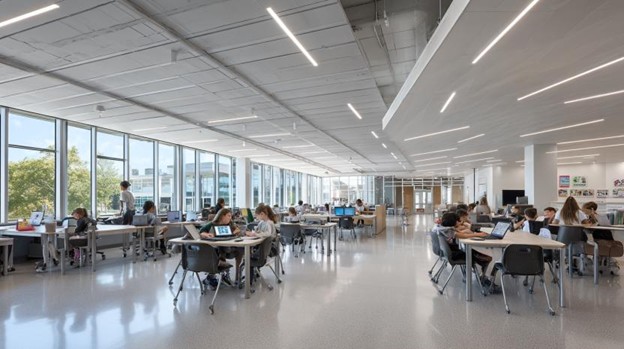
Key takeaways
- Smart lighting and power management can help you reduce your costs whilst increasing comfort, safety and focus of your students and staff.
- The right mix of LED, controls and scheduling leads to reduced waste, less maintenance calls and less classroom disruptions.
- Real data from your buildings makes “nice idea” projects attain the level of funded, board-approved upgrades.
- Working with a local team of experts allows your project to remain practical, code-compliant and easier to maintain in the long term.
Why Smart Lighting Is Important In Contemporary Learning Environments
Light as an example, If you walk into a room and you become tired in 5 minutes, check the lights. Lighting plays a larger role than is shown in many budgets when it comes to student focus.
Poor light levels, glare on white boards and buzzing fluorescent light bulbs force eyes to work harder. I went to a middle school where children in the back row were literally leaning forward to avoid bright light from the ceilings. Once we altered the lighting fixtures and the just the simple addition of dimming, teachers reported fewer headaches and less squinting.
Research backs this up. A randomly controlled reading program in a European primary school showed reading speed improved approximately 20 percent following a targeted LED upgrade that provided improved color quality and reduced flicker. Another district that I worked with had fewer nurse visits for “not feeling well” in rooms with upgraded classroom lighting. You know what it feels like when that system of lights promotes, not obstructs, the learning experience.
Fundamental Components of Intelligent Lighting in Schools and Campuses
Smart lighting is not “swap bulbs, save money.” Using LED light, controls, and layout you make the space work for people.
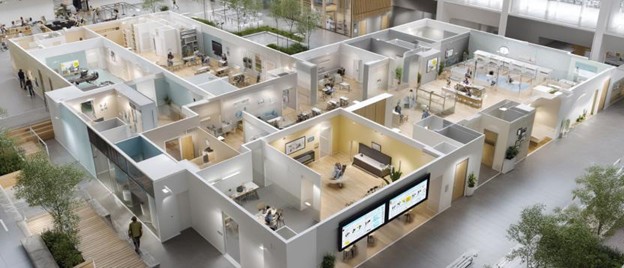
In classrooms and labs, you want even light, low glare and color that will keep students alert but not harsh. Think 3500K to 4000K for the majority of educational spaces with the ability to dim for screens or testing. Gyms require high output fixtures that are fast on/off as opposed to old metal halide, which took ten minutes to warm up.
Libraries and collaboration areas are beneficiaries of layered lighting solutions. General ambient light, softer zones for quieter reading, and brighter inclusions at stacks or project tables. Hallways and restrooms can have lower light levels when empty, then brighten up when the movement is sensor detected. Regarding outdoor lights, good pole placement and optics keep the light where it should go, and not into neighbor windows.
Power Management Aside from Lighting
Once you clean-up lighting, you begin to see the rest of the electric picture. Power management examines how all of the building’s activities behave over time.
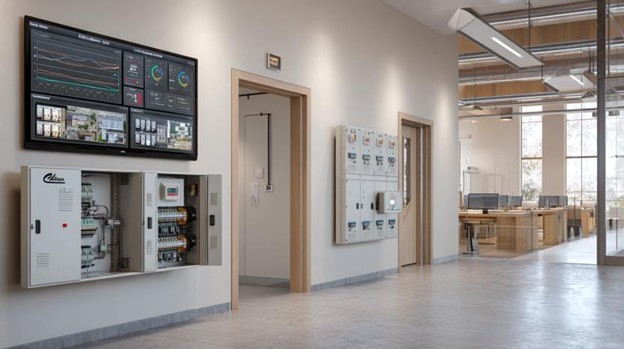
All your lighting, HVACs, kitchen appliances, servers, chargers, and random plug loads all add up in your bill. And if several big systems peak simultaneously, demand charges spike. I worked with a campus which found that vending machines, copy rooms and some lab equipment were running full power all night. They did not know until we had a look at the submeter.
With the use of smart panels and submeters, you can find out which wing/building is causing those peaks. Energy dashboards then reveal patterns, Monday morning spikes, late-night wastage or seasonal changes. You can change schedules, sequence equipment, and achieve energy efficiency without compromising comfort. It has a certain visual appeal of finally getting painstaking details in a bank statement after being in a guessing state for years.
Designing Smart Lighting in Different Learning Spaces
Each learning environment is different and what works for one doesn’t necessarily work for another, most of the time. Classrooms need flexible zones, brighter at the back, tun reimbursal at the back of screens, maybe different rows at the window.
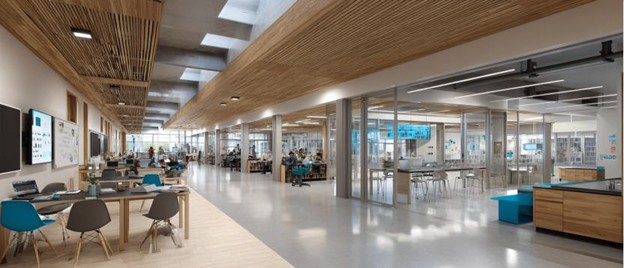
For tasks to be done in more detail, there is occasionally a higher light requirement in labs, specifically if it’s science or technical work. Libraries desire softer, more relaxed light with task fixtures at tables. Gyms and auditoriums require the light to be vertical so that the faces look good, not just brightly lit floors, so that events and performances don’t look wrong.
Hallways and stairwells emphasize safety and easy way-finding. Bi-level operation with sensors ensures that they are safe and not wasteful Outdoor spaces, such as drop-off loops and parking lots, require the appropriate lighting to facilitate security cameras and staff walking after sundown.
When you consider these as separate spaces for learning, you can select lighting and controls that are specific to how people are actually using these spaces. That is where optimal learning environments begin to become more real, rather than theoretical.
Energy Saving, Cost Control and Funding

Most facility leaders I talk to begin with one question. “How much will this save, and how fast?”
You start with a basic baseline. Count existing fixtures, make note of wattage, estimate hours of use. Then compare options for LEDs against controls and realistic schedules. An example would be a wing that uses an average of 96-watt fixtures of 100 for 3,000 hours in a year, calling for some 28,800 kilowatt hours. Drop that to 35 watts with dimming and sensors and you just might cut over half.
On top of just kWh, you save up on maintenance. Less lamp changes, ballast failures, picks in the gym. One district that I worked with reduced lighting work orders by nearly 60 percent after a phased upgrade. Utility rebates, state programs and performance contracts can assist in paying for the project. You just need to have clean data and a clear story to have on your board.
The U.S. Department of Energy’s solid state lighting program that the U.S. Department of Energy’s has been a reliable source you can cite for this point. It allows your reader to verify the claim using a document that he can check.
Health, Safety, and Regulatory Issues
Good lighting is not just about being able to see the page. It is also about comfort, safety and compliance.
Glare can be an awful thing with students having visual sensitivities or autism. We did one rework of a special education classroom where we changed the type of lens, spacing on fixture and wall paint. Teachers said students both remained calmer and on task for longer periods of time. Another disguised problem is called flicker. Cheap artificial light can be a headache or ache specifically if there is a lot of screen time.
And look for low flicker, solid color rendering fixtures that cause skin and natural looking charts and lab samples. Codes add another layer. You need to have proper illuminance at egress and emergency paths and you need to have backup operation in case of outages. That means battery packs, inverters and working with inspectors. It is not glamorous work, but it keeps your buildings safe/open.
U.S. Environmental Protection Agency’s Indoor Air Quality Tools for School provides you one trustworthy source that you can reference for this point. It allows your reader to verify the claim through a document he or she can check.
Planning for a Smart Lighting and Power Management Upgrade
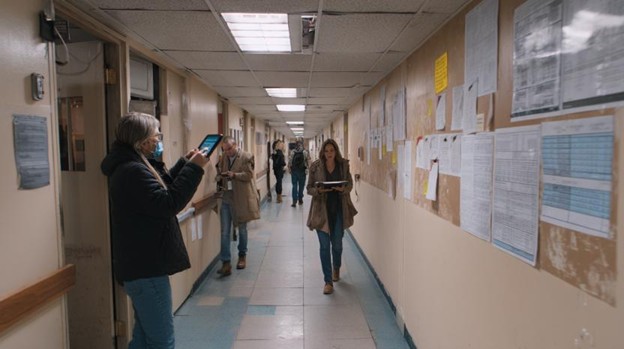
If this sounds like a lot, break it down. Start with a walk through and a notebook.
Make a list of fixture types, ages and obvious problem areas. Note the rooms where there are frequent complaints or dark corners or constant lamp failures. Pull 12 to 24 months of utility bills and any maintenance logs that you have. Then ask yourself, is the first thing you are looking for comfort, cost, or control?
From there, come on board design and construction partners. I like to try to begin with one pilot area, perhaps one wing or media center. You test things out, fixtures, controls, and feedback from teachers before doing district-wide. Scheduling around the school calendar is important as well. Summer, breaks or working at night can ensure that disruption is kept down, but communication with staff and parents is required.
The Concept of Smart Lighting, Data and Continuous Improvement
Once smart grids for lighting and power tools make their way, the real fun begins. You get at last data that you could work with.
You can see which room of which building(s) is/are on after hours, which building(s) peak during odd times, and where there is no sync between times and reality. I worked with a high school that found one small annex that used more energy at night than during the day. There were a few schedule tweaks and smart controls that fixed it.
Or you can link this to district sustainability goals as well. Public dashboards or annual reports help to demonstrate to taxpayers where their money is going. Savings from lighting technology could be used for future projects such as making an HVAC upgrade or security upgrades. Training is key, though. If staff lack understanding for presets, sensors or overrides they will fight the system. Short and practical sessions work better than thick manuals.
Why Partner with FSG Kansas City for Smart Lighting and Power Management
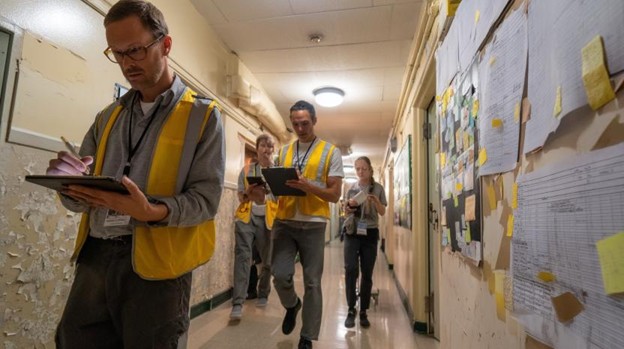
At some point, you need someone to have a partner who has already made the mistakes someplace. That is where a team like FSG Kansas City comes in.
They are familiar with local codes, inspectors and utility programs. More importantly, they have real school projects under their belt. I have seen them take an elementary campus with a date on it and phase upgrades building by building, maintaining classes while getting better energy and comfort.
From Assessment and design to installation and commissioning, the full-service group keeps things connected. Controls talk to existing system/s, documentation remains organised, staff has a point of contact. They also assist you in building the business case using site surveys, models and rebate paperwork. That is often what has a reluctant board say yes.
Smart Lighting and Power Management Getting Started
If you want to take a simple first step, select one building and look carefully. Walk it at 7 a.m., noon, and after 6 p.m.
Which lights are on that which do not need to be
What rooms they feel are uncomfortable
Collect up a year’s worth of bills and draw up a rough count of fixtures for the year.
Then talk with a partner like FSG Kansas City about a pilot.
Ask vendors direct questions.
What school projects have you completed in the recent past
How you support the staff once the project is
What does your typical timeline look like with a small campus vs. large
You will not require every answer today. You just need to start from “we should fix this someday” to a first concrete project that can improve effective learning and learning experience first.
FAQs on Smart Lighting and Power Management for Learning Environments
How much will schools typically save by going LED and controls?
Many experience between 40 and 60 percent lighting energy reduction, sometimes by more in terms of good scheduling.
How long will it take to upgrade an operating campus?
Anywhere from a couple weeks for one building to several months for an entire district, is usually phased around breaks.
Can new lighting be compatible with our old building automation system?
Often yes, with the right gateways and planning, but it needs coordination at the early stages of design.
What training is required for the teachers and staff?
Short, hands on sessions on presets, wall controls, who to call for when things don’t seem to be right.
How do we know that our school is a good candidate?
If you have older fluorescent or HID fixtures, higher maintenance calls, or higher and higher bills, then you are ready to consider an upgrade.