
 English
 Arabic
 Chinese (Simplified)
 Dutch
Dutch French
 German
 Italian
 Portuguese
 Russian
 Spanish
In multilingual workplaces, misunderstandings often come from cultural meaning — not vocabulary. One of the best examples is the difference between chisme and gossip, two words that seem similar but carry very different cultural weight.
4 Examples of Cultural Differences in the Workplace for Managers
For adult English learners, especially in Spanish-speaking countries, knowing this difference helps you:
use English more naturally
avoid miscommunication at work
understand workplace expectations
maintain a professional tone
recognize cultural nuances in conversations
According to this useful workplace communication study cultural interpretation influences how colleagues perceive your words much more than grammar or vocabulary.
This is why understanding the difference between chisme and gossip is essential for modern professionals.

2. The Cultural Meaning of “Chisme” in Spanish-Speaking Countries
To understand the difference between chisme and gossip, we must start with culture.
In Mexico and much of Latin America, chisme can refer to:
friendly conversation
casual updates
light curiosity
playful storytelling
social bonding
“vecina-style” updates
humorous or harmless talk
Examples:
“Te tengo un chisme.” (Fun tone)
“Vamos a echarnos el chisme.” (Social bonding)
“Te cuento el chisme del trabajo.” (Informal, not always negative)
Chisme can be negative, but not always. Often, it is simply about connection, not harm.
This already shows the first part of the difference between chisme and gossip: chisme can be social, not malicious.
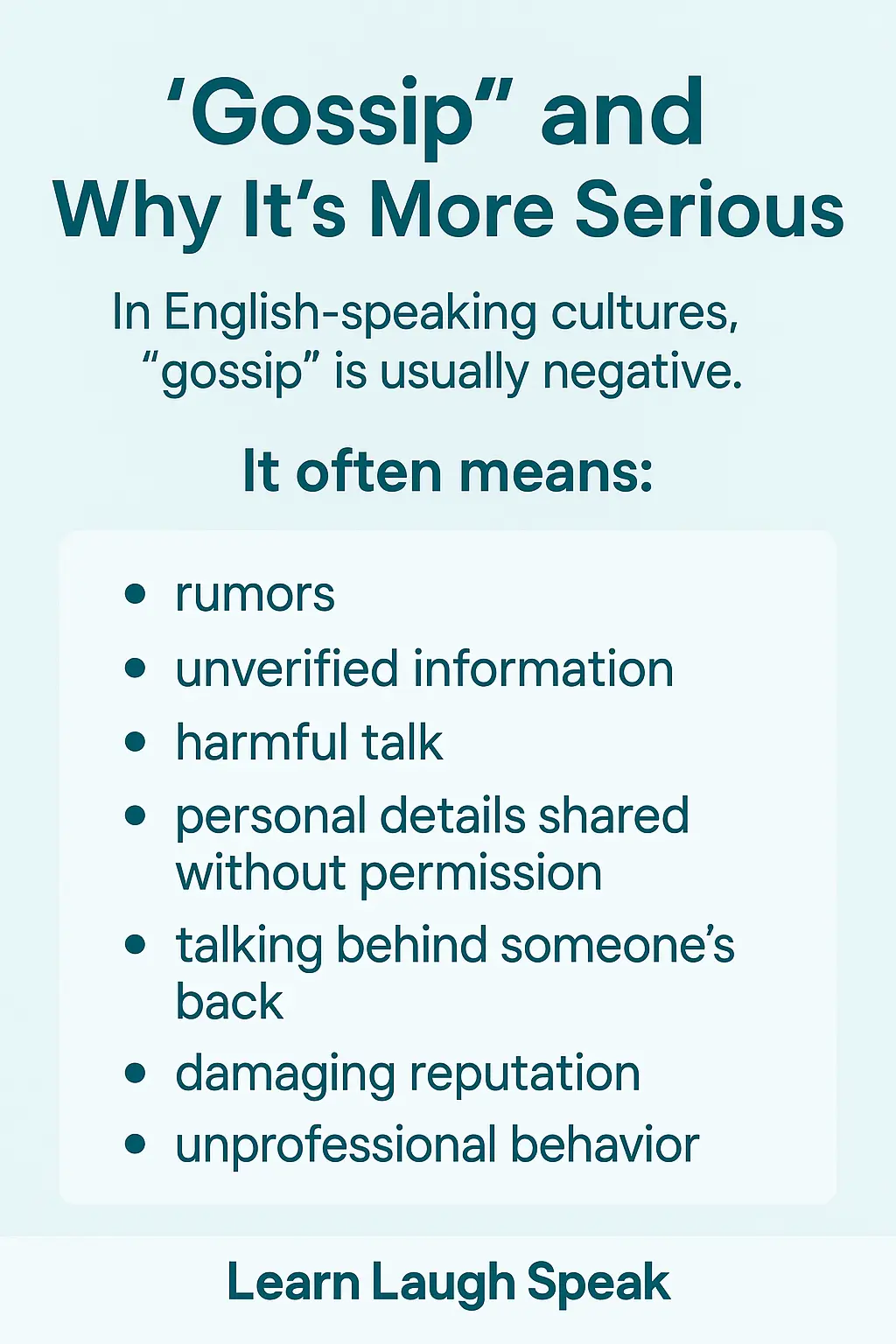
3. The English Meaning of “Gossip” and Why It’s More Serious
In English-speaking cultures, “gossip” is usually negative.
It often means:
rumors
unverified information
harmful talk
personal details shared without permission
talking behind someone’s back
damaging reputation
unprofessional behavior
Examples:
“Office gossip hurts team morale.”
“Gossip creates a toxic workplace.”
There is almost no positive version of the English word “gossip.”
This is a major part of the difference between chisme and gossip: in English, gossip is rarely considered friendly.
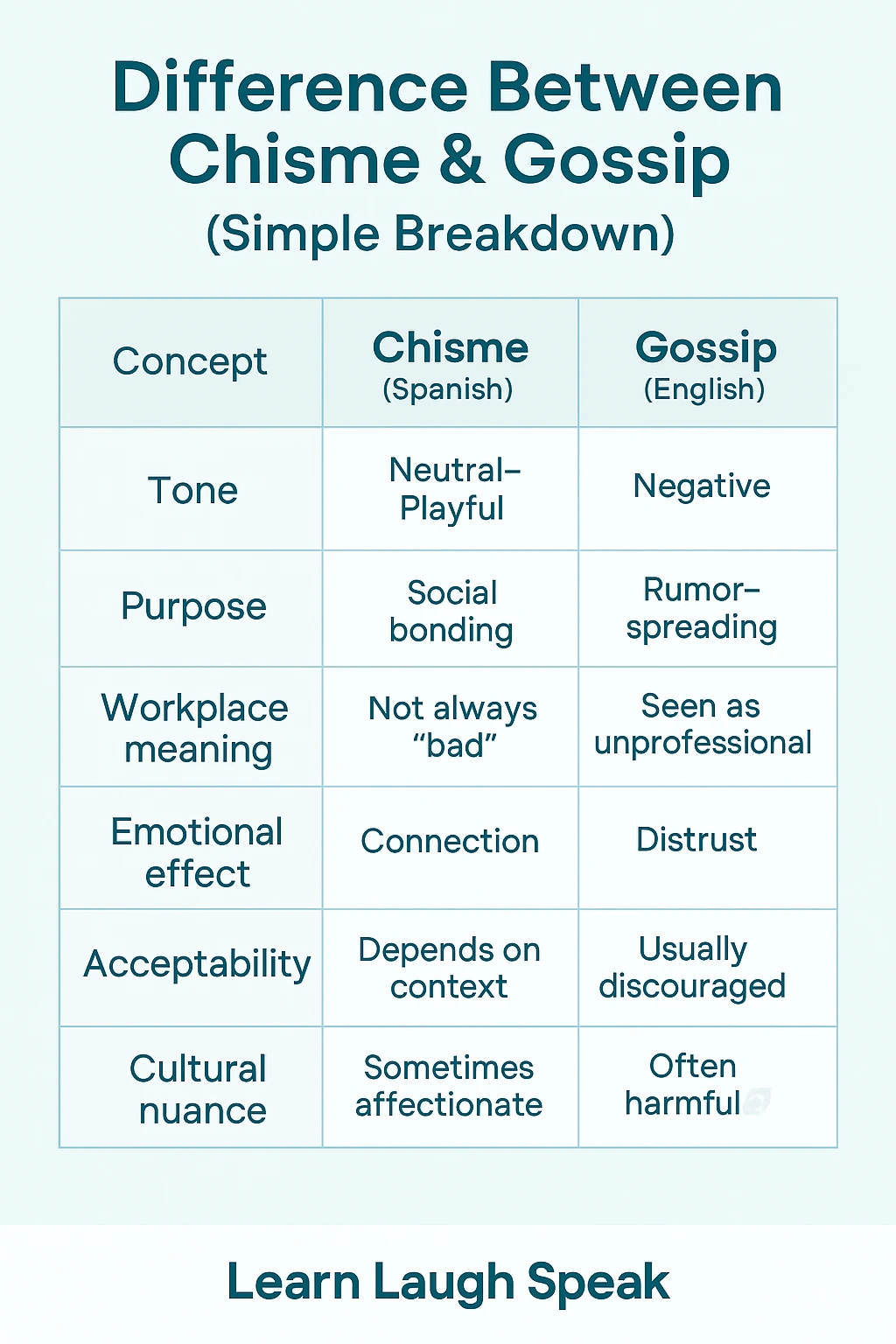
4. Key Difference Between Chisme and Gossip (Simple Breakdown)
This table clearly shows the difference between chisme and gossip in everyday and workplace situations.
5. Examples Showing the Difference Between Chisme and Gossip
Chisme (Neutral/Playful)
“Te cuento un chisme del fin de semana.”
“Tengo un chisme bueno.”
“¿Ya supiste el chisme de la fiesta?”
Gossip (Negative)
“There’s a rumor going around about him.”
“She’s gossiping again.”
“There’s office gossip about the new manager.”
These examples demonstrate the difference between chisme and gossip not just in meaning, but in emotional weight.
Giving Compliments in English: Tips and Examples
6. Workplace Perspective: Why Gossip Is Riskier Than Chisme
In Spanish-speaking offices, chisme can sometimes be harmless.
In English-speaking workplaces:
gossip damages trust
gossip harms reputations
gossip creates conflict
gossip is linked to HR issues
gossip is seen as unprofessional
This is a crucial workplace-related difference between chisme and gossip.
7. How Adult Learners Can Identify the Tone of Chisme vs Gossip
Ask yourself:
Is the intention playful or harmful?
Chisme can be playful.
Gossip is rarely playful.
Is the information verified?
Chisme: sometimes yes, sometimes no.
Gossip: usually unverified.
Is someone’s reputation involved?
Chisme: not always.
Gossip: almost always.
Is the conversation public or whispered?
Chisme: open and social.
Gossip: hidden and secretive.
Understanding intention is the heart of the difference between chisme and gossip.
8. Polite English Phrases for Avoiding Gossip in the Office
Here are professional ways to avoid gossip while sounding confident:
“I’m not sure about that.”
“Let’s wait for official information.”
“I prefer not to discuss personal details.”
“Let’s focus on the project for now.”
“Maybe we should ask directly to confirm.”
These help you stay respectful and professional.
9. How to Talk About Chisme in English Without Sounding Unprofessional
Here are safe alternatives:
Instead of “I have some gossip”, say:
“I heard something interesting, but I’d rather wait for confirmation.”
“There’s some news going around, but I want to get the facts first.”
Instead of “They’re gossiping”, say:
“They’re discussing some unofficial information.”
“There’s some speculation happening.”
Communication Barriers in the Workplace (With Examples)
10. How Learn Laugh Speak Helps Adults Navigate Chisme vs Gossip in English
Learn Laugh Speak helps adult learners:
understand cultural differences
avoid unprofessional language
use polite English alternatives
build workplace confidence
navigate bilingual communication naturally
With 33,000 CEFR-aligned lessons, real workplace dialogues, and pronunciation feedback, adults learn how to speak professionally and culturally aware.
Soft CTA
Learn Laugh Speak teaches adults practical, workplace-focused communication.
Want to master real-world English and understand the difference between chisme and gossip with confidence?
2 thoughts on “The Difference Between Chisme and Gossip: Explained Simply”
Pingback: Why Human Resources Training Is Essential for Modern Workplaces - Learn Laugh Speak
Pingback: Jueves in English: Meaning, Pronunciation and Examples - Learn Laugh Speak