
 English
 Arabic
 Chinese (Simplified)
 Dutch
Dutch French
 German
 Italian
 Portuguese
 Russian
 Spanish
Using the right language in professional settings is essential for making a good first impression. Whether you’re greeting colleagues, meeting clients, or introducing yourself in a business environment, mastering Formal English Greetings and Introductions for Professionals ensures clear and confident communication. This guide will help you understand the most appropriate phrases, their meanings, and how to use them effectively.
12 Examples of Greetings for Formal and Informal Occasions
Quick Answer: Formal English Greetings and Introductions
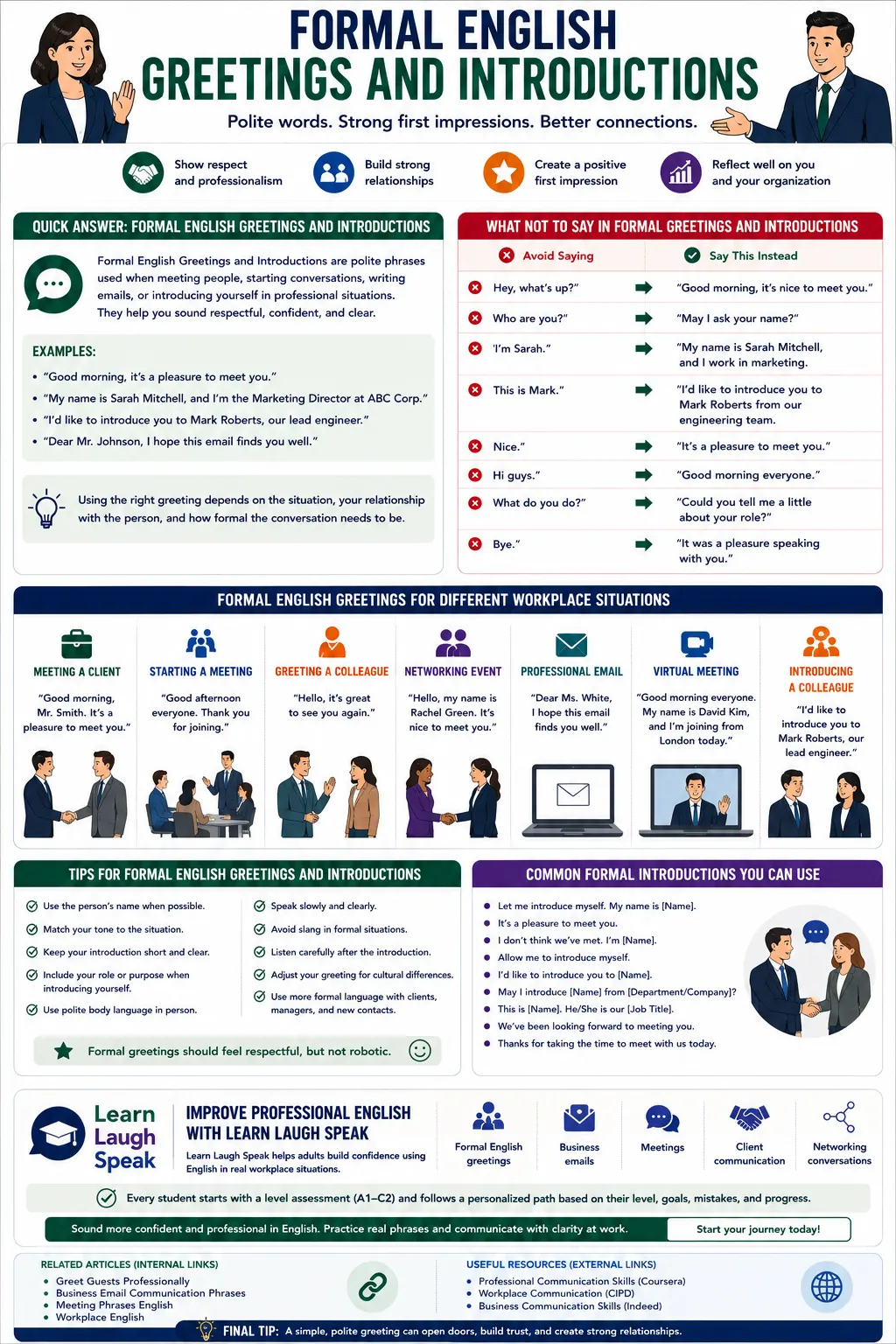
Formal English Greetings and Introductions are polite phrases used when meeting people, starting conversations, writing emails, or introducing yourself in professional situations. They help you sound respectful, confident, and clear in business communication.
Examples include:
- “Good morning, it’s a pleasure to meet you.”
- “My name is Sarah Mitchell, and I’m the Marketing Director at ABC Corp.”
- “I’d like to introduce you to Mark Roberts, our lead engineer.”
- “Dear Mr. Johnson, I hope this email finds you well.”
Using the right greeting depends on the situation, your relationship with the person, and how formal the conversation needs to be.
What Not to Say in Formal English Greetings and Introductions
Some greetings and introductions can sound too casual, unclear, or unprofessional in business English. A better phrase should sound polite, natural, and appropriate for the situation.
| Avoid Saying | Say This Instead |
|---|---|
| “Hey, what’s up?” | “Good morning, it’s nice to meet you.” |
| “Who are you?” | “May I ask your name?” |
| “I’m Sarah.” | “My name is Sarah Mitchell, and I work in marketing.” |
| “This is Mark.” | “I’d like to introduce you to Mark Roberts from our engineering team.” |
| “Nice.” | “It’s a pleasure to meet you.” |
| “Hi guys.” | “Good morning everyone.” |
| “What do you do?” | “Could you tell me a little about your role?” |
| “Bye.” | “It was a pleasure speaking with you.” |
Small changes make your English sound more professional and respectful.
Formal English Greetings for Different Workplace Situations
Use different greetings depending on the person, setting, and level of formality.
- Meeting a client: “Good morning, Mr. Smith. It’s a pleasure to meet you.”
- Starting a meeting: “Good afternoon everyone. Thank you for joining.”
- Greeting a colleague: “Hello, it’s great to see you again.”
- Networking event: “Hello, my name is Rachel Green. It’s nice to meet you.”
- Professional email: “Dear Ms. White, I hope this email finds you well.”
- Virtual meeting: “Good morning everyone. My name is David Kim, and I’m joining from London today.”
- Introducing a colleague: “I’d like to introduce you to Mark Roberts, our lead engineer.”
These phrases help English learners sound confident in meetings, emails, interviews, and business introductions.
Tips for Formal English Greetings and Introductions
- use the person’s name when possible
- match your tone to the situation
- keep your introduction short and clear
- include your role or purpose when introducing yourself
- use polite body language in person
- speak slowly and clearly
- avoid slang in formal situations
- listen carefully after the introduction
- adjust your greeting for cultural differences
- use more formal language with clients, managers, and new contacts
Formal greetings should feel respectful, but not robotic.
1. The Importance of Formal English Greetings and Introductions
In professional settings, the way you greet and introduce yourself sets the tone for communication. Using formal expressions shows respect, professionalism, and confidence. Whether in emails, meetings, or networking events, the right greeting and introduction can build credibility and rapport.

2. Common Formal English Greetings for Professionals
Here are some standard Formal English Greetings used in business and professional environments:
- Good morning / Good afternoon / Good evening – These greetings are used based on the time of day.
- Example: Good morning, Mr. Smith. How are you today?
- Hello, it’s a pleasure to meet you – A polite way to greet someone you’re meeting for the first time.
- Example: Hello, it’s a pleasure to meet you. I’ve heard great things about your company.
- How do you do? – A very formal way of greeting, mostly used in British English.
- Example: How do you do, Ms. Johnson?
- I hope you are doing well – A professional way to greet someone in emails or meetings.
- Example: Good afternoon, Mr. Lee. I hope you are doing well.
- It’s great to see you again – Used when greeting someone you have met before.
- Example: It’s great to see you again, Dr. Patel. How has your week been?
- I trust you’ve had a good week – A polite way to acknowledge someone’s well-being.
- Example: Good morning, Ms. Thompson. I trust you’ve had a good week.
Formal Email Greetings to Use in the Workplace (With Examples)
3. Professional Introductions for Different Situations
Self-Introductions in Professional Settings
When introducing yourself in a business setting, clarity and confidence are key.
- Basic Professional Introduction
- Example: Good morning. My name is Sarah Mitchell, and I am the Marketing Director at ABC Corp.
- Introduction with a Purpose
- Example: Hello, I’m James Carter, a financial consultant specializing in investment strategies. It’s a pleasure to meet you.
- Introducing Yourself in a Meeting
- Example: Good afternoon, everyone. I’m Lisa Wong, the new HR manager. I look forward to working with all of you.
- Virtual Meeting Introduction
- Example: Hello, my name is David Kim, and I work in the Business Development team. I’m calling in from London today.
Introducing Others in a Professional Setting
When introducing colleagues or clients, professionalism and respect are important.
- Introducing a Colleague
- Example: I’d like to introduce you to Mark Roberts, our lead engineer. Mark has been with us for five years and specializes in product innovation.
- Introducing a Client or Business Partner
- Example: Please meet Ms. Anna Lopez, our international sales director. She has extensive experience in global market expansion.
- Introducing Yourself at a Networking Event
- Example: Hi, I’m Rachel Green, a senior project manager at BrightTech. I specialize in digital transformation strategies. What about you?
Easily Make Small Talk At Work in English

4. Email and Written Formal English Greetings
Using the right Formal English Greetings in emails and professional messages enhances professionalism.
- Dear [Name], – The most common professional email greeting.
- Example: Dear Mr. Johnson, I hope this email finds you well.
- To Whom It May Concern, – Used when the recipient is unknown.
- Example: To Whom It May Concern, I am writing to inquire about your services.
- Dear [Title] [Last Name], – When addressing someone with a specific title.
- Example: Dear Dr. Martinez, I look forward to our meeting next week.
- I hope this email finds you well – A polite way to start an email.
- Example: Dear Ms. White, I hope this email finds you well. I am reaching out regarding our recent discussion.
5. Tips for Using Formal English Greetings and Introductions Professionally
- Use appropriate body language – A firm handshake, eye contact, and a smile enhance your greeting.
- Match the tone to the situation – A board meeting requires a more formal greeting than a casual business lunch.
- Practice active listening – After introducing yourself or greeting someone, listen attentively to their response.
- Adjust based on culture – Some cultures prefer a handshake, while others may use a bow or nod.
Final Thoughts on Formal English Greetings and Introductions for Professionals
Mastering Formal English Greetings and Introductions for Professionals ensures confidence in business settings. Whether introducing yourself in a meeting, greeting a new client, or writing a professional email, using the right expressions builds credibility and rapport. By practicing these phrases and techniques, you can improve your professional communication and make a lasting impression in the workplace.
Tips On Communicating In Professional English At Work
Improve Professional English with Learn Laugh Speak
Learn Laugh Speak helps adults build confidence using English in real workplace situations.
That includes:
- formal English greetings
- professional introductions
- business emails
- meetings
- client communication
- networking conversations
Every student starts with a level assessment from A1 to C2. From there, learners follow a personalized path based on their level, goals, mistakes, and progress.
If you want to sound more confident and professional in English, Learn Laugh Speak helps you practise the phrases you need for real communication at work.
2 thoughts on “Formal English Greetings and Introductions for Professionals”
Pingback: What to Expect When Working With a Business Coach
Pingback: 10 Idioms Used in the Office That People Still Use