
 English
 Arabic
 Chinese (Simplified)
 Dutch
Dutch French
 German
 Italian
 Portuguese
 Russian
 Spanish
Do you ever feel like people are talking, but you are not really catching everything they say?
Maybe you understand the words, but miss the meaning.
Maybe you are already thinking about your reply before the other person has finished speaking.
Or maybe you want to communicate more clearly in English, but listening feels harder than reading or writing.
You are not alone. Active listening is difficult. But not impossible.
Good listening is one of the most important parts of communication, but it is also one of the easiest skills to forget.
If you want to know how to listen better, the answer is not only “pay more attention.”
You need to build small habits that help you focus, understand, and respond clearly.
In this guide, we will look at seven simple ways to improve your listening skill in conversations, workplace situations, and English communication.
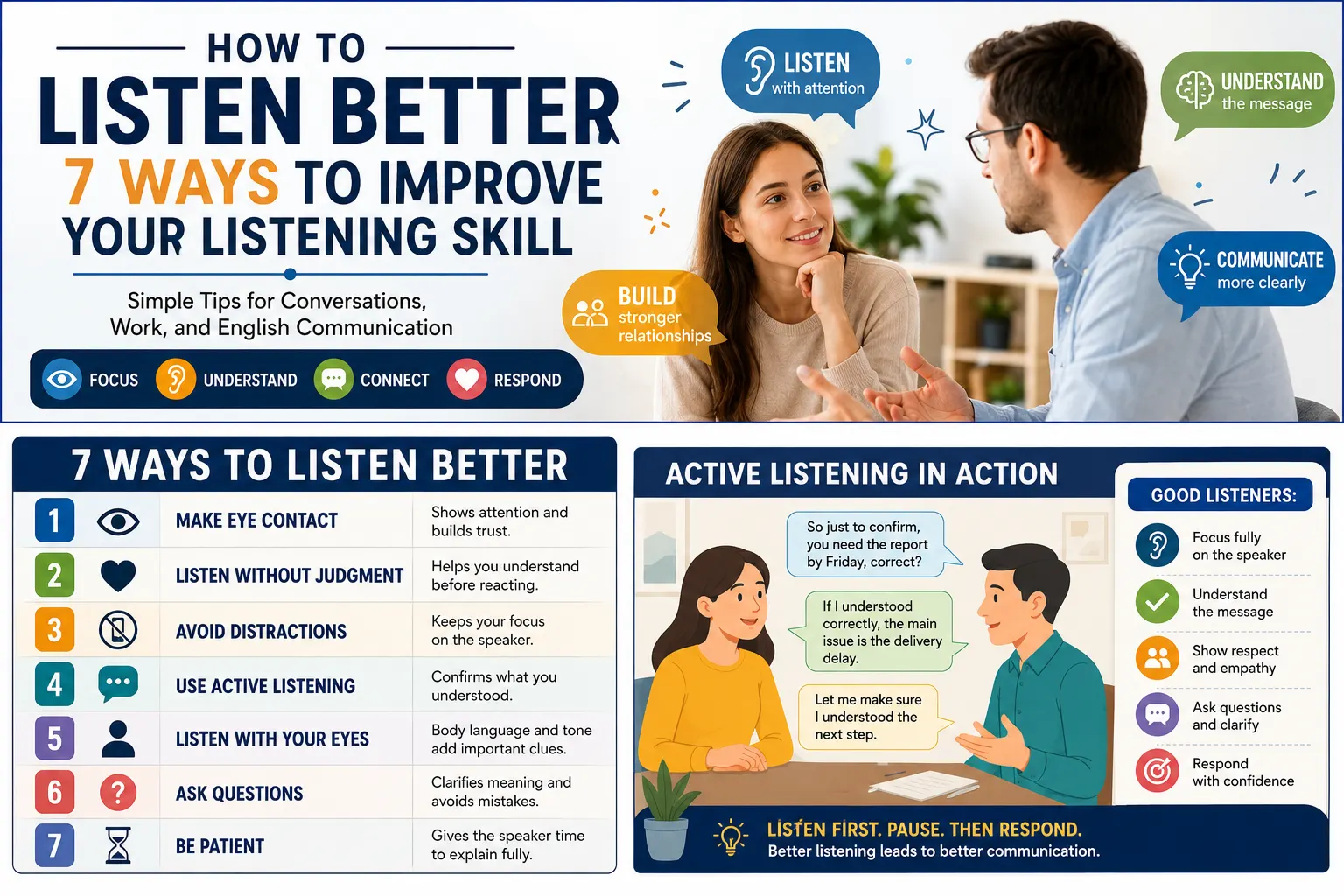
Quick Answer: How Can You Listen Better?
To listen better, focus fully on the speaker, avoid distractions, listen without judging, ask questions, and repeat key points in your own words.
For English learners, listening is not only about hearing words.
It is about understanding meaning, tone, pronunciation, and context.
A simple habit is:
Listen first. Pause. Then respond.
This helps you avoid interrupting, misunderstanding, or answering too quickly.
Why We Don’t Listen Properly
Many people do not listen properly because they are already thinking about what they want to say next.
Instead of focusing on the speaker, they are preparing their own answer.
This can lead to misunderstandings, frustration, and missed details.
At work, poor listening can cause mistakes with tasks, deadlines, instructions, and customer communication.
In everyday conversations, it can make people feel ignored or misunderstood.
If you want healthier relationships and better communication, learning how to listen better is a simple but powerful place to start.
7 Ways to Listen Better
Here are seven practical ways to become a better listener.
| Listening Tip | Why It Helps |
|---|---|
| Make eye contact | Shows attention and builds trust |
| Listen without judgment | Helps you understand before reacting |
| Avoid distractions | Keeps your focus on the speaker |
| Use active listening | Confirms what you understood |
| Watch body language | Helps you understand tone and emotion |
| Ask questions | Clarifies meaning and avoids mistakes |
| Be patient | Gives the speaker time to explain fully |
1. Make Eye Contact
Making eye contact shows the speaker that you are paying attention.
It also helps you notice facial expressions and body language.
You do not need to stare.
Just look naturally at the person while they are speaking.
This shows that you are interested in the conversation and present in the moment.
In English conversations, eye contact can also help you follow tone, emotion, and meaning more clearly.
2. Listen Without Judgment
Listening without judgment means giving the other person time to explain their thoughts before you decide what you think.
You may not agree with everything they say.
That is okay.
But if you react too quickly, you may miss the full message.
In workplace conversations, this is especially important.
If a coworker, manager, customer, or client is explaining something, try to understand the full situation before responding.
Instead of thinking:
“That’s wrong.”
try thinking:
“Let me understand what they mean first.”
This small change can improve communication quickly.
3. Avoid Distractions
It is difficult to listen well when your phone is buzzing, your laptop has ten tabs open, or your mind is already somewhere else.
Modern distractions make listening harder.
Common distractions include:
- phone notifications
- emails
- background noise
- messages
- thinking about your reply too early
- checking your computer while someone speaks
To listen better, remove as many distractions as possible.
Put your phone down.
Close unnecessary tabs.
Look at the person speaking.
Give them your attention for the moment.
This sounds simple, but it makes a big difference.
4. Use Active Listening
Active listening means showing that you are listening and checking that you understood correctly.
One way to do this is to repeat the main idea in your own words.
For example:
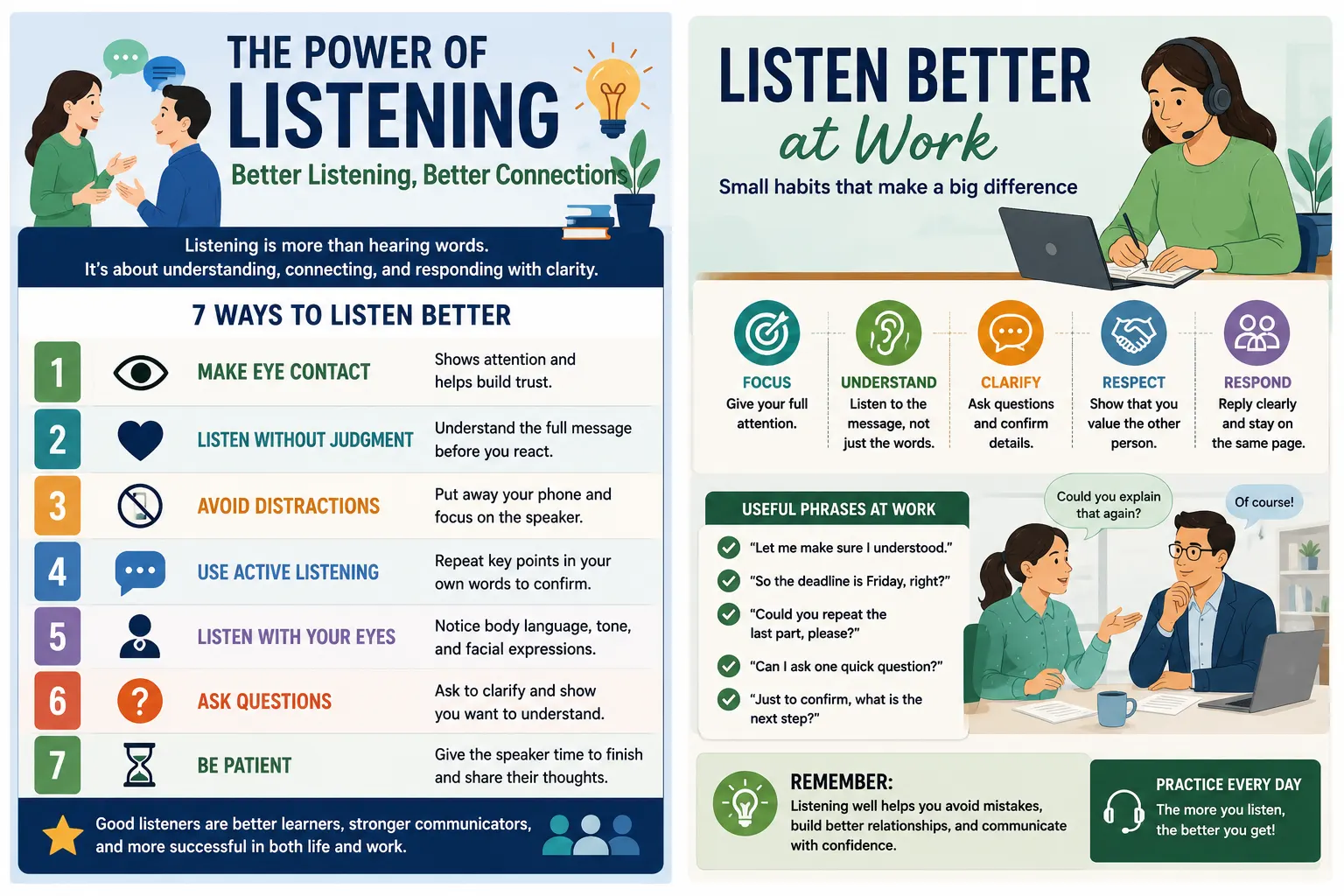
“So just to confirm, you need the report by Friday, correct?”
“If I understood correctly, the main issue is the delivery delay.”
“Let me make sure I understood the next step.”
Active listening helps avoid misunderstandings.
It also shows the other person that you are paying attention.
This is very useful in English meetings, customer service, phone calls, and workplace conversations.
5. Listen with Your Eyes
Listening is not only about hearing words.
People also communicate through body language, facial expressions, posture, gestures, and tone of voice.
When you listen with your eyes, you pay attention to the whole message.
For example, someone might say:
“That’s fine.”
But their face or tone may show that they are frustrated or unsure.
This does not mean you should guess everything.
It means you should notice the signs and ask politely if you are unsure.
For example:
“I just want to check — are you comfortable with this plan?”
or:
“Would you like to discuss another option?”
Good listening includes both words and body language.
6. Ask Questions
Questions help you confirm meaning and avoid mistakes.
If you are not sure what someone means, it is better to ask than to pretend you understood.
Useful phrases include:
“Could you explain that again?”
“Do you mean that we should send it today?”
“Can I check that I understood correctly?”
“Could you repeat the last part, please?”
“What would you like me to do next?”
Asking questions shows that you are interested and careful.
It does not make you look weak.
In professional English, asking clear questions is a sign of good communication.
7. Be Patient
Good listeners do not rush to respond.
They give the other person time to finish.
This can be difficult, especially if you disagree or if you think you already know what the person will say.
But interrupting can make the other person feel ignored.
It can also cause you to miss important information.
Try to pause before replying.
Let the speaker finish their thought.
Then respond calmly.
A useful phrase is:
“Thank you for explaining. Let me think about that for a moment.”
Patience helps you listen more clearly and respond more professionally.
How to Improve Listening Skills in English
For English learners, listening can feel difficult because real English is fast, connected, and full of different accents.
You may know the words but still miss the full meaning.
This is normal.
To improve listening skills in English, practise in small steps.
Try these habits:
- listen to short English audio every day
- repeat useful phrases out loud
- focus on the main idea first
- listen again for details
- practise with real conversations
- write down new phrases you hear
- listen to different accents when possible
The goal is not to understand every word immediately.
The goal is to understand more each time.
Small daily practice is better than one long session once a week.
Listening Better at Work
Listening well at work helps you avoid mistakes, understand tasks, and respond more professionally.
In meetings, calls, emails, and customer conversations, listening carefully can save time and prevent confusion.
Use phrases like:
“Let me make sure I understood correctly.”
“So the deadline is Friday, right?”
“Could you repeat the last part, please?”
“Can I ask one quick question to clarify?”
“Just to confirm, what is the next step?”
These phrases help you confirm details without sounding confused or unprepared.
They also show professionalism and attention to detail.
Common Listening Mistakes to Avoid
If you want to understand how to listen better, it helps to know what gets in the way.
| Mistake | Better Habit |
|---|---|
| Thinking about your reply too early | Focus on the speaker first |
| Interrupting | Let the person finish |
| Pretending to understand | Ask a polite question |
| Judging too quickly | Listen to the full message |
| Looking at your phone | Remove distractions |
| Focusing on every word | Listen for the main idea first |
| Avoiding clarification | Confirm what you understood |
Listening improves when you slow down and give the conversation your full attention.
Improve Listening and Communication with Learn Laugh Speak
Learn Laugh Speak helps adults improve English through structured lessons based on their level.
That includes:
- listening practice
- speaking confidence
- pronunciation
- workplace communication
- real conversation phrases
- reading and writing support
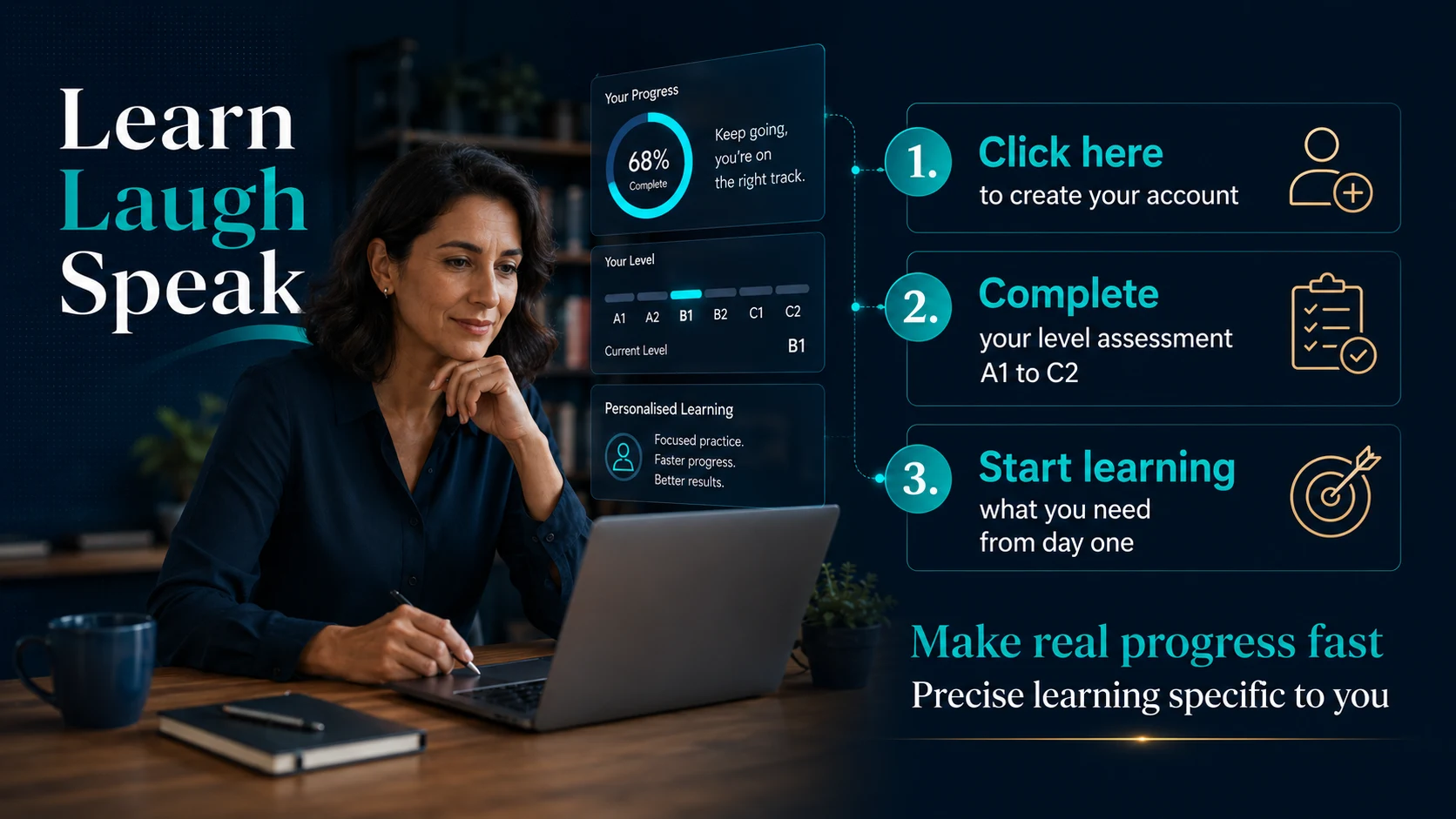
Every student starts with a level assessment from A1 to C2.
From there, learners follow structured lessons based on their level, mistakes, goals, and progress.
If you want to listen better and communicate more clearly in English, Learn Laugh Speak helps you practise step by step.
Final Thoughts
Learning how to listen better is one of the best ways to improve communication.
It helps you understand people more clearly, avoid mistakes, build stronger relationships, and respond with more confidence.
If you are learning English, listening may feel difficult at first.
That does not mean you are failing.
It means your brain is learning to understand sound, speed, tone, and meaning in a new language.
Start small.
Make eye contact.
Avoid distractions.
Ask questions.
Use active listening.
Be patient.
The more you practise, the easier it becomes to improve your listening skill and communicate naturally in English.
One thought on “How to Listen Better: 7 Ways to Improve Your Listening Skill”
Pingback: How to Build Your Communication Skills As a Lawyer - Learn Laugh Speak