
 English
 Arabic
 Chinese (Simplified)
 Dutch
Dutch French
 German
 Italian
 Portuguese
 Russian
 Spanish
Wondering how to say easily I can’t come into work today professionally is clear, but it can sound too direct if you do not add context, respect, and a professional tone.
Sometimes something happens and you cannot go to work.
You may feel sick. You may have a family emergency. You may have transport problems. You may need to handle an urgent personal situation. Whatever the reason, the way you communicate matters.
A better message explains the situation briefly, gives notice as early as possible, and shows that you understand the impact on the team.
This article gives you practical phrases to use when you can’t come into work today professionally, including message examples, phone call scripts, and polite alternatives to calling in sick.
How to Write a Meeting Cancellation E-Mail (With Examples)

Quick Answer: What Should You Say?
If you need a simple professional message, you can say:
Hi [Name], I’m sorry for the short notice, but I won’t be able to come into work today due to an unexpected personal matter. I understand this may cause inconvenience, and I’ll do my best to help with anything urgent remotely if possible. Thank you for your understanding.
If you are sick, you can say:
Hi [Name], I’m not feeling well today and won’t be able to come into work. I’ll keep you updated and will send anything urgent that the team may need. Thank you for understanding.
These messages are clear, respectful, and professional. They do not give too much private information, but they still show responsibility.
Can’t Come Into Work Today Professionally: Why it Matters
When you cannot come into work, your absence may affect other people.
A colleague may need to cover your shift. A manager may need to adjust the schedule. A client meeting may need to be moved. A team task may need to be reassigned.
This is why communication is important.
You do not need to share every personal detail. But you should communicate in a way that shows respect for your role and your team.
Professional communication helps you:
show responsibility
reduce confusion
protect workplace relationships
give your manager time to plan
avoid sounding careless or unprepared
show that you still care about your work
The goal is not to over-explain. The goal is to be clear, polite, and helpful.
The Best Structure for Your Message
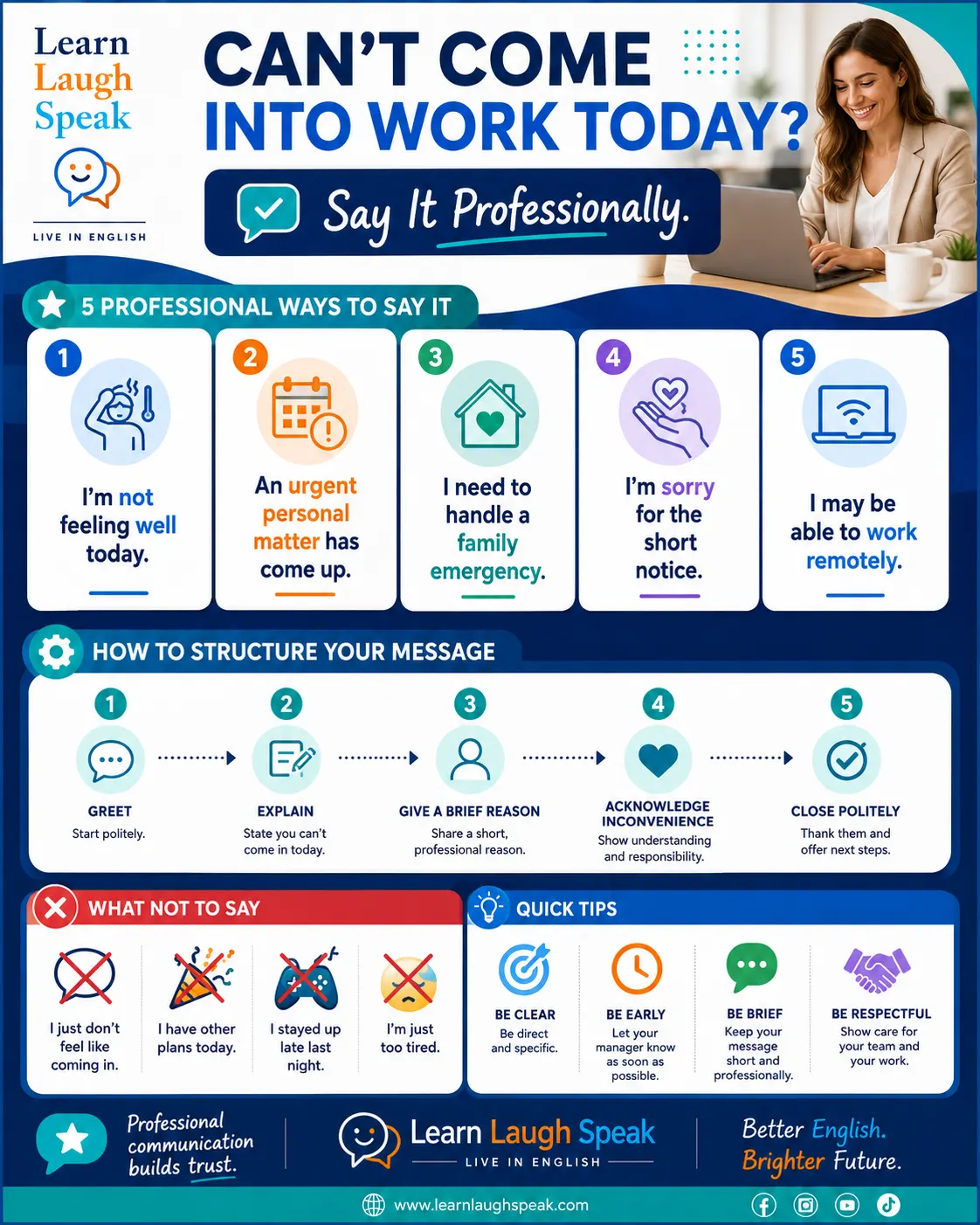
When you need to say you cannot come into work, use a simple structure.
Start with a polite greeting.
Then explain that you cannot attend work today.
Give a brief reason if appropriate.
Acknowledge the inconvenience.
Offer help if possible.
End politely.
For example:
Hi Sarah, I’m sorry for the short notice, but I’m not able to come into work today due to a personal emergency. I understand this may affect the schedule, and I’ll send over anything urgent that may help the team. Thank you for understanding.
This message works because it is short, honest, and respectful.
Phrases to Say You Can’t Come Into Work Today Professionally
Here are useful phrases you can adapt depending on your situation.
1. “I’m Sorry for the Short Notice.”
This phrase is useful when you need to call out on the same day.
Example:
I’m sorry for the short notice, but I won’t be able to come into work today.
This sounds professional because it acknowledges that the timing is not ideal.
You can add a short reason:
I’m sorry for the short notice, but I won’t be able to come into work today due to an unexpected personal matter.
This is polite and does not share too much private information.
2. “I’m Not Feeling Well Today.”
If you are sick, keep the message simple.
Example:
I’m not feeling well today and won’t be able to come into work.
You do not always need to explain every symptom.
A professional version would be:
Hi [Name], I’m not feeling well today and won’t be able to come into work. I’ll keep you updated and will let you know if I need more time to recover.
This is clear and appropriate.
3. “An Urgent Personal Matter Has Come Up.”
Sometimes you are not sick, but something serious needs your attention.
Example:
An urgent personal matter has come up, and I won’t be able to come into work today.
This phrase is professional because it gives context without sharing private details.
You can say:
I’m sorry for the inconvenience. I’ll do my best to support anything urgent remotely if I’m able to.
This shows responsibility while protecting your privacy.
4. “I Need to Handle a Family Emergency.”
If there is a family emergency, you can say this directly.
Example:
I need to handle a family emergency today and won’t be able to come into work.
A full message could be:
Hi [Name], I’m sorry for the short notice, but I need to handle a family emergency today and won’t be able to come into work. I’ll update you as soon as I can. Thank you for your understanding.
This is respectful and serious without giving unnecessary details.
5. “I’m Unable to Attend Work Today.”
This is a formal phrase that works well in writing.
Example:
I’m unable to attend work today due to unforeseen circumstances.
This is useful when you want to sound professional but do not want to explain the full reason.
A complete version:
Hi [Name], I’m unable to attend work today due to unforeseen circumstances. I apologize for the inconvenience and will provide an update when I can.
This phrase is good for emails, messages, or formal workplace communication.
Message Examples You Can Copy
Here are complete examples you can use and adjust.
Example 1: Sick Day Message
Hi [Name], I’m not feeling well today and won’t be able to come into work. I’m sorry for the short notice. I’ll keep you updated and will send anything urgent that the team may need. Thank you for understanding.
Example 2: Personal Emergency
Hi [Name], I’m sorry for the short notice, but an urgent personal matter has come up and I won’t be able to come into work today. I understand this may cause inconvenience, and I’ll update you as soon as I can. Thank you for your understanding.
Example 3: Family Emergency
Hi [Name], I need to handle a family emergency today and won’t be able to come into work. I apologize for the inconvenience and will check in when possible. Thank you for your patience.
Example 4: Transport Problem
Hi [Name], I’m having an unexpected transport issue this morning and I’m not able to make it into work today. I’m sorry for the inconvenience. Please let me know if there is anything urgent I can support remotely.
Example 5: Formal Message
Hi [Name], due to unforeseen circumstances, I’m unable to attend work today. I apologize for the short notice and any inconvenience caused. I’ll follow up as soon as possible.
What to Say on a Phone Call
If your workplace prefers phone calls, keep your message short and calm.
You can say:
Hi [Name], I wanted to let you know that I’m not able to come into work today. I’m sorry for the short notice. I’m dealing with an unexpected situation and will update you as soon as I can.
If you are sick:
Hi [Name], I’m not feeling well today and I don’t think I’ll be able to work. I wanted to let you know as early as possible. I’ll keep you updated about tomorrow.
If you can help remotely:
I may be able to answer urgent messages later today, but I won’t be able to come in person.
This shows you are trying to help, but it does not promise more than you can manage.
Can’t Come Into Work Today Professionally: What not to say
Try to avoid messages that sound too casual or unclear.
Do not say:
Can’t come today.
Not coming in.
Something happened.
I’m busy today.
I won’t make it.
These may be short, but they can sound careless.
Instead, say:
I’m sorry for the short notice, but I won’t be able to come into work today.
That one extra sentence makes the message sound much more professional.
How Much Detail Should You Give?
You do not need to give every detail.
In most workplaces, a short explanation is enough.
You can say:
I’m not feeling well.
A personal matter has come up.
I have a family emergency.
I’m dealing with an urgent situation.
If your workplace requires documentation, such as a medical note, follow the company policy.
If you are unsure, you can ask:
Please let me know if you need any documentation from me.
This sounds professional and responsible.
Alternatives to Calling in Sick
Sometimes you cannot come into the workplace, but you may still be able to work in another way.
Depending on your job and company policy, you may ask about an alternative.
Ask to Work From Home
If your role allows remote work, you can say:
I’m unable to come into the office today, but I may be able to work from home if that helps.
Or:
If possible, I can work remotely today and stay available for urgent tasks.
This is useful when the issue prevents travel but does not stop you from working.
Ask to Swap Shifts
If you work shifts, you may be able to ask a colleague to cover.
You can say:
I’m unable to work my shift today. I’ll check if someone is available to swap or cover, and I’ll update you as soon as possible.
Always follow workplace policy before arranging a shift swap.
Ask to Make Up the Time
If your workplace allows flexible hours, you can say:
If possible, I’m happy to make up the time later this week.
This shows that you care about your responsibilities.
Can’t Come Into Work Today Professionally: Maintain Relationships
Calling out of work does not have to damage your relationships if you handle it well.
The most important thing is to communicate early.
Do not wait until the last minute if you already know you cannot come in.
Next, be clear.
Your manager should not have to guess whether you are late, absent, sick, or available remotely.
Then, follow up if needed.
If your situation changes, send a short update.
Example:
Hi [Name], I wanted to update you. I’m still not well enough to return tomorrow, but I’ll let you know as soon as I have more information. Thank you for understanding.
Finally, show appreciation.
A simple message can help maintain goodwill:
Thank you for your understanding. I appreciate your support.
Returning to Work After an Absence
When you return, you do not need to make a big speech.
A short, professional comment is enough.
You can say:
Thank you for your understanding yesterday. I’m back today and will catch up on anything I missed.
Or:
Thanks for your patience while I was away. I’ll check my messages and follow up on anything urgent.
This helps you return smoothly and shows that you are ready to continue.
Can’t Come Into Work Today Professionally: Useful Phrases
Here are more phrases you can use.
| Situation | Professional phrase |
|---|---|
| You are sick | I’m not feeling well today and won’t be able to come in. |
| Personal matter | An urgent personal matter has come up. |
| Family emergency | I need to handle a family emergency today. |
| Transport issue | I’m dealing with an unexpected transport issue. |
| Need remote work | I may be able to work remotely if that helps. |
| Need to update later | I’ll keep you updated as soon as I can. |
| Need to apologize | I’m sorry for the inconvenience. |
| Need to sound formal | I’m unable to attend work today due to unforeseen circumstances. |
These phrases help you explain the situation without sounding unprofessional.
Email Template: Can’t Come Into Work Today
Subject: Unable to Come Into Work Today
Hi [Name],
I’m sorry for the short notice, but I won’t be able to come into work today due to [brief reason: illness / a personal matter / a family emergency / unforeseen circumstances].
I understand this may cause inconvenience, and I’ll do my best to help with anything urgent if possible.
Thank you for your understanding.
Kind regards,
[Your Name]
Text Message Template
Hi [Name], I’m sorry for the short notice, but I won’t be able to come into work today due to an unexpected situation. I’ll keep you updated and will help with anything urgent if I’m able to. Thank you for understanding.
Short Version for Urgent Situations
Hi [Name], I’m sorry, but I’m unable to come into work today due to an urgent personal matter. I’ll update you as soon as I can. Thank you for understanding.
Final Thoughts on Can’t Come Into Work Today Professionally
When you can’t come into work today professionally, the words you use matter.
You do not need a long explanation.
You do need to be clear, respectful, and responsible.
A good message should say:
you cannot come in
why, briefly
that you understand the inconvenience
whether you can help remotely
when you will update them
Professional communication helps protect trust, reduce confusion, and maintain positive relationships with your team.
The next time life throws you a curveball, use a calm and respectful message. It will help you handle the situation with confidence.

Improve Professional English With Learn Laugh Speak
Learn Laugh Speak helps adult English learners improve speaking, listening, reading, writing, grammar, pronunciation, and vocabulary at the correct level.
Professional English is not only about grammar. It is about knowing what to say in real situations at work.
You may need to call out sick, explain a delay, cancel a meeting, ask for clarification, or write a polite message to your manager.
With Learn Laugh Speak, students complete a full level assessment and start learning from the exact point that matches their ability.
You can practise real workplace English, receive corrections, and build confidence step by step.
If you want to communicate more clearly and professionally at work, Learn Laugh Speak can help you make progress every day.
5 thoughts on “Can’t Come Into Work Today Professionally? What to Say Instead”
Pingback: Software Development Phrases: Developers and IT Teams
Pingback: Ways to Say I’m Not Available Professionally in English
Pingback: How to Say I Need to Go Home from Work Today Professionally
Pingback: Speak About Negative Feelings at Work Professionally
Pingback: How to Speak Up Professionally & Correctly to Stand Out